
Searching “Kyoto temples” or “what to see in Kyoto”? Start with four places: Fushimi Inari, Kinkaku-ji (Golden Pavilion), Kiyomizu-dera, and Ryoan-ji’s stone garden. That is enough to feel the city and fits a multi-city Japan trip with Tokyo and Osaka.
Before you fly, compare flights into Osaka (KIX) or Tokyo, book a hotel near Kyoto Station or Gion, get travel insurance, and an eSIM for Japan. Rough costs with our travel budget calculator.
Short answer: which Kyoto temples are worth it
Core set for 1–2 days: Fushimi Inari (torii), Kinkaku-ji (Golden Pavilion), Kiyomizu-dera (Higashiyama terrace), and Ryoan-ji stone garden. Optional extras: Nijo Castle, evening Gion, Maruyama Park in sakura season.
- 1 day: morning Inari, afternoon/evening Kiyomizu + Gion.
- 2 days: day 1 north (Kinkaku-ji + Ryoan-ji), day 2 south/east (Inari + Kiyomizu).
- 3–7 days: ready routes Kyoto 3 days budget-friendly, 3 days for architecture lovers, 7 days budget-friendly, and 7 days architecture.
When to go and how to prepare
Spring sakura and autumn foliage are peak beauty — and peak crowds. For temples, weekdays outside hanami or late autumn often feel better. Cross-check with our when to travel guide.
Pack water, comfortable shoes, and a light rain layer — Kyoto is hilly. Use our suitcase packing guide. Local guided walks are easy to browse on an excursions aggregator.
Temple cards
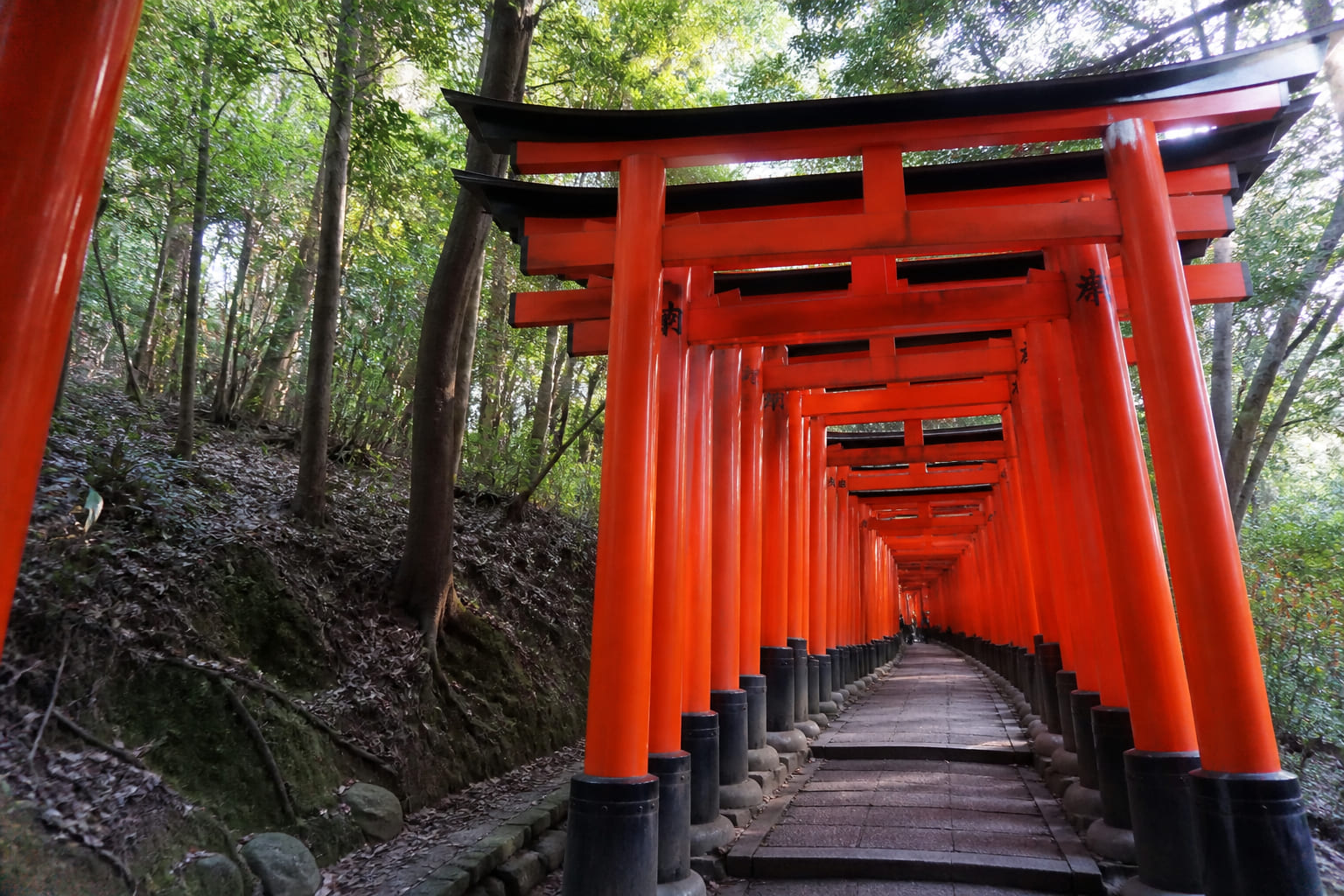
Fushimi Inari Taisha
Kyoto’s thousand vermillion torii gates — the one shrine most visitors should not skip if they want a strong “Japan” moment.
- Go at dawn or near dusk — midday tunnels are packed.
- You do not need the summit: the first 15–20 minutes already deliver the iconic view.
- Easy to pair with southern Kyoto; budget 1.5–3 hours.
Kinkaku-ji — the Golden Pavilion
The gold-leaf pavilion by the pond is Kyoto’s postcard temple. A short visit with high first-timer value.
- The grounds are one-way: plan 45–75 minutes.
- Morning light is best; winter reflections on the pond are especially clean.
- Combine with northwest Kyoto the same day (easy logistics toward Ryoan-ji).
Kiyomizu-dera — Pure Water Temple
Wooden terrace above Higashiyama with city views. Easy to fold into a walking day through Gion and Sannenzaka.
- Expect steep lanes — wear comfortable shoes.
- Seasonal evening illuminations are beautiful but busier.
- After the temple, descend toward Gion for dinner and traditional street photos.
Ryoan-ji stone garden
Kyoto’s famous rock garden at Ryoan-ji — a short, quiet contrast to Inari and Kiyomizu. Ideal if you want “Kyoto gardens” without a long hike.
- Sit facing the garden for 10–15 minutes: the point is contemplation, not selfies.
- Pair with Kinkaku-ji on a northern Kyoto day.
- Rules are strict — silence and no stepping onto the gravel.
Want quieter than classic Kyoto? Compare with Matsuyama on Shikoku or fold Kansai temples into a loop with the Japanese Alps. After temples — unusual Tokyo cafés, Japan & Korea food guide, and souvenir shops.
1–2 day itinerary
- Day 1 (south + east): early Fushimi Inari, midday back toward Kyoto Station, then Kiyomizu-dera and evening Gion.
- Day 2 (north): Kinkaku-ji → Ryoan-ji stone garden → free pace / park or onsen if you want.
- If you only have 1 day: Inari morning + Kiyomizu afternoon; leave the Golden Pavilion for a longer stay.
Connect other cities: Tokyo 3 days budget-friendly, Osaka 3 days budget-friendly, quieter alternatives — Tokyo beyond Shibuya and Beppu hell springs.
Ready-made routes
Routes for your destination
Day-by-day plans you can adapt to your dates right away.

FAQ
Which Kyoto temples should you see first?
Start with Fushimi Inari, Kinkaku-ji (Golden Pavilion), Kiyomizu-dera, and the Ryoan-ji stone garden. That covers the classic temple-and-garden loop without trying to visit all 1,600+ shrines.
How many days do you need for Kyoto temples?
One packed day works (Inari morning + Higashiyama evening). Two days is more comfortable: north (Kinkaku-ji + Ryoan-ji) and south/east (Inari + Kiyomizu). For a full week, use AlpacaBag’s ready-made Kyoto routes.
How do you get to Fushimi Inari?
Easiest: JR Nara Line to Inari Station (about 5 minutes from Kyoto Station) or Keihan to Fushimi-Inari. From the exit it is a 1–3 minute walk to the torii.
Is cherry blossom season worth it for temples?
Yes if you accept crowds and higher lodging prices. For temple visits, late autumn foliage or weekday off-peak hanami days feel easier. Cross-check seasonality with our “when to travel” guide.
How does AlpacaBag help plan Kyoto?
The AI planner builds day-by-day temple and garden timing, connects Kyoto with Tokyo/Osaka, and exports a packing checklist plus PDF. Start from a ready Kyoto route and refine everything in the wizard.