
Ready-made routes: 3 budget days in Osaka, 7 days in Tokyo for history lovers and a weekend in Osaka. Estimate costs in our travel budget calculator, read the Japan & Korea food guide and browse the AlpacaBag route library.
Book flights to Fukuoka or Osaka, a hotel in Beppu, the Nishitetsu bus from Fukuoka airport, a Japan eSIM with offline maps, and travel insurance for Japan. First-time visitors may prefer a guided Jigoku tour.
What is Jigoku?
The "hell springs" (Jigoku) in Beppu are seven unique geothermal zones with water temperatures up to 90–100°C, meant purely for viewing — not bathing. The name stuck centuries ago when boiling water and bubbling mud made the land unfit for farming or habitation. Steam erupts straight through the pavement here, giving the whole district a cinematic, otherworldly atmosphere.
Beppu produces more thermal water than any other hot-spring resort in Japan. If you have already explored the Japanese Alps or offbeat Tokyo, Jigoku adds a completely different visual layer to your trip.
Ranking all seven hells
To save time, we grouped the springs from must-see to overrated. Use this table when prioritising your route.
| Spring name | Main feature | Traveler verdict |
|---|---|---|
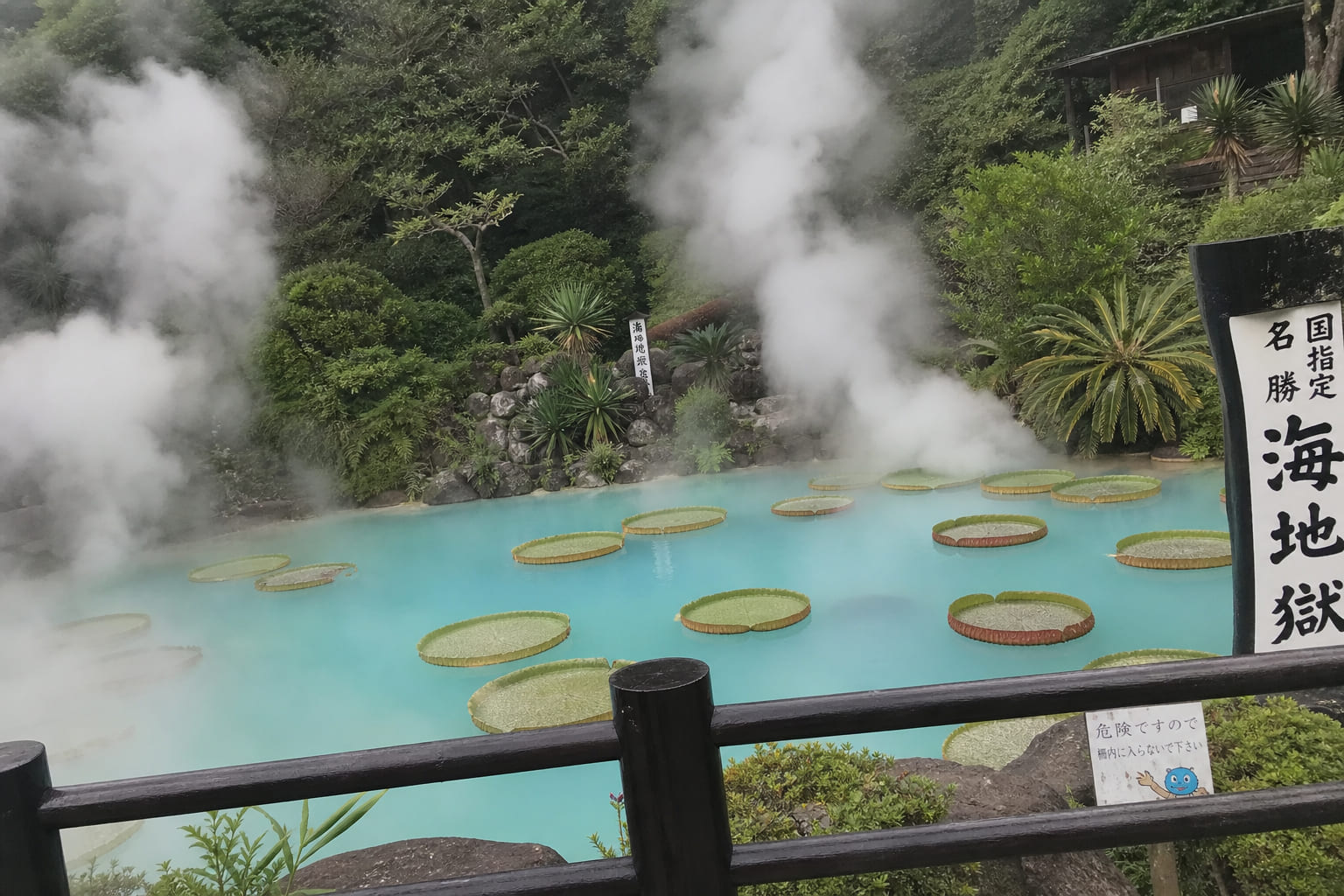
| Umi Jigoku (Sea Hell) | Vivid turquoise water (98°C) and giant tropical water lilies strong enough to hold a child | Must try |
| Chinoike Jigoku (Blood Pond Hell) | Crimson water from high iron oxide and magma concentrations | Must try |
| Tatsumaki Jigoku | Natural geyser erupting powerfully every 30–40 minutes | Must try |
| Onishibozu Jigoku | Bubbling grey mud resembling smoothly shaved Buddhist monk heads | Only if you like |
| Oniyama Jigoku | Pools where geothermal heat is used to breed hundreds of crocodiles | Overrated |
| Kamado Jigoku | Boiling pond with a demon-chef statue, shifting from blue to green | Only if you like |
| Shiraike Jigoku | Garden-surrounded spring with calcium-rich white water | Only if you like |
The three must-see hells cluster in Kannawa — walkable in half a day. The rest sit between Kannawa and Shibaseki; Beppu City local buses link them cheaply.
Must try: three hells worth the trip
Umi Jigoku — Sea Hell
The most photogenic pond: saturated turquoise water against steam and tropical greenery. Giant water lilies are a sight on their own. Arrive at opening (8:00) before tour groups.
Chinoike Jigoku — Blood Pond Hell
Crimson water from iron oxide looks genuinely hellish. One of the region's oldest springs — a shop nearby sells mud cosmetics and eggs boiled in the pond.
Tatsumaki Jigoku — geyser
The only natural geyser in the set: eruptions every 30–40 minutes on schedule. Spectacular but brief — plan to wait for the next cycle if you miss one.
Tickets & budget
Each hell costs roughly ¥400–450. Visiting four or more? A combo pass is mathematically cheaper than separate tickets. All Jigoku zones open daily 8:00–17:00 — plan an early start before tour buses arrive.
Cross-check spending in our budget calculator and pick the best month in our best-travel-season guide. Solo travelers: see our solo travel guide.
Getting to Beppu
Fastest from Fukuoka: Nishitetsu express bus (~2.5 hours). Shinkansen from Tokyo takes just under seven hours; from Hakata only two. Five hells sit in Kannawa, two in Shibaseki — local buses connect them affordably.
Combining Beppu with other cities? See our multi-city vacation guide, anime locations in Japan and 3 budget days in Tokyo.
Routes with AlpacaBag
Smart connections between Kyushu cities need tight schedule control. AlpacaBag's planner slots Jigoku into your full trip in minutes — avoiding crowds while balancing sightseeing density and comfort.
Build a route: Beppu Jigoku & Kyushu
Describe "Beppu seven hells, 1–2 days" — AlpacaBag schedules buses, time per spring, and links with Fukuoka or Osaka.
Ready-made routes
Routes for your destination
Day-by-day plans you can adapt to your dates right away.
FAQ
How long do you need for all seven Beppu Jigoku hells?
Allow 2–3 hours for the three must-see springs (Umi, Chinoike, Tatsumaki) with transfers. A full tour of all seven takes 4–5 hours. Arrive at 8:00 before tour buses. Use AlpacaBag for hour-by-hour timing.
Is the combined Jigoku pass worth it?
If you plan four or more hells, the combo ticket beats individual entries at ¥400–450 each. For three must-see ponds, single tickets are fine.
Can you bathe in the Jigoku hot springs?
No — water reaches 98–100°C and the hells are view-only. Beppu has separate onsen ryokan for bathing; book accommodation through partner services.
How do you reach Beppu from Fukuoka or Osaka?
From Fukuoka (Hakata): Nishitetsu express bus (~2.5 h) or Shinkansen (~2 h). From Tokyo: Shinkansen with transfers (~7 h). Local buses connect Kannawa and Shibaseki districts.
How does AlpacaBag fit Beppu into a Kyushu itinerary?
Describe "Beppu Jigoku — Fukuoka, 2–3 days" and the planner schedules buses, time per hell, and connections with other Kyushu cities.