
The city is compact: you can cover the cultural core in two days and fold it into a longer Japan trip via multi-city trip planning. Before you fly, compare flights to Osaka or Tokyo, book a hotel near Dogo or the castle, arrange travel insurance, and set up an eSIM for Japan.
For other onsen landscapes, compare with our Beppu Seven Hells guide; for a mountain contrast, see the Japanese Alps itinerary.
Must-see spots: facts and figures
Matsuyama packs a dense cultural core. Include these stops when planning with AlpacaBag or starting from the ready 3-day Matsuyama route.
Matsuyama Castle
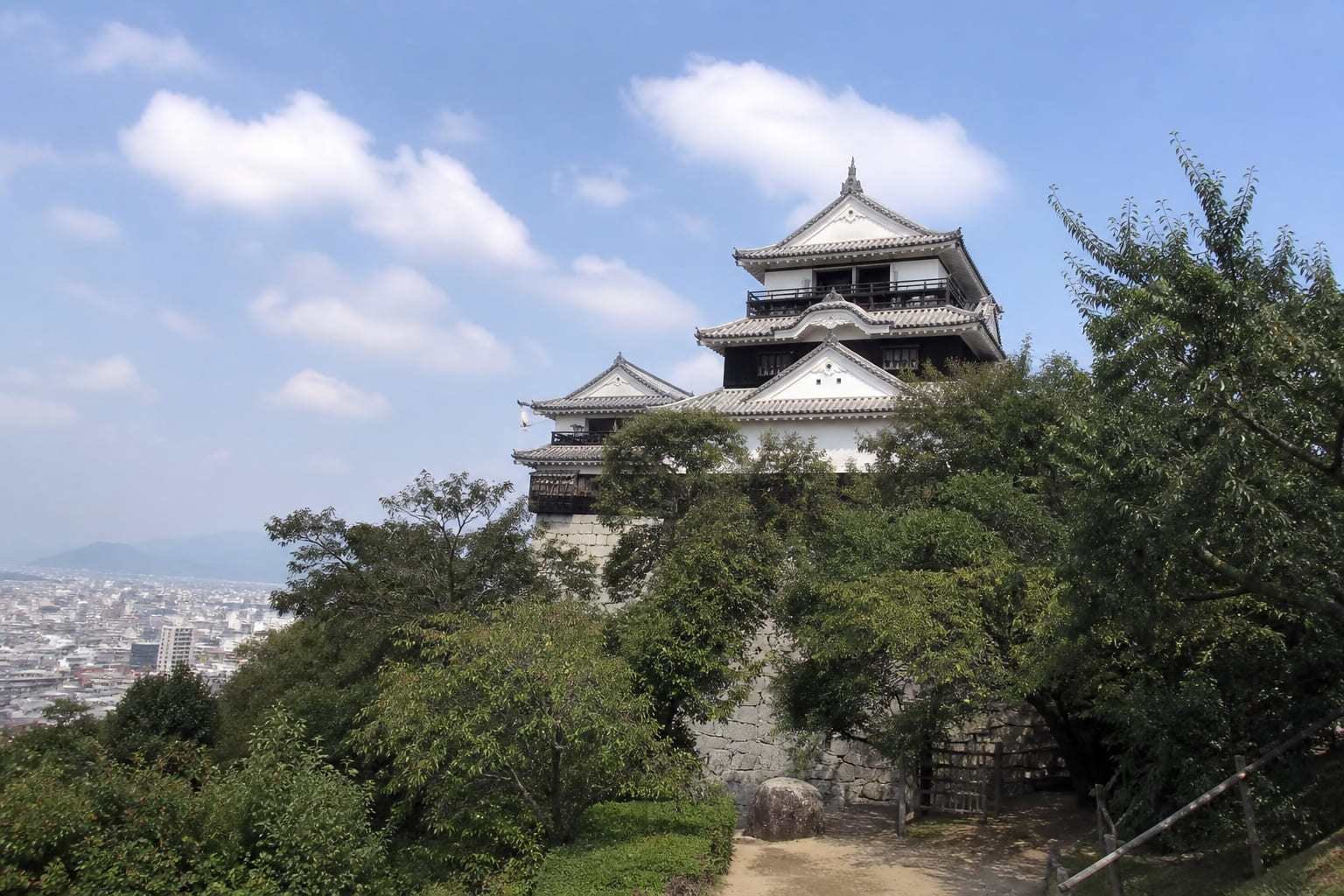
One of Japan’s 12 surviving original castles, overlooking the city. Rebuilt in the 17th century; the complex sits about 4 km from the central area. Reach the main keep (tenshu) on foot, by chairlift, or ropeway. Inside you can try on samurai armor — easy to pair with tickets and tours.
Dogo Onsen Honkan
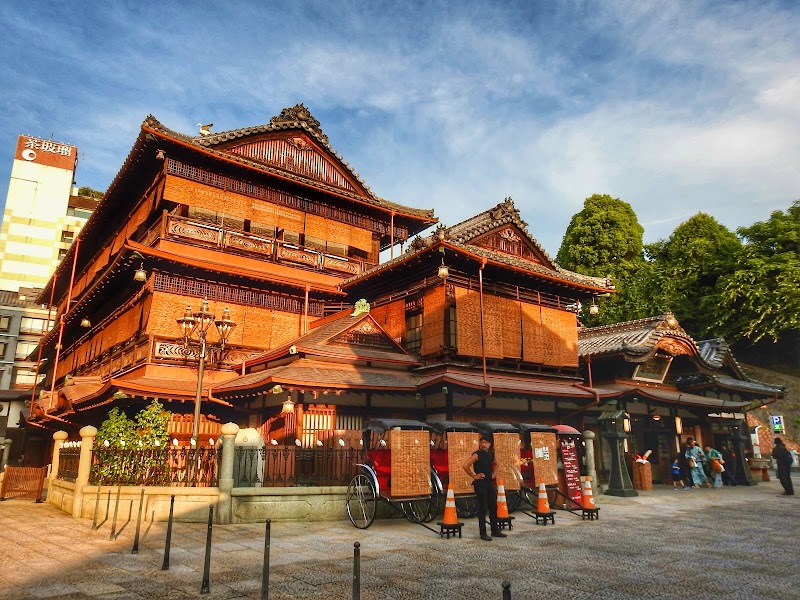
The historic main bathhouse is Japan’s oldest hot spring complex, with roughly 3,000 years of history and past imperial guests. Yukata strolls, tea houses, and souvenir lanes surround the onsen. 2026 price guide for Honkan: Kami-no-yu ≈ ¥600–700; Tama-no-yu with a rest room ≈ ¥1,500–1,600 (confirm on site). For other Japanese springs, also see Beppu.
Ishite-ji Temple
Matsuyama hosts eight temples on the Shikoku Henro (88 temples total). Ishite-ji (temple No. 51) is the best known for its architecture and caves leading to the inner sanctuary — a natural day-two pairing with Dogo.
Saka no Ue no Kumo Museum & Bansuiso Villa
The museum was designed by Tadao Ando — a must for modern-architecture fans. Nearby, Bansuiso is a French-style historic villa. It pairs well with a Tokyo history itinerary if Matsuyama is part of a longer tour.
Takashimaya Ferris wheel
A quick stop for panoramic photos of the city and the Seto Inland Sea — ideal after the castle or onsen.
Comparison: Matsuyama vs other historic Japan cities
When building an itinerary, it helps to see how Matsuyama differs from more popular stops like Kyoto and Hakone.
| Criterion | Matsuyama (Shikoku) | Kyoto (Honshu) | Hakone (Honshu) |
|---|---|---|---|
| Main focus | Authentic onsen + original castle | Temples and traditional gardens | Onsen with Mt. Fuji views |
| Crowd level | Low / medium | Critically high | High |
| Local transport | Botchan retro train, trams | Buses, subway | Trains, ropeways |
| Spring age | 3,000+ years (Dogo Onsen) | Mostly modern baths | Around 1,200 years |
If you still want classic Kyoto or a Kansai hub, use 7 days in Kyoto, 3 days in Osaka, or budget Tokyo— then slot Matsuyama in as a quieter Shikoku chapter. Crowd-light Tokyo ideas live in our Tokyo beyond Shibuya guide.
Day-trip ideas
Staying a few nights? Consider nearby half- or full-day trips:
- Kashima Island: about 20 minutes by train to Iyo-Hojo, then a ~5-minute ferry — great for wildlife and quiet shores.
- Yuzuki Castle ruins: in Dogo Park next to the onsen — outdoor Japanese art and garden walks.
- Isaniwa Shrine: a hilltop shrine near Isaniwa Slope, closely tied to Japan’s bathing culture.
Book stays via Matsuyama hotel search; size the trip budget with our how-much-money calculator. Train fans can browse grand railway journeys (including Shinkansen links to Kansai hubs).
Practical tips before you go
- Season: spring (castle sakura) and autumn are most comfortable — cross-check shoulder months in our best time to travel guide.
- Food: Shikoku flavors pair well with our Japan & South Korea food guide.
- Souvenirs: after Tokyo, see our Japan souvenir shops guide; in Dogo, look for yukata and local sweets.
- Ready country plans live in the route library.
Build your Matsuyama itinerary
AlpacaBag links the castle, Dogo Onsen, and Henro temples into a realistic 2–3 day plan. Compare flights and hotels, then refine everything in the wizard.
Ready-made routes
Routes for your destination
Day-by-day plans you can adapt to your dates right away.
FAQ
How do you get around Matsuyama?
The best way to explore the historic core is the Botchan retro train between main stations and the Dogo area. The city also has a solid modern tram network; for the castle, use the ropeway or chairlift.
When is the best time to visit Matsuyama Castle?
Castle grounds are among the best cherry-blossom spots on Shikoku in spring — with far fewer crowds than Tokyo or Kyoto. Autumn foliage and mild winters are also comfortable.
How many days do you need in Matsuyama?
Two full days is ideal: day one for Matsuyama Castle and central museums, day two for Dogo Onsen and Shikoku pilgrimage temples such as Ishite-ji. With extra time, add a Kashima Island day trip.
How much does bathing at Dogo Onsen cost?
For Honkan in 2026, expect roughly ¥600–700 for the basic Kami-no-yu entry and about ¥1,500–1,600 for Tama-no-yu with a rest room. Prices change — confirm on site or with the official operator.
How does AlpacaBag help plan a Matsuyama trip?
The AI planner builds a 2–3 day itinerary around the castle, Dogo Onsen, and Henro temples, connects transfers via Osaka or Tokyo, and exports a packing checklist plus PDF. You can start from the ready Matsuyama ready-made route and refine everything in the wizard.