
Ready-made plans: 7 days in Kyoto for architecture lovers, 7 days in Tokyo for history lovers and 3 days in Osaka for architecture. Estimate costs in our travel budget calculator, read the Japan & Korea food guide and browse the AlpacaBag route library. Heading to Kyushu? See our Beppu Jigoku guide.
Book flights to Tokyo or Nagoya, a hotel in Matsumoto or Kanazawa, a Japan eSIM with offline maps, and travel insurance for mountain regions. For Kamikochi and Tateyama, a local guided tour helps on first alpine visits.
Seasonality & logistics
Mountain areas close in winter due to heavy snow. When planning via AlpacaBag, note that a standard JR Pass is not enough — many segments use private railways and dedicated mountain buses.
| Location | Open season | Season notes |
|---|---|---|
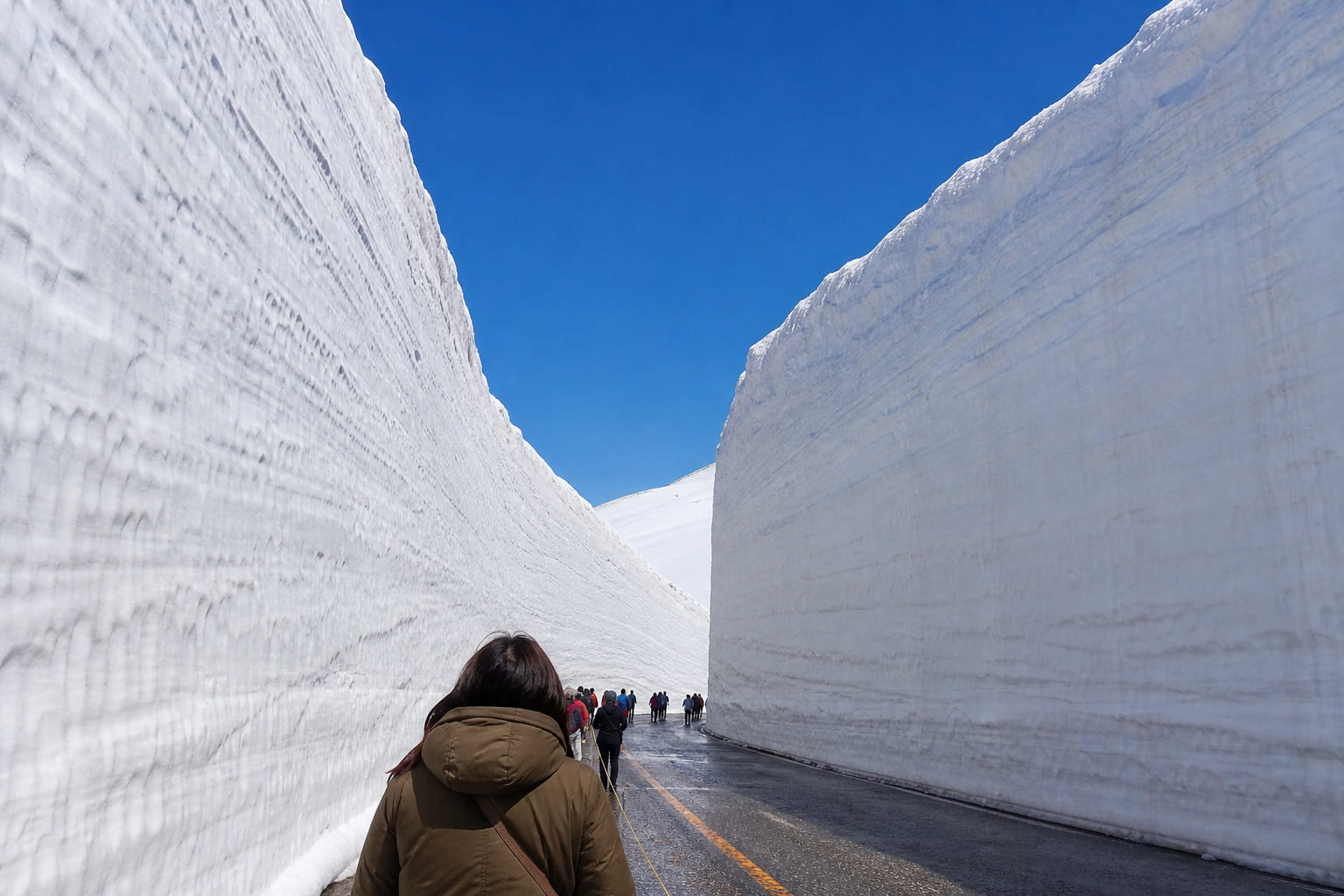
| Tateyama Kurobe | April 15 — November 30 | Snow walls (Yuki-no-Otani) peak at 15–20 m from mid-April through mid-June |
| Kamikochi | Mid-April — mid-November | Best hiking: summer (cooler than cities) and October (momiji maple season) |
| Matsumoto | Year-round | Castle and museums open in winter; mountain route access from April |
| Shirakawa-go / Kanazawa | Year-round | Winter gassho-zukuri illumination (Jan–Feb); Kenroku-en garden open year-round |
Combining the Alps with Tokyo and Kyoto? See our multi-city vacation guide and best months to travel. For longer trips — how to pack a suitcase.
Day 1. Matsumoto — gateway to the Alps
A compact city: most sights are walkable from the station — an ideal base before heading into the mountains.
Matsumoto Castle (Crow Castle)
One of Japan's oldest original castles
Highlight: Black facade and authentic wooden interiors — not a concrete rebuild.
What to do: Tower climb, arms museum, mountain views from upper floors.
Architecture fans: 7-day Tokyo route for architecture lovers.
Matsumoto City Museum of Art
Birthplace of Yayoi Kusama
Highlight: Large permanent Kusama collection.
What to do: Contemporary art, installations, rotating exhibitions.
Nakamachi & Nawate streets
Historic merchant quarters
Highlight: Traditional kura storehouses turned into cafés and craft shops.
What to do: Old-town stroll, specialty coffee, local sweets.
Day 2. Kamikochi valley
A glacial valley in Chubu-Sangaku National Park at 1,500 m. Private cars are banned — take the eco-bus from Shin-Shimashima or Sawando parking (~1 hour).
Kappa Bridge (Kappabashi)
Resort icon
Highlight: 36-metre wooden suspension bridge over the Azusa River.
What to do: Classic photo spot, start of valley walks.
Taisho Pond
Volcanic origin
Highlight: Crystal-clear water reflecting the Hotaka range — formed after Mt. Yakedake erupted.
What to do: Loop walk, sunrise photography.
Myojin Pond & Okumiya Shrine
Shrine at the mountain foot
Highlight: ~1 hour walk from the visitor centre; paid entry, cash required.
What to do: Gentle hiking, contemplative atmosphere.
Solo travelers: see our solo travel guide.
Day 3. Tateyama Kurobe Alpine Route
A 90 km artery through the mountains with 2,400 m elevation gain — funiculars, trolleybuses, cable cars, and buses in sequence.
Kurobe Dam
Japan's tallest dam
Highlight: An underground trolleybus brings visitors to the observation deck.
What to do: Mountain panorama, seasonal water discharge (summer).
Murodo snow corridor (Yuki-no-Otani)
The route's signature sight
Highlight: A 500 m path carved through snow up to 20 m high — peak April through mid-June.
What to do: Walk between white walls; bring layers and sun protection (snow reflects UV).
Shomyo Falls
Japan's highest waterfall
Highlight: 350 m drop; short side trip from Tateyama station at the route end.
What to do: Short trek, viewpoints.
Day 4. Shirakawa-go & Kanazawa
After finishing the mountain leg in Toyama Prefecture, head toward the Sea of Japan. Direct buses from Toyama or Takayama reach Shirakawa-go (UNESCO): gassho-zukuri farmhouses with steep thatched roofs built against heavy snow.
Continue to Kanazawa for Kenroku-en garden and the Nagamachi samurai district, then Shinkansen to Tokyo or Kyoto. Pair with a 7-day Kyoto architecture route. For quieter Tokyo: Tokyo beyond Shibuya Crossing; anime locations — top 10 anime spots in Japan.
Build a route: Matsumoto — Kamikochi — Tateyama — Kanazawa
Describe "Japanese Alps, 4–5 days, snow walls + hiking" — AlpacaBag schedules transport, lodging, and seasonal closures hour by hour.
Ready-made routes
Routes for your destination
Day-by-day plans you can adapt to your dates right away.
FAQ
How many days do I need for the Japanese Alps route?
Plan 4–5 days: one in Matsumoto, one in Kamikochi, one on the Tateyama Kurobe Alpine Route, plus Shirakawa-go and Kanazawa. The loop fits neatly between Tokyo and Kyoto — see our multi-city vacation guide.
Does the JR Pass cover the Japanese Alps?
Only partly. Tateyama Kurobe segments and the Kamikochi eco-bus require separate tickets from private operators — JR Pass does not include them. Budget for an Alpine Route pass and the national-park shuttle.
When is the best time for the Tateyama snow corridor?
Snow walls reach maximum height from mid-April through mid-June. After that walls shrink, but the alpine route runs until late November. Compare months in our best-travel-season guide.
Can I drive my own car into Kamikochi?
No — private vehicles are banned inside the reserve. Reach Shin-Shimashima station or Sawando parking and transfer to the eco-bus (~1 hour).
How does AlpacaBag help plan a Japanese Alps trip?
The AI planner builds day-by-day itineraries with seasonal closures, transfers, and budget. Describe "Matsumoto — Kamikochi — Tateyama — Kanazawa, 5 days" and get a PDF with addresses and travel times.