
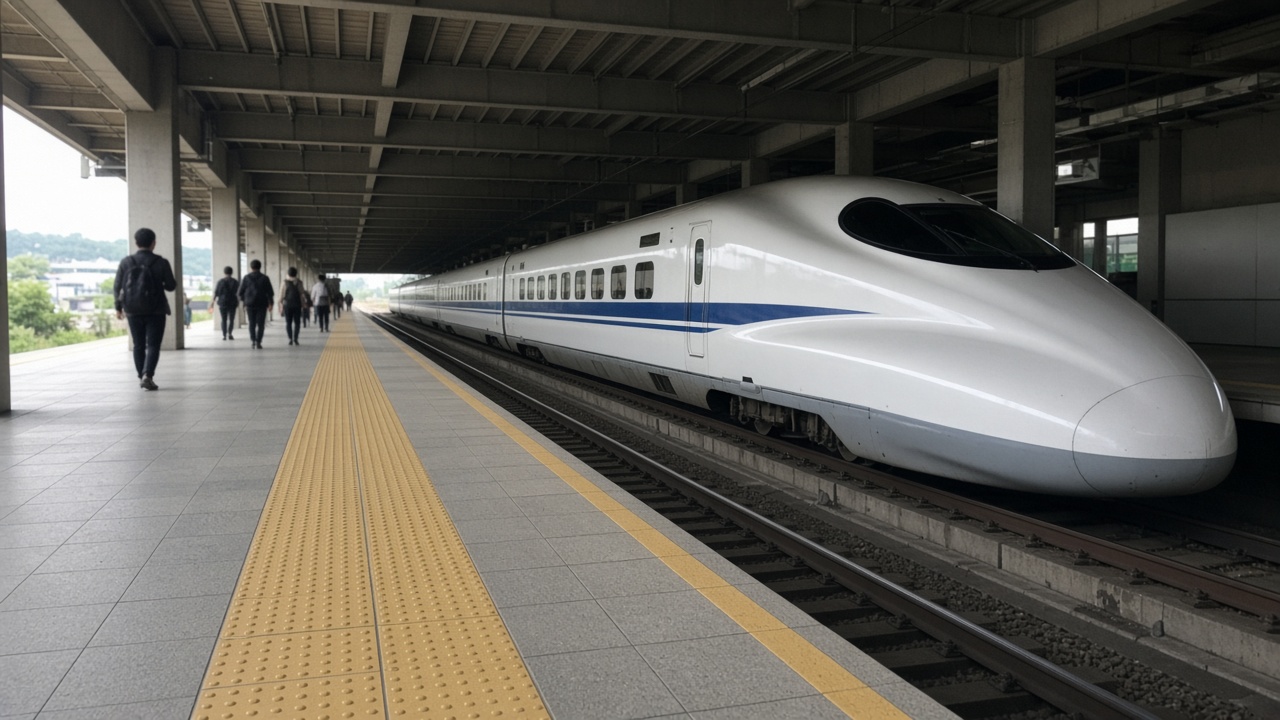
Short answer: when the pass is actually profitable
Run the math per adult, and only on JR trains. The 7-day Ordinary threshold on the official site is ¥50,000. That is about 3.6 reserved Hikari seats from Tokyo to Kyoto (¥14,050 in the regular season). A Tokyo–Kyoto–Shin-Osaka–Tokyo loop is ¥29,030. The pass costs ¥20,970 extra — skip it.
Buy the nationwide pass only when separate tickets on covered trains exceed the pass price, and you will actually ride those legs on consecutive days. A child pass (ages 6–11) is half price, and a child ticket is about half price too, so adding kids rarely flips the yes or no. For the rest of the trip budget, use the travel money calculator.
JR Pass prices in 2026: online versus agencies
Adult fares below. In the child column the first figure is online, and agencies through 30 September 2026; the second is agencies from 1 October 2026. The online price on japanrailpass.net stays frozen for now under the JR Group notice of 9 April 2026. The group said it would announce the end of that freeze separately. Agency prices rise on 1 October 2026.
| Pass | Online | Agency from 1 Oct 2026 | Child 6–11 |
|---|---|---|---|
| 7-day Ordinary | ¥50,000 | ¥53,000 | ¥25,000 / ¥27,000 |
| 14-day Ordinary | ¥80,000 | ¥84,000 | ¥40,000 / ¥42,000 |
| 21-day Ordinary | ¥100,000 | ¥105,000 | ¥50,000 / ¥53,000 |
| 7-day Green | ¥70,000 | ¥74,000 | ¥35,000 / ¥37,000 |
| 14-day Green | ¥110,000 | ¥116,000 | ¥55,000 / ¥58,000 |
| 21-day Green | ¥140,000 | ¥147,000 | ¥70,000 / ¥74,000 |
Green costs ¥20,000 more than a 7-day Ordinary. The Green versus ordinary reserved gap on Tokyo–Kyoto is ¥4,870 per ride, and the season does not change that gap. You need more than four of those rides to justify it. Ordinary is the better default for a normal holiday.
How to calculate: the break-even formula
- List only JR trains inside the pass window. Days run consecutively from activation. They are not any seven days in a month.
- Use the reserved ordinary fare on a train the pass actually covers: Hikari, Kodama, Sakura, most limited expresses, local JR, the Narita Express and Haruka. Do not paste in a Nozomi fare unless you will buy the supplement.
- Add them up. Compare with ¥50,000 (7 days online), ¥80,000 (14) or ¥100,000 (21). If you buy from an agency after 30 September 2026, use ¥53,000 / ¥84,000 / ¥105,000.
- Subtract metro, private railways and any Nozomi or Mizuho supplement. The pass does not replace that cash.
- If every leg sits in one region, compare a JR East or JR West pass. It is often cheaper than the nationwide one.
Reserved-seat fees on the Tokaido line move −¥200 off-peak, +¥200 in peak and +¥400 in the super peak. An unreserved Hikari Tokyo–Kyoto stays ¥13,320 all year. On 19 September 2026 Ekitan shows a reserved seat at ¥14,250: that Saturday is peak, and the regular season is ¥14,050. The old round-trip discount for trips of 601 km and up stopped being sold on 14 March 2026, so a return is two one-way tickets. Advance fares such as smartEX, EX Hayatoku and Tokudane are left out of the sum: they make separate tickets cheaper still, so the pass pays off even less often. Figures are regular-season ordinary reserved seats on trains the pass actually covers. Not a quote.
Four itineraries versus a 7-day pass at ¥50,000
| Scenario | What we add | Tickets | Vs ¥50,000 | Verdict |
|---|---|---|---|---|
| Golden route | Tokyo to Kyoto Hikari ¥14,050, Kyoto to Shin-Osaka ¥580, Shin-Osaka to Tokyo Hikari ¥14,400 | ¥29,030 | −¥20,970 | Does not pay |
| Golden route + airports | Same loop plus a Narita Express round trip (¥6,280) and Haruka Kansai Airport–Kyoto (¥2,200) | ¥37,510 | −¥12,490 | Still no |
| Western arc | Tokyo to Kyoto ¥14,050, Kyoto to Hiroshima ¥11,300, Hiroshima to Tokyo ¥18,910 | ¥44,260 | −¥5,740 | Usually no |
| Long hops | Tokyo–Hiroshima round trip (¥18,910 × 2) and Tokyo–Kanazawa round trip (¥14,600 × 2) | ¥67,020 | +¥17,020 | Pays off |
These legs are regular-season fares on trains the pass covers, not Nozomi. Tokyo–Hiroshima on Hikari, Sakura or Kodama is ¥18,910, not the ¥19,760 Nozomi fare. Tokyo–Kanazawa reserved on Kagayaki or Hakutaka is ¥14,600 (tables revised in March 2026). Kyoto–Hiroshima is ¥11,300. A seasonal swing of ¥200–¥400 does not flip the first three rows. The fourth pays only if both round trips really fit in one week.
A 14-day pass at ¥80,000 is stricter still: two quiet Kansai weeks will not recoup it. It makes sense when those 14 days include the west (Hiroshima or Kyushu) and a second long direction. A 21-day pass at ¥100,000 is almost never the cheapest tool for a normal trip.
Day scaffolds to drop those trains into: Tokyo, 3 days on a budget and Kyoto, 7 days on a budget. A Kyoto week with no shinkansen days needs the nationwide pass even less.
How to recoup the money if you still buy the pass
- Activate on the morning of the first long ride, not on arrival night if you will not travel again that day.
- Put the Narita Express and Haruka inside the window. They are covered, but they do not close a ¥12,490–¥20,970 hole by themselves.
- A reserved ordinary seat on Hikari or Sakura is free with the pass, but you still have to book it. Nozomi is faster, and a supplement of ¥4,960 on Tokyo–Kyoto or ¥6,500 on Tokyo–Hiroshima eats the saving.
- Side trips that actually move the total: Hiroshima, Himeji on the way, Kanazawa, Sendai. Walking Kyoto temples does not recoup a pass — day logic lives in the Kyoto temples guide.
- Kyushu (Hakata and beyond, Beppu for example) is the kind of distance the pass is built for. On the ground, see Beppu Jigoku.
The Japanese Alps are only partly covered: Tateyama Kurobe segments and the Kamikochi bus are private operators. If the Alps are the point of the trip, read the Tateyama, Kamikochi and Matsumoto guide first, and do not book those tickets as JR Pass savings.
Lay the legs out by day so you do not buy seven days for two rides.
Build the itineraryWhen a regional pass is cheaper
The nationwide pass loses when you are not crossing the country.
- Kanto only, plus day trips (Nikko, Karuizawa, Fuji): the JR Tokyo Wide Pass is ¥16,000 for 3 days, adult 12 and over. It does not reach Kyoto.
- Kyoto, Osaka, Nara, Kobe and Himeji without Tokyo: the Kansai Area Pass is ¥2,800 / ¥4,800 / ¥5,800 / ¥7,000 for 1–4 days. The JR West page marks those prices as current on 1 August 2024, and the pass does not cover the shinkansen. The same page still says the pass is sold year-round. Overseas sellers warn that the last start date is 29 October 2026, after which West QR Kansai Area Pass replaces it. Reopen westjr.co.jp before you pay.
- Osaka or Kyoto plus Hiroshima and the Sanin coast: the Sanyo-Sanin Area Pass is ¥23,000 for 7 days against ¥50,000 for all of Japan. Same date caveat.
On the JR West site the Kansai Wide Area Pass is ¥12,000 for 5 days (price marked 1 August 2024). Its Sanyo shinkansen coverage stops at Okayama, not Hiroshima. From 14 March 2026 the Hokuriku Arch Pass is ¥35,000 for 7 days on the Tokyo–Kanazawa–Kansai arc. That figure is on the JR West and JR East pages, not a blog estimate.
What the calculator should leave out
Tokyo Metro, private lines and most city buses are outside the pass. Short urban hops still need an IC card. A bicycle between temples is not a free pass kilometre either — hire rules are in the Japan bike rental guide.
The pass is sold to temporary visitors, not residents. Carry your passport. A lost pass is not reissued. Ordinary seat reservations are free, but an unreserved train at Golden Week, Obon or New Year can mean standing. Nozomi often has no unreserved cars in those windows at all.
For context on where Japanese trains sit among the big rail trips, see grand railway journeys of the world.
Where to buy, and what to budget around the ticket
Independent travellers are usually better on the official japanrailpass.net checkout: the price is still below the agency rate, and you can reserve seats before exchanging for the physical pass in Japan. We do not sell train tickets or the pass. That link is JR, not an affiliate store.
Money still leaves around the pass. Shop the flight to Tokyo or Osaka on its own: flights to Japan. Sleep near the station the shinkansen uses, or the morning Hikari costs you an hour on the metro. Hotel shortlist: central Tokyo hotels, and search via a hotel by the station. Seat reservations and maps are easier with an eSIM for the trip. Medical cover sits with travel insurance.
A day when you are not burning long-distance trains is sometimes better with a guide than with a pass you are trying to justify. Private lines and alpine segments are outside the pass anyway: a day excursion is more honest than a Nozomi supplement.
Ready-made routes
Routes for your destination
Day-by-day plans you can adapt to your dates right away.
FAQ
Is the JR Pass worth it for Tokyo, Kyoto and Osaka?
Usually no. A 7-day Ordinary pass bought online costs ¥50,000. Regular-season Hikari Tokyo–Kyoto, the special rapid to Shin-Osaka and Hikari back add up to ¥29,030. Separate tickets are about ¥21,000 cheaper.
How much does the Japan Rail Pass cost in 2026?
On the official site an adult Ordinary pass is ¥50,000 for 7 days, ¥80,000 for 14 and ¥100,000 for 21. Overseas agencies charge ¥53,000, ¥84,000 and ¥105,000 from 1 October 2026. The child rate is half if the child is 6–11 on the purchase date or the exchange-order date.
Does the JR Pass cover the Nozomi shinkansen?
Not by itself. Nozomi and Mizuho need an ONLY WITH JAPAN RAIL PASS ticket: ¥4,960 for Tokyo–Kyoto or Tokyo–Shin-Osaka, and ¥6,500 for Tokyo–Hiroshima. It is sold in Japan before boarding, not online. On the Tokaido and Sanyo lines the pass covers Hikari, Kodama and Sakura without that extra ticket.
How do you break even on a 7-day pass?
You need long JR legs inside seven consecutive calendar days: Hiroshima, Hakata, Kanazawa or Tohoku, not only the Kansai loop. The bar is separate JR tickets above ¥50,000. Airport expresses help, but they do not close the gap alone.
What does the JR Pass leave out?
Tokyo Metro, private railways such as Odakyu, Keihan and Hankyu, most buses and ferries, and parts of alpine routes run by private operators. You still want a Suica, Pasmo or ICOCA card for city hops.