
Why these three stops belong in one day
Geghard, Garni Temple and the Symphony of Stones share one branch of road east of Yerevan, but they do not feel repetitive. Geghard is a working monastery whose medieval churches and tombs are partly cut from the cliff. UNESCO lists the monastery with the Upper Azat Valley. Garni opens the horizon with a formal colonnade above a deep gorge. Down below, regular hexagonal basalt columns form the natural wall known as the Basalt Organ.
That contrast is the reason to go. Resist tours that bolt on Lake Sevan or Khor Virap: the map may look efficient, yet parking, meals and winding roads turn the result into a photo relay. An 8:30 or 9:00 departure gives the core three enough space and normally returns you to Yerevan before dinner.
Private driver or shared coach: what you actually buy
A private car is the easiest option for two adults, a family or anyone who wants to linger. Send the driver the complete sequence before confirming: Geghard, Garni Temple, Symphony of Stones, Yerevan. Ask whether waiting, gorge access and parking are included. Booking a one-way ride to Garni does not guarantee that the same car will remain available for the afternoon.
A shared tour removes negotiation and adds a guide, useful when you want the temple's reconstructed history and the monastery's iconography explained. For a solo visitor it can cost less than keeping a car all day. The trade-off is control: craft demonstrations, lunch partners and stop lengths may be fixed. Compare minutes at the three headline sites, not the total number of bullets in the sales page.
Start at Geghard while the rock chambers are quiet
Geghard sits at the end of the road, so visiting it first avoids backtracking late in the day and often beats the largest groups. The exterior only hints at what is inside. Walk through the gavit into chambers carved directly from living rock, pause as your eyes adjust and listen to the remarkable resonance beneath the vaults. UNESCO describes the ensemble as a high point of Armenian medieval architecture framed by the cliffs at the entrance to the Azat Valley.
Allow about an hour plus a short look at the courtyard and khachkars. Geghard remains a place of worship: keep voices low, give services room and ask before photographing people. Covered shoulders and knees are a considerate default. Stalls by the car park sell gata and dried fruit, useful as a snack, but save a proper meal for Garni village.
Give Garni Temple time beyond the front steps
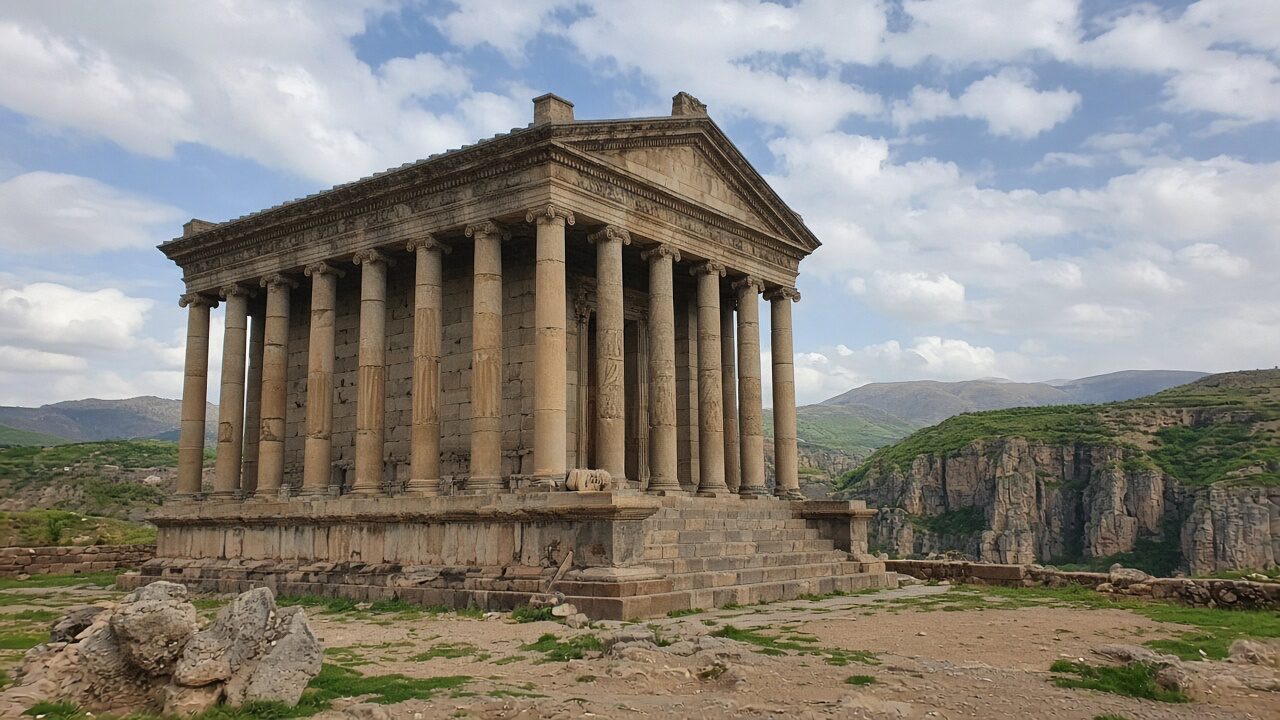
Armenia's tourism authority describes Garni as the country's only standing Greco-Roman style colonnaded building and links its probable first-century construction to King Tiridates I. The twentieth-century reconstruction is part of its story, not a detail to conceal. Circle the building, inspect the masonry and move to the edge of the former fortress for the broad view into the gorge.
One to ninety minutes is enough for most visitors. There is little shade on the plateau, so summer sun makes water and a hat essential. Lunch in the village is more memorable than a rushed road stop: order lavash from a tonir, herbs and cheese, grilled meat and seasonal fruit. Agree a return time with your driver before sitting down, especially if the gorge still lies ahead.
Walk below the Symphony of Stones, not just above it
The basalt formation lies in Garni Gorge below the village. Armenia's official tourism portal directs drivers along the main village road past the temple turn, then downhill; it notes parking, a small admission charge and summer crowding. The overlook near Garni Temple is not a substitute. The scale appears only at river level, where columns hang overhead like the pipes of an enormous organ.
Reserve at least an hour for the approach and walk. The road is rough, riverside stones become slippery after rain and summer dust gets everywhere. Stay clear of unstable edges and leave the basalt where it is. Travellers with limited mobility may enjoy the high gorge view and a longer Garni visit more than the uneven descent. After heavy weather, let local access conditions decide.
Build enough slack for lunch, weather and traffic
A useful outline is departure at 8:30, Geghard around 10:00, Garni before noon, village lunch and the Symphony of Stones after 14:00. Arrival back in Yerevan often falls between 17:00 and 18:00, but traffic and busy parking can add an hour. Do not attach a non-refundable 18:30 performance or tasting to this day.
Spring brings greener slopes, autumn brings softer light, and winter forces a choice because darkness arrives early. In July and August, leave sooner and keep extra water in the car. There is no advantage in moving hotels for the excursion: compare Yerevan hotels and add travel insurance before the trip. Back in town, plan an easy dinner rather than another major sight.
A Yerevan base for an early departure
A convenient base can simplify an early start; compare location before price.
Shape your own Azat Valley day
Set the pace for Geghard, Garni Temple, lunch and the gorge.
Questions before driving into the Azat Valley
How long does Garni, Geghard and the Symphony of Stones take?
Allow eight to nine hours door to door from Yerevan. Geghard needs about an hour, Garni one to ninety minutes and the gorge another hour; driving, lunch and parking take the rest.
Is a private taxi better than a group tour?
A taxi suits families and travellers who want control over each stop; agree the full route, waiting time and final fare in writing. A group is often better value for one person and includes interpretation, but its timetable is fixed.
Do I need hiking shoes for the Symphony of Stones?
No technical footwear is required, but wear shoes with a firm grip. The gorge road and riverside stones can be dusty in summer and slick after rain.
Can young children manage this day trip?
Yes, with snacks, water and one stop shortened. A baby carrier works better than a stroller around Geghard's steps and on the rough approach through Garni Gorge.
Are all three attractions free?
Geghard is an active monastery; Garni Temple and the protected Symphony of Stones section have their own admission arrangements. Fees can change, so check the ticket desks on the day.