
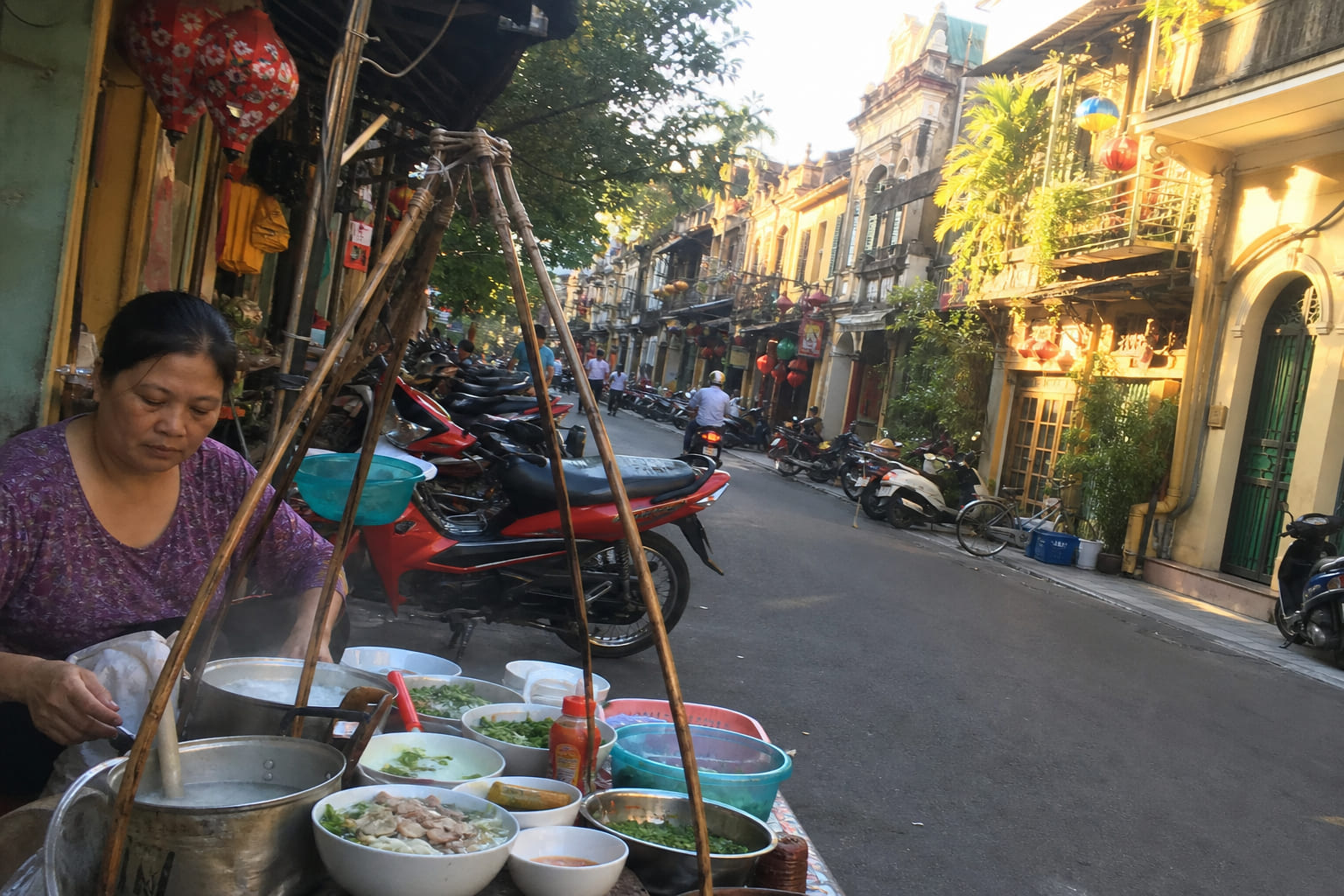
Vietnam rewards independent travelers with low prices, incredible food, and easy visa rules for Russian citizens. The catch is logistics: payments, transport apps, and intercity buses work differently from Europe or even neighboring Thailand. This guide covers what actually matters in 2026.
Before you fly, book flights to Hanoi or Ho Chi Minh City, activate an eSIM, and buy travel insurance. Run through our smartphone travel checklist and read solo travel basics if you are traveling alone. For a Vietnam–Thailand combo, see how to plan a multi-city vacation. Planning a central Vietnam bucket-list stop? Read the Son Doong Cave guide.
Visa and entry rules
Since 15 August 2023, Russian citizens enjoy visa-free entry for up to 45 days — the rule is extended through 2028. Border control requires only a passport valid for at least 6 months and a printed return ticket, which officers frequently ask to see.
Keep a photo of your passport on your phone, but store the original in your hotel safe — see our guide on where to store money while traveling. Solo travelers should also check the solo safety checklist.
How to pay: cards and cash
Russian Visa and Mastercard cards do not work in Vietnam. UnionPay cards from Russian banks are useful mainly for ATM withdrawals at select banks. Local cafés and markets accept only cash dong or local QR payments — tourists must adapt quickly.
| Payment method | Status in 2026 | Recommendation |
|---|---|---|
| Foreign Visa / Mastercard | Works reliably | Best for hotels, supermarkets, and linking to Grab |
| UnionPay (Russian banks) | Limited | Keep only as a backup for ATM cash withdrawals |
| Crypto wallets (Bybit) | Growing in popularity | Useful for P2P exchange into dong and QR payments at advanced merchants |
| Cash (Vietnamese dong) | Essential | Always carry small bills for street food and markets |
Foreign (non-Russian) Visa and Mastercard cards work reliably at hotels, supermarket chains, and when linking to Grab. Withdraw dong at ATMs on arrival and keep small bills for street vendors. For budget meal planning, see cheap eats across Asia and our travel budgeting guide.
Transport and connectivity
Buying a physical SIM at the airport is a waste of money — activate an eSIM before departure so internet works the moment you land. That lets you call Grab immediately instead of paying 2–3× more to taxi touts outside the terminal.
For intercity travel, sleeper buses are the best value — you save on both tickets and a hotel night. Popular legs include Ho Chi Minh City to Da Lat, Nha Trang to Da Nang, and Hanoi to Sapa. Book through Vexere (details below) or buy intercity bus tickets online when you know your dates.
Combining Vietnam with Thailand? Compare our Thailand safety guide and Thailand apps guide — Grab works in both countries with the same account. Ready-made 7-day Bangkok itinerary pairs well with a week in Vietnam.
Health and daily life
Never drink tap water in Vietnam — not even in luxury hotels. Buy bottled water only with an intact factory seal. Bring SPF 50+ sunscreen from home; local mass-market creams often contain whitening ingredients unsuitable for most tourists.
Street food is central to the Vietnam experience. For market hygiene tips across the region, read our Asian street food markets guide. Stick to busy stalls, bottled water, and skip ice at questionable spots.
Top 5 apps for 99% of daily needs
These five apps cover transport, food, tickets, translation, and local communication. Install them before departure and link a working foreign card to Grab on day one.
1. Grab — Transport & food
The absolute monopoly and must-have across Southeast Asia — it replaces Uber, taxi apps, and food delivery in one.
Airport taxis cost 2–3× more than Grab rides. In 2026 the app supports foreign (non-Russian) bank cards, saving you from hunting for change. Order cars, moto-taxis, restaurant delivery, and supermarket groceries.
2. InDrive or Xanh SM — Backup rides
Lifesavers when Grab surge pricing kicks in during peak hours.
InDrive lets you negotiate fares and is available in Russian — often the cheapest taxi option. Xanh SM runs turquoise VinFast electric cars, hands out tourist promo codes (~15% off), and is the only option in some remote regions.
3. Vexere — Intercity tickets
Vietnam is a long country — sleeper buses are the smartest way to move between cities.
The main aggregator for bus and train tickets. Shows carrier ratings, cabin photos, and lets you pick a specific seat (e.g. lower bunk by the window). Pay in cash when boarding.
4. Google Translate — Offline Vietnamese
Vietnamese is tonal — without a visual translator you cannot order food off the tourist trail.
Live camera translation saves you at menus and price tags. Download the offline Vietnamese pack before you leave — signal drops in mountains and on highways. Many travelers also use ChatGPT for context-aware translation.
5. Zalo — Local messenger
Vietnam's WhatsApp equivalent — used by virtually everyone locally.
Bike rentals, Airbnb hosts, and private tour guides communicate through Zalo. Install it before arrival so you are not stuck exchanging Facebook messages on slow airport Wi-Fi.
Plan your Vietnam route without the stress
AlpacaBag maps Hanoi, Ha Long Bay, Da Nang, Hoi An, and Ho Chi Minh City with realistic transfer times and sleeper-bus nights. Start from scratch or pair Vietnam with a ready 3-day Tokyo route for a broader Asia trip — compare flights and hotels for your dates.
Ready-made routes
Routes for your destination
Day-by-day plans you can adapt to your dates right away.

FAQ
Do Russian citizens need a visa for Vietnam in 2026?
No. Since 15 August 2023, Russians enjoy visa-free entry for up to 45 days — extended through 2028. You need a passport valid for at least 6 months and a printed return ticket, which border officers often request.
Do Russian Visa and Mastercard cards work in Vietnam?
Russian-issued Visa and Mastercard do not work. Foreign cards (Kazakh, Armenian, Turkish, etc.) work at hotels, chains, and in Grab. UnionPay from Russian banks is limited to some ATMs. Cash in dong remains mandatory for markets and street food.
Should I buy a SIM card at the Vietnam airport?
Usually no — airport SIMs are overpriced. Activate an eSIM before departure so mobile data works the moment you land. That lets you call Grab immediately instead of negotiating with taxi touts at 2–3× the fair price.
Is tap water safe to drink in Vietnam?
Never — not even in five-star hotels. Buy bottled water with an intact factory seal. Bring SPF 50+ sunscreen from home; local mass-market creams often contain whitening agents unsuitable for tourists.
What apps cover 99% of daily needs in Vietnam?
Grab (rides + food), InDrive or Xanh SM (backup taxis), Vexere (sleeper buses), Google Translate with offline Vietnamese, and Zalo (local messaging). Pair them with a route built in AlpacaBag to map transfers between Hanoi, Da Nang, and Ho Chi Minh City.