
Tourist safety inside Thailand in 2026 depends heavily on knowing local laws and cultural norms. Below are the most important rules — breaking them can mean heavy fines or even jail time.
Before you fly, buy travel insurance with active-holiday coverage, activate an eSIM, run through our smartphone travel checklist, and the digital security checklist (VPN, 2FA, eSIM). For a Bangkok-plus-islands combo, see how to plan a multi-city vacation and the best Thailand travel apps.
Strict laws and bans
In 2026, Thai police run frequent raids in tourist hotspots, so travelers should always carry at least a photo of their passport on their phone. Keep the original in the hotel safe — see our guide on where to store money while traveling.
Thailand enforces lèse-majesté strictly: any criticism, mockery, defamation, or even a torn banknote showing the king can lead to imprisonment. Do not discuss the monarchy on social media, and do not pose with damaged currency «for fun».
Importing, possessing, or using e-cigarettes (vapes), IQOS devices, and hookahs is completely banned and punished with large fines or deportation — even if the device is «for personal use only».
- Drugs — zero tolerance; traces in your blood after a party still carry prison risk.
- Without ID during a raid — fines and a trip to the station until identity is confirmed.
- Smoking in public places is restricted; tourists get fined on beaches too.
New alcohol rules
In May 2026, Thailand introduced selective dry-law measures. An emergency decree fully banned alcohol sales and consumption in transport hubs, changing the format of some tours. Bartenders must also monitor guests more closely, including visual sobriety checks.
Shop sales remain limited to 11:00–14:00 and 17:00–24:00. Religious holidays and mourning days add extra restrictions — check dates in our best travel season guide.
When planning evenings out, build dry hours into your itinerary. Ready-made Bangkok weekend routes and a week-long budget plan help you avoid «bars closed, taxi stuck in traffic» surprises. For guided temple visits, browse local tours with reviews.
Transport and scooter rentals
Scooter rental is the top cause of tourist injuries and police trouble. Legal riding requires an International Driving Permit with category A. Riding without a helmet or while intoxicated triggers instant fines; after an accident, standard travel insurance often refuses treatment if you lacked the correct license category.
- Photograph scooter damage at pickup — otherwise you pay for the previous renter's scratch.
- Passengers need helmets just like drivers.
- Grab and Bolt are safer in rain and at night — see our apps guide.
- Extended insurance with motorbike coverage is cheap compared with a private Phuket clinic bill.
If you still rent, map daylight-only legs in AlpacaBag, skip alcohol, and leave buffer time before sunset. Budget for fines and taxis early — see our travel budgeting guide.
Social behavior and religion
Thais treat religion with deep respect: temples require covered shoulders and knees, and shoes come off before entering a shrine. Never touch a Thai person's head — it is considered sacred — and never point at people or holy objects with your feet.
At Wat Pho or Doi Suthep, wrap rentals are common, but packing modest clothing is smarter. First-time visitors benefit from an excursion with a local guide who explains where to sit and how to greet with a proper wai.
Solo travelers should also read our solo travel safety checklist — accommodation, home contact, and behavior in unfamiliar neighborhoods at night.
Sea safety and hazardous wildlife
Thailand's sea hides serious risks tourists often underestimate. In spring–summer 2026, the Department of Marine Resources recorded major jellyfish blooms, including moon and fire jellyfish, with densities up to 100 individuals per square meter off Phuket.
In Krabi province, Portuguese man-of-war siphonophores closed several national-park beaches. Contact with tentacles — even on beached animals — causes severe burns. Never rinse with fresh water; lifeguards recommend seawater or vinegar only.
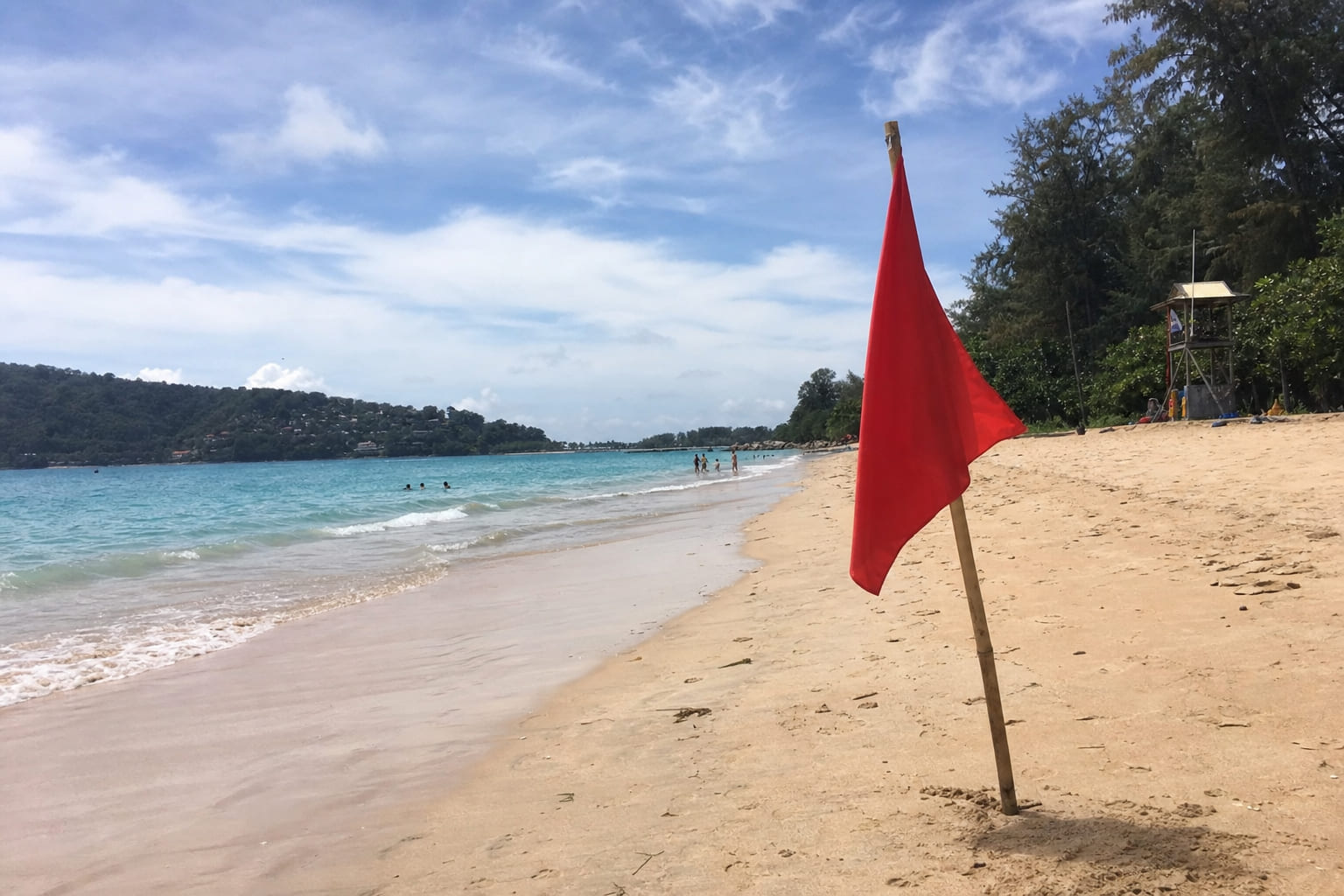
Rip currents are the second invisible hazard. Northern Phuket beaches introduced official swim bans with fines up to 100,000 baht in 2026. If caught in a rip, do not fight it — swim parallel to shore until you exit the flow. Watch beach flags: red means absolutely no entry.
| Beach flag | Meaning | What to do |
|---|---|---|
| Red | No swimming — rip currents or jellyfish | Stay out of the water |
| Yellow | Swim with caution | Stay near shore, watch children closely |
| Red-yellow | Moderate risk | Swim only if you are a confident swimmer |
| Green | Safe conditions | Normal swimming, but flags can change within an hour |
Rash guards (lycra swim suits) strongly reduce accidental jellyfish contact — especially for children. More beach tips appear in our China beach vacation guide. For safe, budget-friendly meals after swimming, see cheap eats across Asia.
Plan a safer itinerary upfront
AlpacaBag helps you schedule flights, transfers, and beach days around jellyfish season, alcohol hours, and temple visits. Start with a ready 3-day Bangkok route or build your own — compare flights and hotels for your dates.
Ready-made routes
Routes for your destination
Day-by-day plans you can adapt to your dates right away.

FAQ
Can you bring a vape to Thailand?
No. Importing, possessing, or using e-cigarettes, IQOS devices, and hookahs is illegal. Violations lead to heavy fines or deportation. Do not count on tourist exceptions.
When can you buy alcohol in Thai shops?
Retail sales are allowed only from 11:00 to 14:00 and from 17:00 to 24:00. After the 2026 emergency decree, alcohol sales and consumption in transport hubs are fully banned.
Do you need a license to rent a scooter in Thailand?
Yes — an International Driving Permit with category A is required for legal riding. Without it, police fines are the smaller problem: travel insurance often refuses medical bills after an accident.
What should you do after a Portuguese man-of-war sting?
Do not rinse with fresh water — it worsens the burn. Use seawater or vinegar, remove tentacles with a glove or stick, and seek lifeguards. Beached specimens remain dangerous.
How do you prepare for a safe Thailand trip?
Save a passport photo on your phone, buy extended travel insurance, install the apps from our Thailand guide, and build a day-by-day route in AlpacaBag to account for transfers, temple dress codes, and dry alcohol hours.