
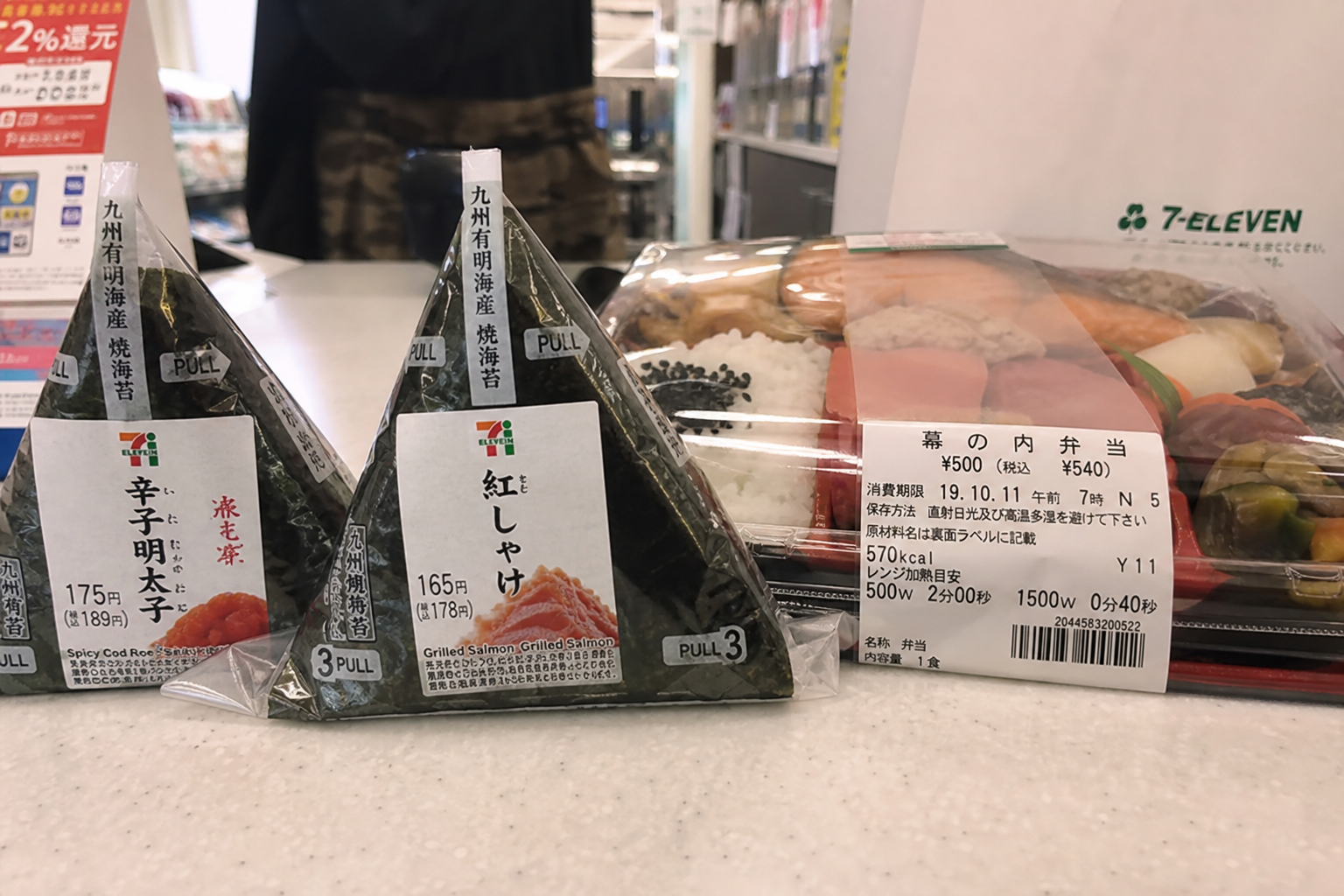
In Europe, budget snacking often means discount supermarkets. In Asia, round-the-clock convenience stores (konbini) dominate. In Japan, South Korea, China, Thailand, and Vietnam they are everywhere — offering a huge range of fresh, delicious, and cheap ready-to-eat food.
Saving on meals is one of the fastest ways to stay on budget. See our guide to saving money while traveling for all expense categories, and use the trip budget calculator to set a daily food limit before you book flights.
Japan and South Korea: store-bought food culture
In Japan and Korea, buying a ready-made lunch at a supermarket is not a compromise — it is part of the food culture. Japan’s leaders are 7-Eleven, FamilyMart, and Lawson. In South Korea, add local giants CU, GS25, and Emart24.
Ready lunch boxes (bento / dosirak)
In Japan these are famous bento boxes; in Korea, dosirak. Balanced sets of rice, meat or fish, pickled vegetables, and sauces. A full meal costs 300–600 yen in Japan or about 4,000–5,000 won in Korea — roughly half a simple café lunch.
Onigiri and kimbap triangles
Rice triangles with fillings (tuna, salmon, chicken) wrapped in crisp nori seaweed. Perfect on-the-go snacks at about 100–150 yen or 1,000–1,500 won each.
Hot counter snacks
At the register you will always find hot items: Japanese yakitori skewers, crispy karaage chicken, steamed buns (nikuman), and corn dogs.
Hack: discounts after 7 p.m.
At Japanese supermarkets (e.g. OK Supermarket) and basement floors of department stores (depachika), fresh prepared food and sushi sets get 20–50% off after 7 p.m. When planning a multi-city route, schedule evening shopping near your lodging to avoid tourist-zone dinner markups.
China, Thailand, and Vietnam: stores meet street food
In Southeast Asia and China, the line between supermarket food and street food is blurred. Street food is already cheap, but chain stores offer AC, microwaves, and predictable prices.
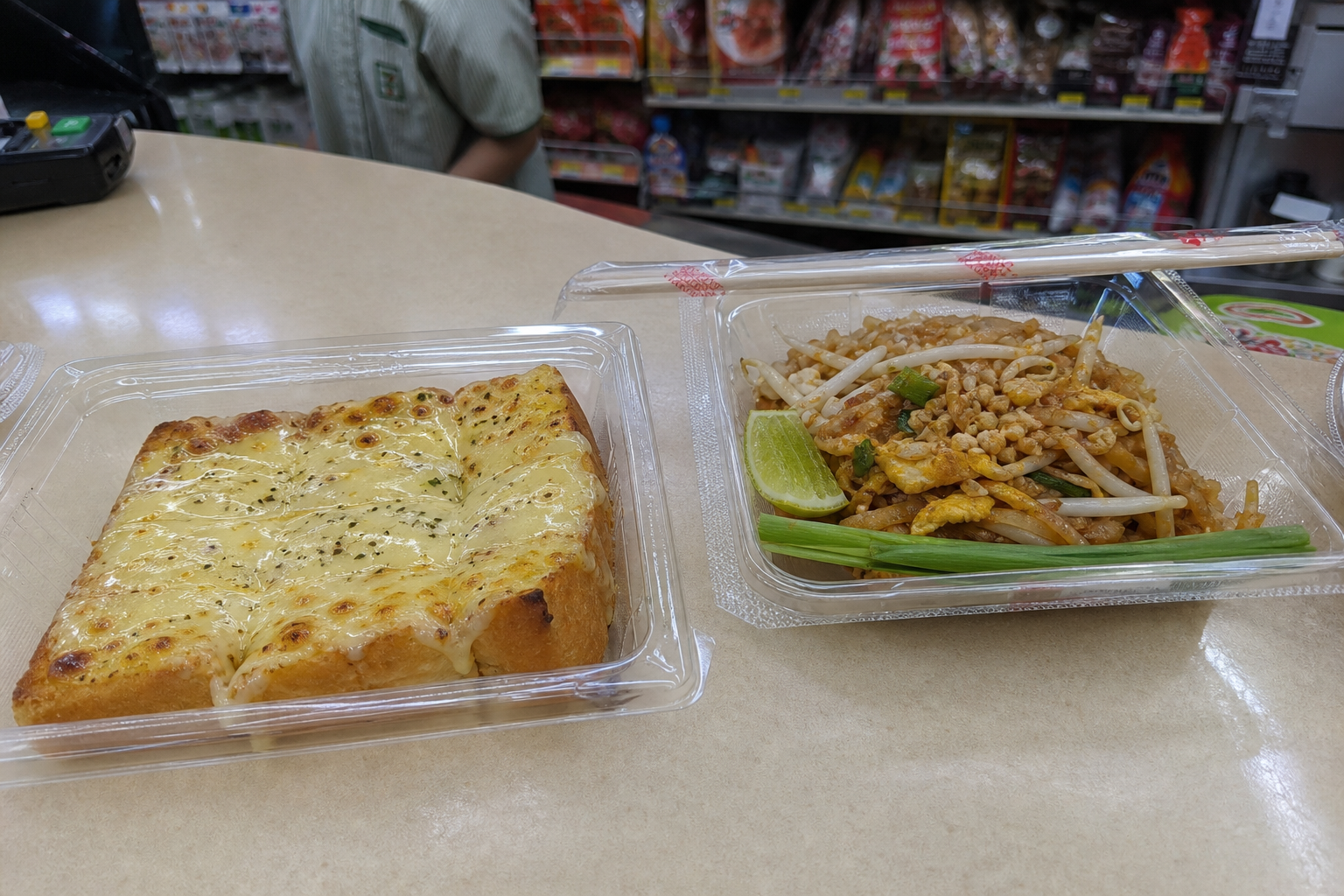
Thailand (7-Eleven)
A tourist favorite. Hot cheese-and-ham toast (heated at the register), ready pad thai or basil pork rice, plus sausages, iced coffee, and desserts. A filling snack rarely exceeds 50–80 baht. For Bangkok timing and season tips, see when to travel: top 25 destinations.
Vietnam (WinMart, Circle K, FamilyMart)
Find affordable filled baguettes (bánh mì) or instant noodles. Most stores have hot water, tables, and chairs — add sausages or boiled eggs for a meal that costs about $1–2.
China (Lawson, 7-Eleven, local chains)
The assortment leans local: hot steamed baozi buns, spicy noodles, tea- or soy-braised eggs, and portioned fruit.
Plan an Asia route with food costs in mind
In AlpacaBag, enter cities, dates, and a budget trip type — the service builds logistics, a day-by-day plan, and helps you avoid overspending at every stop.
How to save at Asian convenience stores
Unlike European meal deals (sandwich + drink + snack), Asia loves “1+1” or “2+1” promos. At Korean CU and GS25 you often buy two kimbap triangles or two drinks and get a third free. Watch for bright tags near the register.
Nearly every Asian mini-market has self-service zones with hot water, microwaves, and free chopsticks — so you can assemble a hot lunch anywhere. Before you fly, activate an eSIM with data to find the nearest store and translate menus.
Food formats compared across Asia
| Country | Where to buy | Go-to snack | Typical price |
|---|---|---|---|
| Japan | 7-Eleven, Lawson, FamilyMart | Bento, onigiri, yakitori | ¥100–600 |
| South Korea | CU, GS25, Emart24 | Dosirak, kimbap, corn dogs | ₩1,000–5,000 |
| Thailand | 7-Eleven, Big C Mini | Toast, pad thai, sausages | ฿50–80 |
| Vietnam | Circle K, WinMart | Noodles + eggs, bánh mì | ₫25,000–50,000 |
| China | Lawson, local chains | Baozi, eggs, noodles | ¥5–25 |
Other budget tips
- Get travel medical insurance — stomach issues in a new country happen more often than travelers expect.
- At restaurants and markets, check our tipping guide by country: no tips in Japan, optional in Thailand.
- Mix paid activities with free options from free things to do in any city.
- On a solo trip, convenience stores are safe and well-lit late at night.
- Book lodging near metro or BTS lines — easier konbini runs and less taxi spend.
- For the European leg of your trip, see how to eat cheap on a Europe trip without a kitchen.
Ready-made routes
Routes for your destination
Day-by-day plans you can adapt to your dates right away.

FAQ
How much does a full lunch at a Japanese konbini cost?
A ready-made bento or lunch box at 7-Eleven, FamilyMart, or Lawson usually runs 300–600 yen (roughly $2–4). That is about half the price of a simple café meal and includes rice, protein, and vegetables.
Can you eat only from supermarkets and convenience stores in Asia?
Yes. In Japan and Korea, store-bought meals are part of the food culture, not a fallback. In Thailand and Vietnam, konbini-style shops complement cheap street food — especially on rainy days, late nights, or when you want AC and a microwave.
Which is cheaper — street food or convenience stores?
At Bangkok and Hanoi markets, street food is often cheaper, but convenience stores win on hygiene, stable pricing, and quick reheating. The sweet spot is mixing both and budgeting roughly $4–8 per person per day for snacks.
How do I build food costs into an Asia trip budget?
Use the travel budget calculator and AlpacaBag wizard: choose a “budget” trip type and the service will spread costs across days with logistics between cities.