
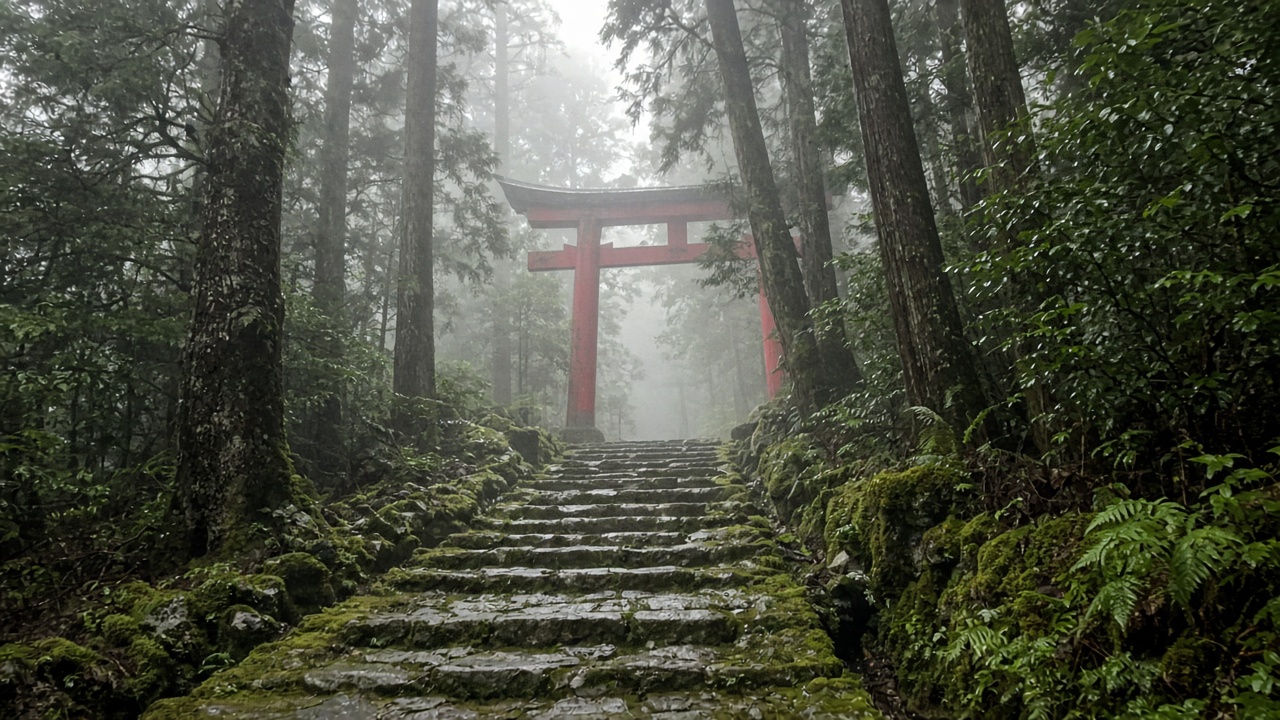
Kumano Kodo is a network of pilgrimage routes on the Kii Peninsula (mostly Wakayama Prefecture), part of the UNESCO "Sacred Sites and Pilgrimage Routes in the Kii Mountain Range". The spiritual core is the three grand shrines — Hongu, Hayatama, and Nachi — linked by forest paths that feel closer to a trek than a city temple hop (for Kyoto temples, see our Kyoto temples guide). Prefer alpine scenery instead? Compare with the Japanese Alps route.
Slot the trek after 3 days in Osaka or 3 days in Kyoto, or wrap a longer Kansai loop with 7 days in Osaka and 7 days in Kyoto. Check whether a rail pass pays off in our JR Pass calculator, and send big luggage ahead with the hotel-to-hotel luggage guide.
Book flights into Osaka (KIX), a hotel in Osaka, Tanabe, or Hongu, a Japan eSIM for offline maps, and travel insurance that covers hiking. Local guided day walks help if you want a shrine-focused day without full luggage.
Trail comparison: which Kumano route?
Four named approaches reach the Kumano Sanzan. For a first pilgrimage vacation, choose Nakahechi — marked, lodge-friendly, and easy to exit by bus.
| Route | Distance / feel | Days | Notes |
|---|---|---|---|
| Nakahechi | ~38 km (classic Takijiri–Hongu core) | 3–5 days | Best first pilgrimage: marked trails, lodges, buses to Hongu & Nachi |
| Ohechi | Coastal ~90+ km | 5–7+ days | Sea views and cliffs; fewer overnight options — plan logistics carefully |
| Kohechi | ~70 km mountain link | 4 days | Steep Koyasan–Hongu traverse for experienced hikers only |
| Iseji | East Kii coast to Ise | Multi-day | Long coastal approach; combine with Ise Jingū if you have spare days |
How to get there from Osaka or Kyoto
From Osaka: JR Limited Express Kuroshio (or similar) to Kii-Tanabe, then a local bus to Takijiri-oji — the usual Nakahechi trailhead (~40–50 minutes). From Kyoto, change in Osaka or Shin-Osaka. Base nights before the trek work well in central Osaka hotels or a Kyoto ryokan.
Buy reserved seats in peak foliage season. If your Japan itinerary is mostly Kansai + Kumano, a full JR Pass rarely pays — use the calculator and keep a day-by-day plan in AlpacaBag.
Nakahechi day-by-day (3–5 days)
Distances and overnight villages vary by fitness and lodge availability. Book minshuku / pensions early — many have few rooms.
- Day 1 — Takijiri-oji → Takahara (or Chikatsuyu). Steep opening climb through cedar forest; first stamp office atmosphere. Overnight in Takahara for sunset views, or push farther if you started early.
- Day 2 — Takahara / Chikatsuyu → Hongu area. Classic ridge and valley walking to Kumano Hongu Taisha. Visit the Oyunohara torii on the old riverbed if energy allows.
- Day 3 — Hongu → Yunomine or Kawayu onsen. Short sacred-loop day with hot springs — recovery before the Nachi leg. Book onsen lodging near Hongu.
- Day 4 — Bus / walk toward Nachi. Many walkers combine bus hops with the Daimonzaka stone staircase to Kumano Nachi Taisha and the waterfall. Finish in Nachi or Shingu.
- Optional Day 5 — buffer or Hayatama. Rain day, slower shrine time, or a side trip to Kumano Hayatama Taisha in Shingu before returning to Osaka/Kyoto.
Where to sleep
On trail: family-run lodges with dinner included — cash and early check-in norms are common. Gateways: Osaka or Kyoto hotels before/after; mid-trek Yunomine and Kawayu for onsen recovery. Compare city bases in our Osaka center hotels and Kyoto ryokans guides.
What to pack (and what to ship)
Walk with a daypack only: trail shoes with grip, rain shell, layers, cash, stamp book, water, and blister care. Ship the hard suitcase between Osaka/Kyoto hotels — see how to send luggage hotel to hotel in Japan and how to pack a suitcase for a long trip.
Season, difficulty & pilgrim etiquette
Expect roots, mud after rain, and continuous ups and downs — Nakahechi is moderate, not a stroll. Stay on marked paths, keep voices low near shrines, and do not leave offerings that become litter. Dual-pilgrim stamps (Kumano ↔ Camino de Santiago) are a nice optional ritual, not a requirement.
Typhoon season can close buses and lodges: keep a flexible buffer day in AlpacaBag and avoid forcing wet ridge walks.
Build: Osaka — Tanabe — Nakahechi — Nachi
Tell AlpacaBag "Kumano Kodo Nakahechi, 4 days, lodges + onsen" — get transfers, overnight hubs, and rain buffers hour by hour.
Ready-made routes
Routes for your destination
Day-by-day plans you can adapt to your dates right away.
FAQ
How many days do I need for Kumano Kodo Nakahechi?
Most first-timers walk 3–5 days on the Nakahechi: Takijiri → Takahara/Chikatsuyu → Hongu → Yunomine or Kawayu onsen → Nachi. Add Osaka or Kyoto nights before and after using our budget Osaka and Kyoto SEO routes.
Do I need a JR Pass for Kumano Kodo?
Usually no for a short Kansai + Kumano trip. JR Limited Express Kuroshio to Kii-Tanabe is often cheaper as a point-to-point ticket. Run the numbers in our JR Pass calculator before buying a pass.
Can beginners hike Kumano Kodo?
Yes on Nakahechi if you are fit for daily 10–20 km on roots and stone steps. Kohechi is much harder. Pack light — send the suitcase hotel-to-hotel before you start.
When is the best season for Kumano Kodo?
March–May and October–November: cooler air and clearer paths. Summer is hot and humid with typhoon risk; winter is quieter but some lodges close — book ahead.
Where should I stay before and after the trail?
Osaka or Kyoto make the best gateways. Sleep near Tanabe or Takahara on night one of the trek, then Hongu / Yunomine / Kawayu mid-route, and Nachi or Shingu at the end.
How does AlpacaBag help plan Kumano Kodo?
Describe “Osaka — Kii-Tanabe — Nakahechi 4 days — Nachi — Kyoto” in the planner. You get a day-by-day PDF with transfers, overnight hubs, and buffer time for rain.