
Museum, circuit and road details are current as of August 2026. Admission, prices, timetables, booking rules and closures can change, so open the official source before every visit. Prices appear only where a published rate could be confirmed.
For the wider trip, compare flights to Japan, hotels in Tokyo, Nagoya or Hakone and an eSIM for navigation. If you are not driving, use the Tokyo route hub or this guide to Tokyo beyond Shibuya Crossing.
Contents
Manufacturer museums and factory tours
Seven collections cover everything from Toyota’s industrial history to book-ahead Mazda and Subaru factory visits.
1. Toyota Commemorative Museum of Industry and Technology
Nagoya
Start here to understand Toyota beyond its cars. Working machinery, the company’s textile origins and the transition into vehicle production make this far richer than a showroom.
| Price | Access | Important |
|---|---|---|
| Check the current admission fee on the official website. | Close to central Nagoya and easy to combine with the station area. | Do not confuse it with the Toyota Automobile Museum: they are separate museums. |
2. Toyota Automobile Museum, Nagakute
Nagakute, Aichi Prefecture
This broad international collection traces automotive development across brands, countries and eras. It is a useful current alternative to the former Toyota Mega Web in Tokyo.
| Price | Access | Important |
|---|---|---|
| Adult admission: ¥1,200. | Travel from Nagoya by train and Linimo; allow at least half a day. | Toyota Mega Web in Odaiba is closed and is no longer a travel option. |
3. Nissan Global Headquarters Gallery
Yokohama
The public gallery near Yokohama Station displays current models, concepts and selected heritage cars, making it an easy visit without renting a vehicle.
| Price | Access | Important |
|---|---|---|
| Confirm current visitor conditions before going. | Walk through the covered connection from Yokohama Station. | This is not the Nissan Heritage Collection in Zama; access arrangements are different. |
Source: Nissan Gallery official page.
4. Nissan Heritage Collection, Zama
Zama, Kanagawa Prefecture
The collection preserves hundreds of Nissan road and racing cars, including significant Skyline and Z models, but it does not operate like a walk-in city museum.
| Price | Access | Important |
|---|---|---|
| Check the terms during booking. | Advance booking is mandatory, and the tour is conducted in Japanese. | Do not arrive without confirmation; arrange interpretation in advance if you do not speak Japanese. |
Source: Nissan Heritage tour official page.
5. Honda Collection Hall
Mobility Resort Motegi, Tochigi Prefecture
Honda cars, motorcycles and competition machines share one strong collection focused on engineering experiments and motorsport history.
| Price | Access | Important |
|---|---|---|
| There is no extra hall admission, but resort entry and parking are charged; rates vary. | The complex is remote, so a car is practical; verify transport and the event calendar. | No separate hall fee does not mean the whole complex or its parking is free. |
6. Mazda Museum
Hiroshima
The factory museum explains Mazda’s rotary-engine story, design and production, and adds worthwhile industrial context to a Hiroshima trip.
| Price | Access | Important |
|---|---|---|
| Free, but advance booking is required. | An English tour is available to individual visitors; use the time and meeting point in your booking. | Do not expect walk-in access, even if you are already near the plant. |
7. Subaru Visitor Center / Yajima Plant
Ota, Gunma Prefecture
The main draw is seeing Subaru’s production process rather than browsing a conventional museum independently.
| Price | Access | Important |
|---|---|---|
| Confirm conditions and any charges when applying. | Visits are available only as advance-application factory tours. | International visitors need an accompanying interpreter; apply well ahead. |
Source: Subaru official booking system.
Circuits and motorsport complexes
Plan Fuji, Suzuka and Motegi around their official calendars: events can change admission, parking and open areas.
8. Fuji Speedway and Fuji Motorsports Museum
Oyama, Shizuoka Prefecture
One trip combines an international motorsport collection with an active circuit near Mount Fuji. Clouds can hide the mountain completely, so the view is never guaranteed.
| Price | Access | Important |
|---|---|---|
| Museum online: ¥1,600 weekdays / ¥1,800 weekends; at the door: ¥1,800 / ¥2,000 per adult. | Driving from Tokyo is easiest; public transport involves connections. | Circuit entry, museum admission and event tickets may be separate; check the calendar. |
9. Suzuka Circuit
Suzuka, Mie Prefecture
The famous figure-eight circuit is worth considering even outside a major race, though available viewing areas and activities depend on the date.
| Price | Access | Important |
|---|---|---|
| Prices vary by event and area; check the official website. | Base yourself in Nagoya or near Shiroko Station and allow extra time on race days. | Do not assume a museum or unrestricted paddock access; the program changes. |
Source: Suzuka Circuit official website.
10. Mobility Resort Motegi
Motegi, Tochigi Prefecture
The track, Honda Collection Hall and family activities form a complete motorsport complex that deserves a full day.
| Price | Access | Important |
|---|---|---|
| Admission and parking depend on the date and event; check official rates. | Options without a car are limited; verify seasonal bus services. | Twin Ring Motegi is the former name; since 2022 it has been Mobility Resort Motegi. |
Scenic driving and riding roads
Hakone, Izu and Okutama are public roads, not racetracks. Respect speed limits, weather restrictions and other road users.
11. Hakone Turnpike, Ashinoko Skyline and Lake Ashi
Hakone
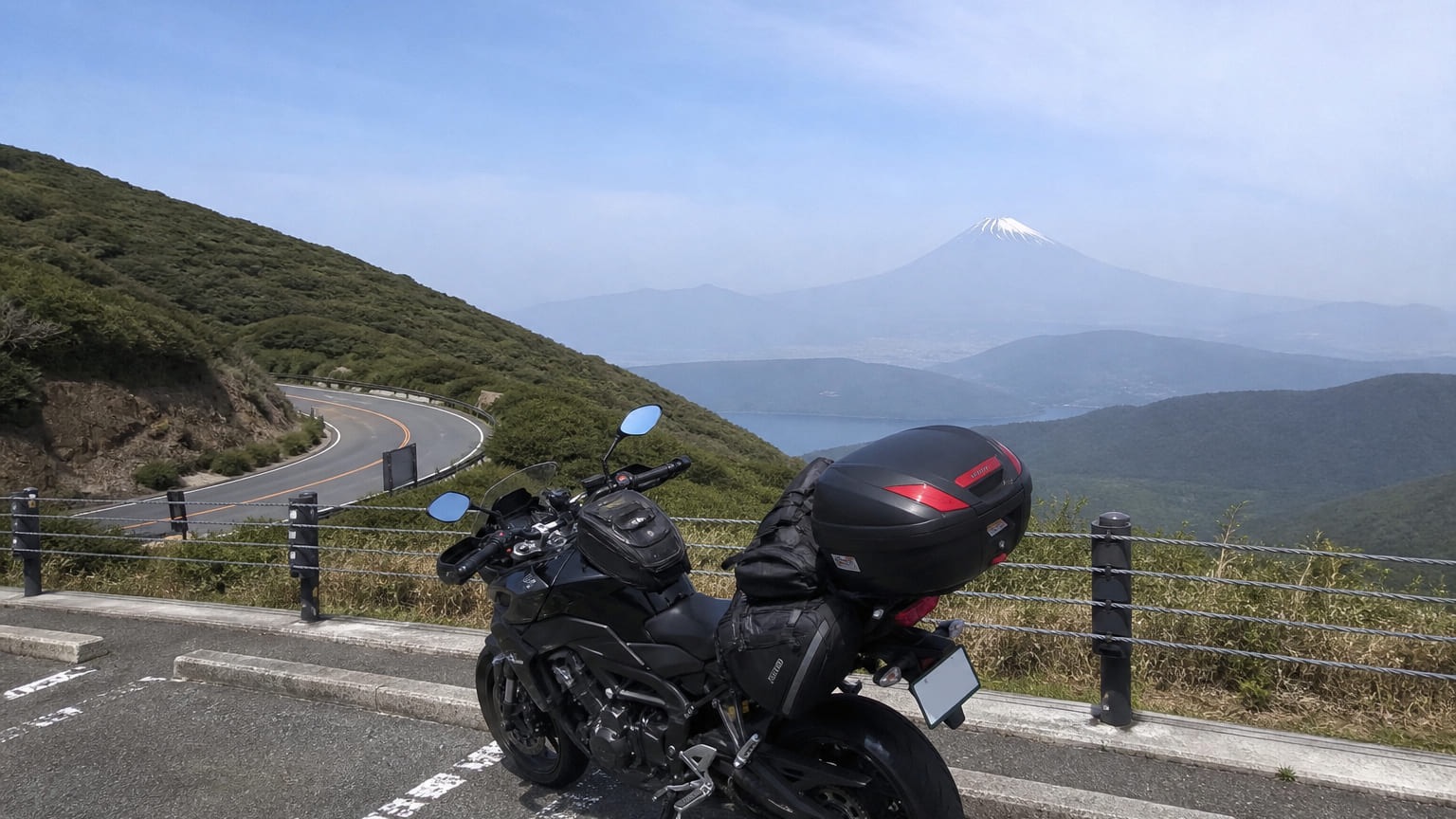
Toll mountain roads, Lake Ashi and designated overlooks create an excellent varied drive or ride. Mount Fuji may still be invisible behind clouds.
| Price | Access | Important |
|---|---|---|
| Road tolls change; consult the official pages before departure. | Leave early and avoid fog, ice and peak weekend traffic. | These are public roads: speeding, stopping outside designated areas and filming while driving are dangerous. |
Source: Hakone Turnpike official website.
12. Izu Skyline, Nishi-Izu and Cape Irozaki
Izu Peninsula
The route links the Izu Skyline plateau, west-coast scenery and Cape Irozaki. It works best over two days rather than as a rushed Tokyo loop.
| Price | Access | Important |
|---|---|---|
| Check official toll-road and parking rates. | Stay overnight on the peninsula and leave time for slow, twisting roads. | Rain, wind and winter weather can change conditions quickly; obey all restrictions. |
Source: Izu Skyline official website.
13. Okutama Shuyu Road
Okutama, western Tokyo
This mountain road beside Lake Okutama is a nearby nature escape that pairs well with a walk and designated viewpoints.
| Price | Access | Important |
|---|---|---|
| Open road sections are free; parking and facilities may charge separately. | Check closures, gate hours and road conditions on the day. | Do not treat the bends as a track: expect oncoming traffic, cyclists and wildlife. |
Expressway parking areas
Daikoku and Umihotaru are working parking areas, not guaranteed attractions or organized car meets.
14. Daikoku PA
Yokohama, Shuto Expressway
This working parking area sometimes attracts interesting visitor cars, but it is not an official car meet and no particular turnout is guaranteed.
| Price | Access | Important |
|---|---|---|
| There is no entry ticket; expressway tolls and vehicle costs apply. | Vehicle-only access from the Shuto Expressway; there is no pedestrian entrance. | Unexpected closures happen. Do not rely on a taxi without a safe exit plan, and never disrupt PA operations. |
Source: official Daikoku PA page.
15. Umihotaru PA
Tokyo Bay Aqua-Line
This five-level parking area in Tokyo Bay is notable for Aqua-Line engineering, sea views and its small engineering display.
| Price | Access | Important |
|---|---|---|
| Parking is free; the Tokyo Bay Aqua-Line toll, food and other services are charged separately. | Reach it via the tolled Aqua-Line between Kawasaki and Kisarazu. | It is a separate bay detour, not a sensible continuation of a Fuji Speedway trip. |
Source: Umihotaru PA official website.
Three realistic itineraries
These outlines set a sensible pace but do not replace checking circuit calendars, weather and closures. Major events can add substantial travel time.
| Route | Time | Plan | Caveat |
|---|---|---|---|
| One day: Tokyo to Fuji | 1 day | Leave Tokyo early → Fuji Motorsports Museum → any spectator areas open at Fuji Speedway → return or stay near Gotemba. | Check the circuit calendar first. Do not add Umihotaru “on the way”; it requires a separate Aqua-Line detour. |
| Two days: Hakone and Izu | 2 days | Day 1: Hakone Turnpike, Lake Ashi and an overnight stay. Day 2: Izu Skyline, the west coast or Cape Irozaki—without trying to cover all three. | Shorten the route in fog, heavy rain, strong wind or winter restrictions. |
| Two or three days: Nagoya and Suzuka | 2–3 days | Day 1: Toyota Commemorative Museum. Day 2: Toyota Automobile Museum in Nagakute. Day 3, or a separate full day: Suzuka Circuit. | Book accommodation early for race weekends; Nagoya or the Suzuka area makes a practical base. |
Compare hotels and ryokan in Hakone and Izu before committing to mountain-road days. For a separate, public-transport-friendly nature trip, save the Japanese Alps guide.
Seasons and weather
- Spring and autumn are usually comfortable, but blossom and foliage weekends create congestion around Hakone and Izu.
- Summer brings heat, downpours and typhoons; winter can bring ice, snow and high-elevation motorcycle restrictions.
- A Mount Fuji view is never guaranteed. Cloud can hide the mountain even when Tokyo has pleasant weather.
- Check the Fuji, Suzuka and Motegi calendars: events affect tickets, parking and which areas are open.
Use current information from Fuji Speedway, Ashinoko Skyline and the Tokyo Bay Aqua-Line, rather than old prices in reviews.
Rental, licences, ETC and road safety
Japan drives on the left. Make your first kilometres on quiet roads, avoid collecting a vehicle immediately after a long flight, and never imitate performance videos on public roads.
- Licences: do not assume a Russian or any other foreign licence, or just any “international permit,” is eligible. Before paying, check Japan’s official rules for the issuing country and confirm the documents with the rental company.
- ETC: an electronic card simplifies expressway tolls. Ask the rental company whether one is supplied and how the final charges are settled.
- ETCX: this is a separate payment system at supported facilities, not a universal ETC replacement. Check each road’s compatibility.
- Insurance: review rental vehicle cover, deductibles and roadside assistance separately. General travel insurance does not replace car or motorcycle rental insurance.
- Connectivity: carry an offline map, charging cable and working eSIM for road alerts.
Park only where permitted, never film while driving and turn back when a road is closed. For car-free Tokyo days, explore real-life anime locations or browse this guide to Japanese souvenir shops.
Build your Japan motoring route
Choose cities, museums and a comfortable pace, then let AlpacaBag arrange the stops without unnecessary backtracking.
Ready-made routes
Routes for your destination
Day-by-day plans you can adapt to your dates right away.
FAQ
Can I visit the Nissan Heritage Collection without booking?
No. The Zama collection requires advance booking, and its tour is in Japanese. The public Nissan Global Headquarters Gallery in Yokohama is a separate, easier-to-access venue.
How much is Fuji Motorsports Museum in 2026?
As of August 2026, adult online tickets cost ¥1,600 on weekdays and ¥1,800 on weekends; door prices are ¥1,800 and ¥2,000. Recheck before buying.
Can I walk into Daikoku PA?
No. Daikoku PA is accessible only by vehicle from the Shuto Expressway. It is not an official car meet, it may close unexpectedly, and an interesting turnout is never guaranteed.
Will my Russian or other foreign driving licence be accepted?
There is no universal answer. Before paying for a rental, check Japan’s official eligibility rules for the country that issued your national licence and confirm the recognized supporting document with the rental company.
When is the best time to ride or drive Hakone and Izu?
Spring and autumn weekdays are often comfortable, but fog, rain, wind and winter ice remain possible. Check road notices that morning and never plan around a guaranteed Mount Fuji view.
Is Toyota Mega Web in Tokyo still open?
No. Toyota Mega Web in Odaiba is closed. Choose the Toyota Automobile Museum in Nagakute for a broad car collection or the Toyota Commemorative Museum in Nagoya for manufacturing history.