
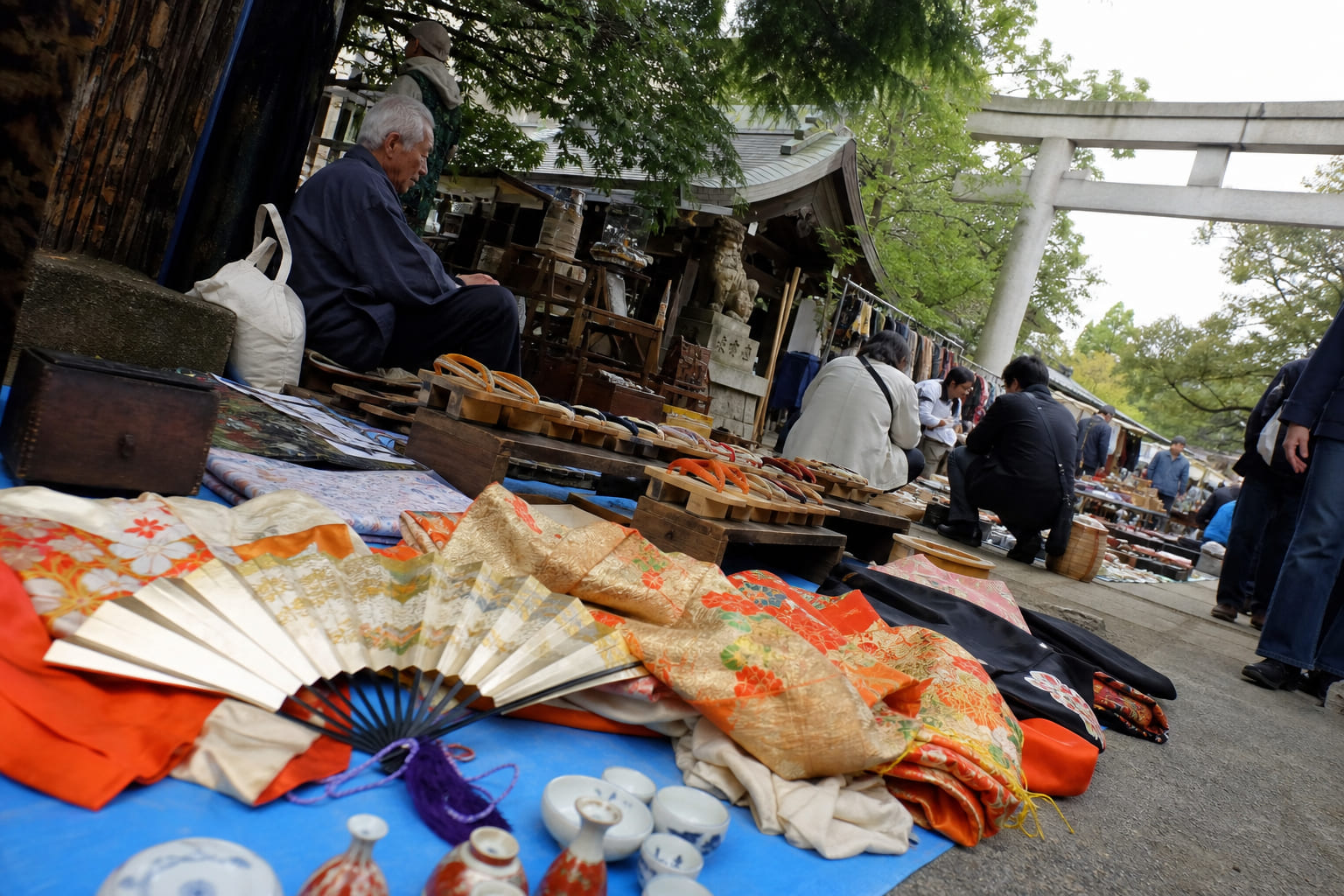
Flea markets in Japan and South Korea are more than bargain hunting — they are cultural spaces where rare artifacts and vintage goods sell for far less than in tourist boutiques. Japanese markets often unfold beside ancient shrines on fixed calendar days; Korean brocantes are permanent mazes of trading streets open daily.
Budget your shopping spree in our travel budget calculator, book flights to Tokyo or Seoul and a metro-adjacent hotel — hauling heavy antiques across town is no fun. More savings tips in our how to save money while traveling guide.
Flea markets in Japan
Japanese brocantes are known for excellent item condition and deep stocks of historical antiques. Bargaining is acceptable but rarely as aggressive as elsewhere in Asia. For fixed-price alternatives, see our Tokyo souvenir shops guide.
Best buys
- Vintage kimono & yukata: silk kimono from $200–300 — a fraction of boutique prices.
- Traditional fans & woodblock prints: iconic souvenirs; antique folding fans with tassels from ~$50.
- Ceramics & tableware: handmade porcelain, sake cups, and teapots (minor flaws, often under ¥500).
- Armor & collectibles: armor fragments, miniature swords, and old coins for collectors.
Japan flea markets at a glance
| Market | Location | Hours | Main assortment |
|---|---|---|---|
| Oi Racetrack | Tokyo, Oikeibajo Station | Weekends | Paintings, vases, vintage kimono, geta sandals |
| Hanazono Shrine | Tokyo, Shinjuku | Every Sunday (dawn to dusk) | Furniture, antique scrolls, woodblock prints |
| Yasukuni Shrine | Tokyo, Kudanshita (exit 1) | Saturdays (closed all July) | Traditional fans, Japanese tableware, souvenirs |
| Osu Kannon Temple | Nagoya, Sakae district | 18th and 28th of each month | Swords, armor, ancient coins, clay pottery |
| Setagaya (Boroichi) | Tokyo, Kamimachi to Setagaya | Jan 15–16 and Dec 15–16 only | Antiques, plants, traditional clothing, footwear |
Pair Hanazono Shrine market with offbeat Tokyo neighborhoods in a 3-day Tokyo weekend itinerary, or slot shopping into a 3-day budget-friendly Tokyo route.
Flea markets in South Korea
Korean markets are loud, unpredictable, and packed with everyday and technical goods from past decades. Prices swing wildly — active bargaining is essential. Refuel with our Japan & Korea food guide or save on meals via budget snacks across Asia.
Best buys
- Used electronics: film cameras, radios, TVs, and instruments — also see our Asia electronics shopping guide.
- Vintage fashion: 80s–90s Asian and American brands for a bold street look.
- Regional crafts: Gyeongsang ceramics, paper goods, and wooden souvenirs from across Korea.
South Korea flea markets at a glance
| Market | Location | Hours | Main assortment |
|---|---|---|---|
| Seoul Folk Flea Market | Seoul, Sinseol-dong (lines 1/2, exit 9) | 10:00–19:00 (closed 2nd & 4th Tuesday monthly) | Rare electronics, coffee grinders, regional Korean goods |
| Dongmyo | Seoul, near Dongmyo Station | Daily (busiest on weekends) | Street vintage fashion, cheap tech, chaotic stalls |
Add Dongmyo to a Seoul weekend itinerary and Seoul Folk to a 3-day budget Seoul plan. K-drama fans should read our filming locations guide; for beauty hauls, see where to buy Korean cosmetics.
The art of bargaining
In Japan
Aggressive haggling can feel disrespectful. Politely ask for a small discount when buying multiple items from one vendor. The best hack is arriving an hour before closing — sellers often drop prices rather than repack heavy antiques.
In South Korea
Bargaining is expected: opening prices are unpredictable and often inflated. Ask for 20–30% off without hesitation. Learn «kkakka juseyo» (깎아 주세요 — please give a discount). If the vendor refuses, politely say goodbye and start walking away — a compromise price often follows.
Cash is mandatory
Outdoor stalls rarely take cards. Carry yen or won in small bills and never ask for change from a large note right after a bargain. Read our travel money safety guide for storage tips; cover valuable finds with travel insurance.
Plan a route with flea markets
Add Tokyo and Seoul, pick weekend dates, and tag “markets” — AlpacaBag maps shrine brocantes, shopping streets, and food stops day by day with a PDF and map.
Practical tips before you go
- Check the calendar: Yasukuni market is closed all July; Setagaya Boroichi runs only Jan 15–16 and Dec 15–16.
- Seoul Folk closes every 2nd and 4th Tuesday — plan around it.
- Leave suitcase space — see our long-trip packing guide.
- Combine Japan and Korea via a multi-city vacation plan; for quieter Tokyo days, try our 3-day off-the-beaten-path Tokyo route.
- Anime fans can follow up with our real-life anime locations guide; book an guided city tour if logistics feel overwhelming.
Ready-made routes
Routes for your destination
Day-by-day plans you can adapt to your dates right away.
FAQ
What is the best day to visit Tokyo flea markets?
Most Tokyo markets run on weekends: Hanazono Shrine on Sundays, Yasukuni on Saturdays (except all of July). Oi Racetrack opens Saturday and Sunday. Arrive early — the best finds appear in the first hours.
Can you bargain at Japanese flea markets?
Aggressive haggling is frowned upon, but politely asking for a discount when buying several items from one vendor is fine. Prices often drop in the last hour before closing — sellers prefer not to pack heavy antiques back home.
Which Seoul market is best for vintage clothing?
Dongmyo is the go-to for street vintage and chaotic stalls with 80s–90s Asian and American brands. Seoul Folk leans toward antiques, electronics, and regional crafts — visit on a weekday morning.
Do Japan and Korea flea markets accept credit cards?
Almost never at outdoor stalls. Carry yen or won in small bills and avoid asking for change from a large note after a successful bargain — it is considered bad manners. See our cash safety guide for storage tips.
How do I fit flea markets into a Japan–Korea itinerary?
Block one Tokyo weekend day for a shrine market and half a day in Seoul for Dongmyo or Seoul Folk. In AlpacaBag, add the “markets” interest tag — the planner slots shopping between temples, food stops, and transit.