
Minoan palaces and ancient temples
Crete is the one place in Greece where you can see European civilisation before classical Athens. The Minoan palaces predate the Parthenon by roughly a thousand years, and they reward a different kind of looking: not columns and pediments but floor plans, frescoes, and storage magazines. If classical architecture is more your thing, compare with an architecture-focused Athens route.
Knossos and the labyrinth of the Minotaur
Knossos, 5 km from Heraklion, is the island’s headline site and its biggest timing trap. Budget 1.5–2 hours for the palace itself and arrive at opening — by 11:00 the coach groups from the northern resorts are already inside. The “labyrinth” is not an underground tunnel but a sprawling multi-level plan of hundreds of rooms; that complexity is one likely origin of the Minotaur myth and Ariadne’s thread.
Treat the Heraklion Archaeological Museum as the second half of the same visit. The frescoes, pottery, and figurines you feel you missed at Knossos are physically there: most originals at the site itself have been replaced by replicas. Check tickets and opening hours on official ministry channels only — we deliberately never wrap those in affiliate links.
Phaistos and Gortyn
Phaistos, in the south of central Crete, is the second-ranking Minoan palace and a far calmer one: almost no reconstruction, but a wide view over the Messara plain. Gortyn nearby is Roman rather than Minoan — the island’s provincial capital, with the Basilica of St Titus and the famous Gortyn Law Code carved into stone blocks, the oldest surviving legal text in Europe.
The two pair well as one day out of Heraklion or Rethymno; allow 5–6 hours including driving. The ruins of ancient Aptera in the west are a bonus if you are already based in Chania.
Myth caves and ancient sanctuaries
On Crete, mythology is less decoration than a memory aid for the map. Zeus is born here, Minos rules from here, Ariadne guides Theseus out here — and all three stories attach to specific points you will be driving between anyway.
Dikteon Cave — the birthplace of Zeus
The cave above Psychro village on the Lasithi Plateau is traditionally where Rhea hid the infant Zeus from Cronus. It is a 15–20 minute uphill walk from the car park (donkeys are available, walking is better), and inside there are slick steps and stalactites, so footwear matters more than your camera. The plateau itself, with its windmill frames, deserves its own stop: it is the least maritime landscape on Crete.
Sanctuaries along the way
At the old city sites — Gortyn, Aptera, Lato — you will find temple foundations and civic sanctuaries. They are worth seeing for scale rather than for any single deity: you can read how these towns lived on their slopes, where the theatre, agora, and cisterns sat. The island’s other sacred cave is Ideon on Mount Psiloritis, where a rival version has Zeus raised. For your itinerary the practical point is simple: east and centre each offer one cave option, and you do not need both.
Gorges and beaches
Samaria Gorge: a full-day hike
Samaria is not a stroll. The 16 km descent from the Omalos plateau to Agia Roumeli takes 5–7 hours, and from there a ferry to Chora Sfakion and a bus back to Chania is the only way out — there is no walking back. Start early (the first Chania buses leave around 06:00), and note the gorge runs roughly May to October and closes when rain is forecast. Not up for the distance? Imbros Gorge is 8 km and much gentler.
Balos Lagoon and the pink sand of Elafonisi
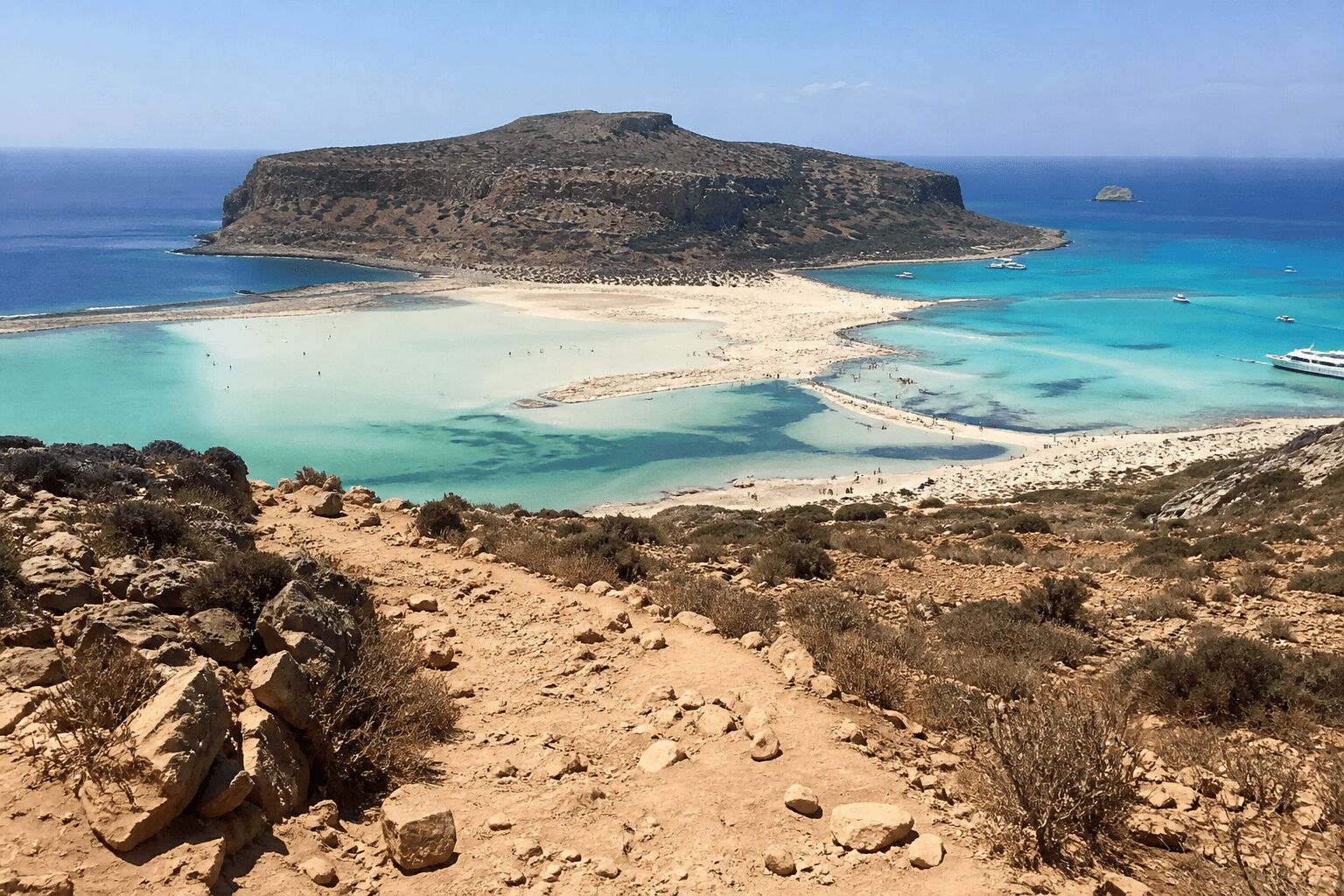
The two most photographed spots on the island are both in the west and both suffer from their own fame. Balos is reached by a rough toll track (or a boat from Kissamos) plus a 20–25 minute walk down to the lagoon. Elafonisi draws people for pink-tinted sand and knee-deep water — but the car park fills by midday, and the dunes are now protected, so stay on the marked paths.
Timing is the only real lever. Here is what earns the queue and where you will be nearly alone.
| Place | Status | What to know |
|---|---|---|
| Balos Lagoon | Must see | The postcard shot of Crete. Crowds land around 11:00 with the Kissamos boats — drive in earlier |
| Elafonisi | Must see | Pink-tinted sand and knee-deep water. Same rule: early or late, the car park fills by midday |
| Falasarna | Quieter | Long west-coast beach with real sunsets and some swell; noticeably emptier than Balos |
| Seitan Limania | Quieter | Narrow fjord-like cove near Akrotiri. Steep descent, very little space — off-peak only |
| Preveli (Palm Beach) | Quieter | Palm gorge and a river meeting the sea; pairs naturally with Preveli Monastery in one day block |
| Xerokambos (east) | Genuinely quiet | Far south-east: long empty sand, minimal facilities, drive in with a full tank |
Towns and fortresses: Venetian to Byzantine
Chania and Rethymno old towns
Chania is the best base for the west and the most lived-in old town on Crete: Venetian harbour, lighthouse, narrow lanes with an Ottoman layer still visible. Rethymno is quieter and more compact, with the Fortezza on its hill and a pleasant evening promenade. In Heraklion the fortification to see is Koules, the sea fort guarding the harbour mouth.
Spinalonga, the island fortress
Spinalonga in the Gulf of Elounda is a Venetian fort that spent much of the 20th century as a leper colony, which is why it became the east’s most story-driven site. Boats run from Elounda, Plaka, and Agios Nikolaos; an hour to ninety minutes on the island is plenty. Take the first or last sailing — mid-afternoon the queue for the boat outlasts the visit.
Athens as the architectural counterpoint
Crete’s Venetian walls impress by mass, not by the living city inside them. If what you want is architecture you can walk through rather than around, keep an Athens block in the trip — the three-day Athens weekend covers the classical layer that Crete deliberately skips.
Arkadi and Preveli monasteries
Arkadi, inland from Rethymno, matters as a national symbol more than as architecture: in 1866 the defenders and sheltering villagers blew up the powder magazine rather than surrender to the besiegers. The Venetian façade of its church is still one of the finest on the island. Allow an hour; the drive from Rethymno takes about 30 minutes.
Preveli on the south coast works as a monastery-plus-nature pairing: the working monastery above with a view over the Libyan Sea, and below it a palm gorge and a beach where a river meets the sea. It makes a sensible full day from Rethymno — as long as you do not try to bolt Samaria onto the same day.
Working monasteries enforce covered shoulders and knees, and they mean it. Keep a light scarf or shirt in the car; it is faster than turning around.
Regional logistics: west, centre, east
The classic Crete mistake is booking one hotel for the whole trip. The island runs 260 km end to end, and Chania to Agios Nikolaos is three hours each way. What works over seven days: 3–4 nights in the centre, then move west (or the reverse). Add the east only if you have ten days or you are flying into Sitia.
| Region | Base | What it covers |
|---|---|---|
| West Crete | Chania | Old Town and Venetian harbour, Samaria Gorge, Balos, Elafonisi, Falasarna. Longest drives and the most scenic switchbacks |
| Central Crete | Heraklion – Rethymno | Knossos, Heraklion Archaeological Museum, Phaistos and Gortyn, Arkadi Monastery, Preveli, Peza valley wineries. Best balance of history and driving |
| East Crete | Agios Nikolaos | Dikteon Cave and Lasithi Plateau, Spinalonga and Elounda, palm-fringed Vai, quiet Xerokambos. Fewer museums, more road and views |
If Crete is only one leg of a Greek trip, the neighbouring Cyclades play by different rules — see the Santorini itinerary and the Mykonos guide. There, two or three days per island is enough and you rarely need a car.
Driving, season, and day budget
Start with flights and bases: compare flights into Heraklion (HER) and Chania (CHQ) — the price gap often outweighs an extra hour of transfer — and book a hotel against a two-base plan rather than one. For a trip with gorges and rocky descents, most travellers add travel insurance and an eSIM: mountain navigation only really works with offline maps.
Car rental and the switchbacks
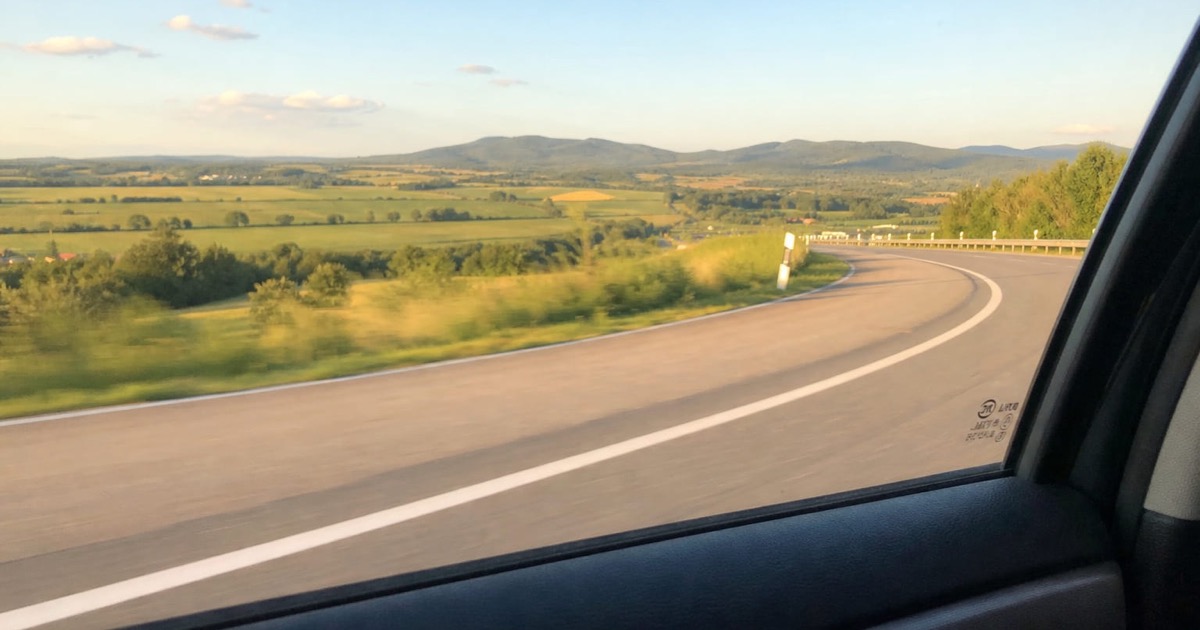
A car is a condition of this itinerary, not a luxury. Know this in advance: mountain roads to the south coast are narrow, not always guard-railed, and your realistic average is 40–50 km/h rather than 80. Dirt tracks to Balos or Seitan Limania are often excluded from insurance cover — confirm that in the contract before signing. Rural petrol stations close in the evening and do not always take cards. Do not try to park inside the old towns of Chania or Rethymno; use the paid lots on the edge of the centre.
When to go without the crowds
May to early June and September to October give you warm sea, open gorges, and visibly fewer people at the headline beaches. July and August add 8–10 °C and full car parks; if the dates are fixed, sightsee from 07:00 to 10:00 and after 17:00, and give the middle of the day to a taverna and the sea near your hotel. November to April means cheap rooms and a green island, but Samaria is closed and so are many southern tavernas.
| Line item | Amount | Note |
|---|---|---|
| Car rental (economy, per day) | ≈ €35–60 | Shoulder-season ballpark; August costs more and books out weeks ahead |
| Fuel for one day | ≈ €15–25 | A western loop burns through a tank faster thanks to climbs and switchbacks |
| Archaeological site entry | official tariff | Knossos, Phaistos, Gortyn, Heraklion museum — check prices and hours on official sources only |
| Taverna lunch | €12–20 | Per person: dakos, salad, something grilled; harbour tables cost more |
| Parking and Balos boat | €2–25 | Toll road plus parking at Balos, or a boat ticket if you are travelling without a car |
Without a car, some days still work fine: Samaria and Spinalonga run well as a guided excursion with transfers, and regular intercity buses connect Chania, Rethymno, and Heraklion. For ready-made plans across the country, open the Greece routes hub.
Food stop: dakos, snails, and raki
Cretan cooking is a reason to come in itself, and it slots neatly into the driving day: mountain-village tavernas are cheaper and more honest than harbour-front ones. The minimum list:
- Dakos — barley rusk with grated tomato, mizithra, and olive oil. The most Cretan dish there is, and almost always the right way to start lunch
- Hochli bourbouristi — snails fried in olive oil with rosemary and vinegar. A local classic most visitors skip
- Cheeses — graviera and fresh mizithra, sold at the source in mountain villages
- Raki (tsikoudia) — grape distillate that often arrives on the house at the end of dinner. Declining is not really done
- Peza valley wine — wineries sit right next to Heraklion and Knossos, an easy add-on after the palace, on an island that has been making wine under the patronage of Dionysus for a very long time
Crete without sprinting between palaces and beaches
Set your dates, pace, and whether you lean archaeology or sea — AlpacaBag splits the island into days and bases.
Ready-made routes
Routes for your destination
Day-by-day plans you can adapt to your dates right away.
FAQ
How many days do you need on Crete?
Seven days with one base change is the comfortable minimum: 3–4 days from Heraklion or Rethymno for the archaeology, then 3 days from Chania for the west. Four or five days works if you commit to a single region.
Do I need a rental car, or will buses do?
KTEL buses link the north coast well (Chania — Rethymno — Heraklion — Agios Nikolaos), but gorges, southern beaches, and the Lasithi Plateau are far easier by car. Without one, stay in a town and fill the gaps with day tours.
How long should I budget for Knossos and Samaria Gorge?
Knossos takes 1.5–2 hours plus travel and the ticket queue, and the Heraklion Archaeological Museum another 1.5–2 hours. Samaria is a full day: 5–7 hours for the 16 km descent, then the ferry from Agia Roumeli and a bus back.
When is the best time to avoid crowds?
May to early June and September to October: warm sea, open gorges, and far more room at Balos and Elafonisi. In July and August only timing helps — be on site before 10:00 or after 17:00.
What should I eat in a Cretan taverna?
Dakos (barley rusk with tomato and mizithra), hochli bourbouristi (snails in olive oil), graviera cheese, and raki to finish. Order wine from the Peza valley near Heraklion.
Should I combine Crete with Santorini or Mykonos?
Ferries run from Heraklion to Santorini and on through the Cyclades in summer. Just plan them differently: Crete is a driving loop built around archaeology, while a Cyclades island needs only 2–3 days and no car.