
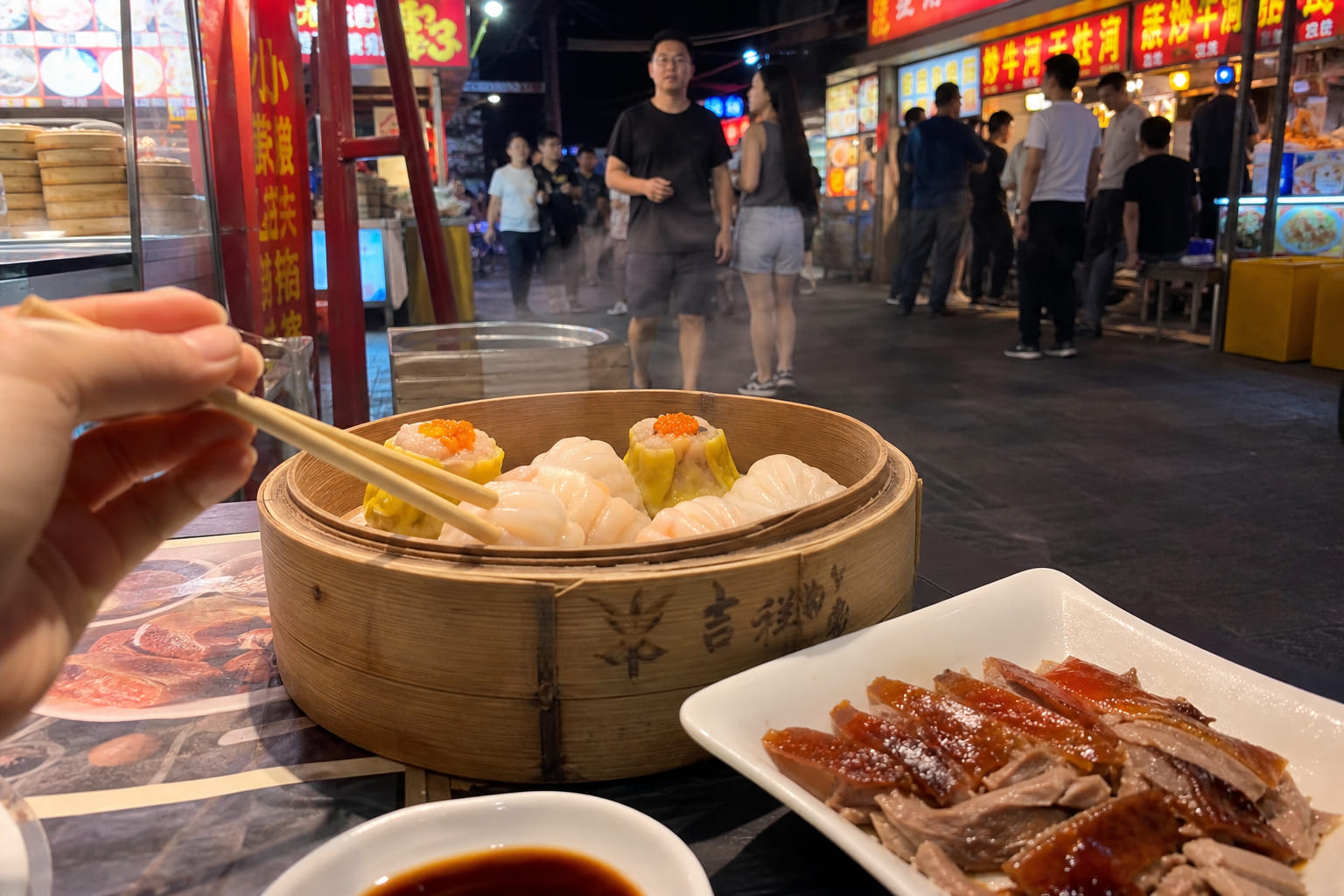
China is one of Asia's top food-tourism destinations, yet "Chinese food" abroad often means one or two dishes from a neighborhood restaurant. On the ground you quickly see that Beijing, Chengdu, Guangzhou, Shanghai, and Xi'an are five different cuisines with different heat, texture, and logistics. Before you go, budget for meals in the travel budget calculator and read the budget food guide for Asia — it covers snacks and convenience stores between big sit-down meals.
For a multi-city trip, start with the multi-city vacation planner, then compare flights and intercity buses between regions. High-speed trains are essential for routes like Beijing–Xi'an or Shanghai–Chengdu.
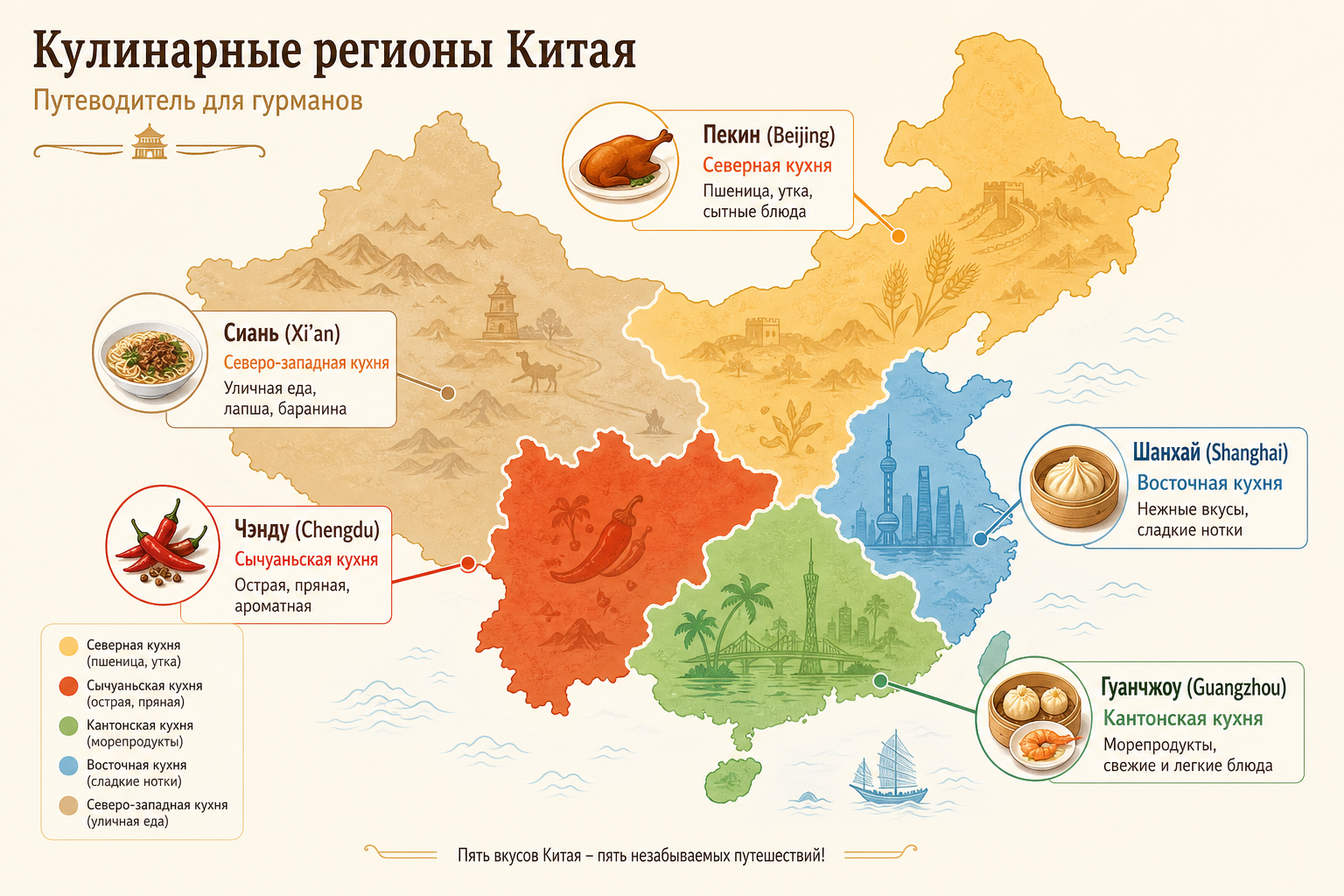
Beijing — northern cuisine
Northern regions have harsh winters, so the diet centers on hearty wheat dishes and rich meats. A ready-made route with market and restaurant stops is in the 3-day budget Beijing plan.
Beijing (Northern cuisine)
Wheat flour, fatty meats, mild spice
Peking duck
Iconic crispy-skinned duck served with thin pancakes, fresh vegetables, and sweet hoisin sauce. Book at specialist restaurants (Quanjude, Da Dong) and stay in central Beijing hotels to walk hutong alleys after dinner.
Jiaozi dumplings
Classic dumplings with minced pork and napa cabbage — pan-fried, boiled, or steamed. Perfect breakfast or snack between temples.
Mongolian hot pot (Shuan Yangrou)
A copper-pot variation focused on thinly sliced lamb in light broth — warming in cooler months and a nice counterpoint to duck day in the capital.
Best for: Travelers who want familiar, filling meat dishes and baked goods — and those who avoid fiery chili.
Chengdu — Sichuan cuisine
Sichuan food is famous for fiery, numbing flavors built on Sichuan pepper, garlic, and ginger. For the "capital of spice," see the 3-day Chengdu route.
Chengdu, Sichuan (Western cuisine)
Chili pepper, hot pot, mapo tofu
Sichuan hot pot
Interactive dining: cook meat, vegetables, and tofu in a bubbling, scorching broth. Order a split pot — spicy and mild — if your group has mixed heat tolerance.
Mapo tofu
Silky tofu with minced pork in a fiery sauce with a crisp edge. Try it at least once even if you usually skip spicy food.
Kung Pao chicken
Stir-fried chicken with peanuts, dried chilies, and vegetables. Tourist spots often dial down the heat — ask for your preferred level.
Best for: Food adventurers, chili fans, and anyone who loves warming, intense flavors.
Guangzhou — Cantonese cuisine
Guangzhou, Guangdong (Southern Cantonese cuisine)
Dim sum, seafood, steaming and light wok work
Cantonese cooking preserves ingredient flavor and freshness. Rice, seafood, and gentle cooking (often steaming) dominate this warm southern region.
Dim sum
Small bites — har gao (shrimp dumplings) and shumai (pork dumplings) in bamboo steamers. Go for yum cha in the morning; it's breakfast and cultural ritual in one.
Roast suckling pig (Kao Ru Zhu)
Juicy pig with crackling skin — a local pride. Order whole or by portion; the skin should shatter, the meat stay moist.
Sweet and sour pork
Fried pork in a thick sauce with honey and pineapple — familiar from abroad, but balanced differently in Guangzhou.
Best for: Families with kids, seafood lovers, and anyone who prefers clean flavors without aggressive seasoning.
Shanghai — eastern cuisine
Shanghai food is soft, slightly sweet, and texture-focused. Combine food with theme parks via the Shanghai Disneyland guide, and see a full week plan in the 7-day Shanghai route for couples.
Shanghai (Eastern cuisine)
Soup dumplings, sweet-leaning sauces, seafood
Xiaolongbao
Famous soup dumplings with hot broth inside paper-thin wrappers. Bite carefully: pierce the skin, sip broth, then eat the filling.
Wuxi-style spare ribs
Pork ribs braised until tender in a sweet soy glaze — a Shanghai home-style classic.
Steamed river snails (Xianglu)
Local shellfish with minimal seasoning to highlight clean seafood flavor. Ask what's in season.
Best for: Food lovers who enjoy gentle sweetness in savory dishes and fresh seafood.
Xi'an — northwest street food
Xi'an, Shaanxi (Northwest street food)
Silk Road spices and market stalls
Xi'an sits at the crossroads of the Silk Road. Food here is heavy on cumin, coriander, and market energy — especially in the Muslim Quarter. Reach it by high-speed train from Beijing in about 4–5 hours; pair a Terracotta Army day with an evening food crawl.
Roujiamo ("Chinese burger")
Spiced minced pork or lamb inside a crisp flatbread — grab it hot off the griddle.
Biangbiang noodles
Hand-pulled wide noodles with chili oil and vegetables — portions are large; share or come hungry.
Yangzhou paomo
Rich lamb soup: you tear flatbread into the bowl so it soaks up broth. Perfect after walking the old city walls.
Best for: Street-food fans, hearty soup lovers, and travelers who enjoy Central Asian–leaning flavors.
Build your China food itinerary
In AlpacaBag, set interests, dates, and budget — get cities, logistics, and stops for duck, dim sum, and hot pot without juggling dozens of tabs.
How to weave food into a day-by-day route
A practical 10–12 day loop: Beijing (2–3 days, duck and jiaozi) → Xi'an (2 days, street food) → Chengdu (2–3 days, hot pot) → Guangzhou (2 days, dim sum) → Shanghai (2–3 days, xiaolongbao). Compare flights and ground transport between cities; for a first visit, add an eSIM and travel insurance — WeChat/Alipay payments are easier with reliable data.
Compare with other Asian food destinations: the Japan & South Korea food guide and budget food in Asia. Save on lunches with tips from how to save money while traveling.
Pick your season carefully — Guangzhou summers are humid, Beijing winters cold. See the best travel season guide for cheaper flights and hotels. Between meals, try free things to do in any city. Tipping is not expected everywhere, but 5–10% in tourist restaurants is fine — see the tipping guide.
Want deeper local context? Book a food tour with a local guide to find spots off the main tourist strips.
Ready-made routes
Routes for your destination
Day-by-day plans you can adapt to your dates right away.
FAQ
Which regional Chinese cuisines should tourists definitely try?
The essential food map covers Beijing (Peking duck and jiaozi), Sichuan/Chengdu (hot pot and mapo tofu), Guangdong/Guangzhou (dim sum), Shanghai (xiaolongbao), and Xi'an (roujiamo and biangbiang noodles). Each region is a distinct culinary school.
How many days do you need for a food tour of China?
Plan 10–14 days for a 4–5 city route including flights and high-speed trains. Allow 2–3 days per city: one for landmarks, two for markets, restaurants, and street food.
Is Chinese food too spicy for tourists?
Not everywhere. Northern and Cantonese cuisines are mild; the heat is in Sichuan and partly in Xi'an. Look for 微辣 (slightly spicy) on menus or ask for "bu la" (no chili). Tourist restaurants often offer toned-down versions.
How do I build a gastronomic China itinerary with AlpacaBag?
Set interests to food, pick cities (Beijing, Chengdu, Shanghai, etc.), and your budget — the planner handles logistics, day-by-day structure, and stops near markets and restaurants. Sample routes for Beijing, Chengdu, and Shanghai are on the site.