
Dates: Palm Sunday 21 March to Easter Sunday 28 March 2027
Semana Santa follows Easter, and in 2027 Easter Sunday lands on 28 March. That makes Holy Week 21–28 March 2027, starting with Palm Sunday. It is an early-spring week: days are pleasant, evenings can be cool, and a sudden shower is possible — brotherhoods sometimes delay or cancel a procession when rain threatens.
Because the dates are earlier than in many recent years, double-check any old “April” advice you find online. Build your flights, hotel nights and any Spain add-ons around the March window. For the whole trip: flights into Seville, an eSIM for maps and procession timetables, and travel insurance.
What Semana Santa actually looks like
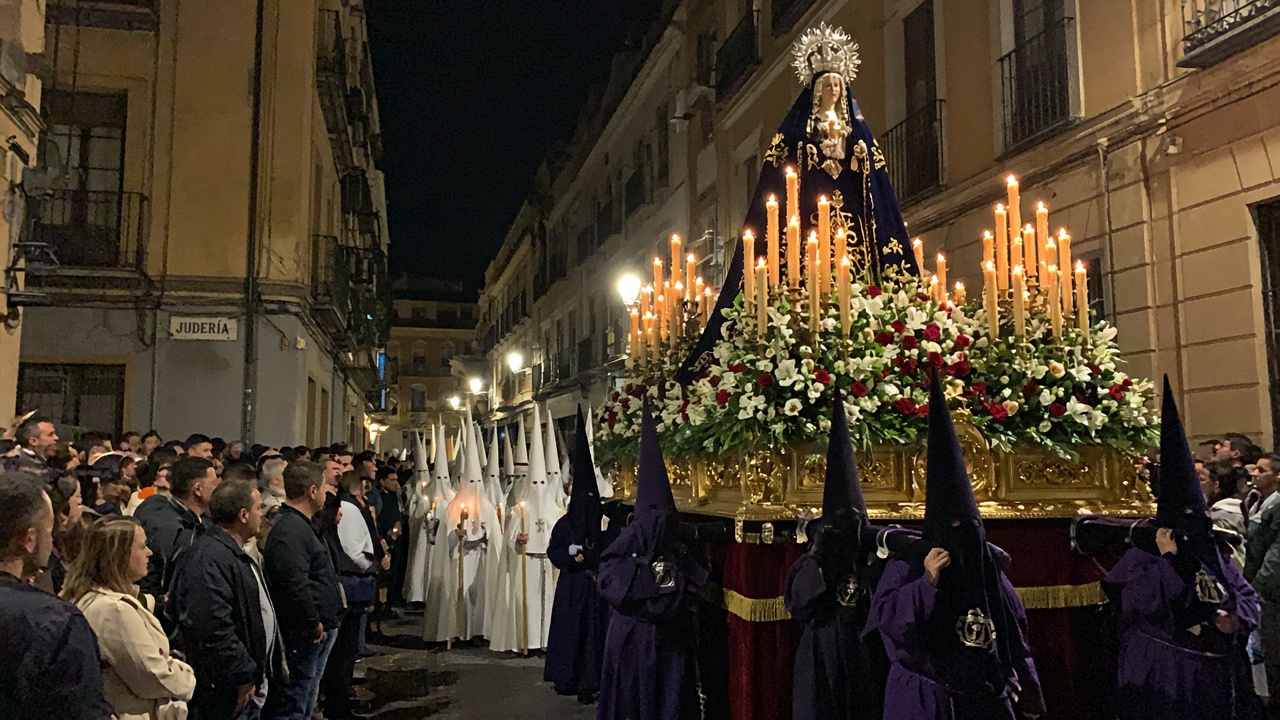
Each day, brotherhoods (hermandades) leave their home churches and walk to the cathedral and back, carrying heavy sculpted floats (pasos) on the shoulders of costaleros, often with brass bands and incense drifting through the streets. Hooded penitents — the nazarenos — walk in long lines in front of the float. It is solemn, loud in an unusual way, and deeply local.
Think of it as a moving city-wide ceremony rather than a single show: several processions can be on the streets at once, each leaving and returning at a different time. You do not need to see everything. Pick two or three that fit your days and enjoy the rest of Seville around them.
The official route (Carrera Oficial)
Every procession has its own path from church to church, but all of them pass through the shared official route in the centre, ending at the cathedral. This stretch is where the atmosphere is most formal and where you will find the stands and rented seats.
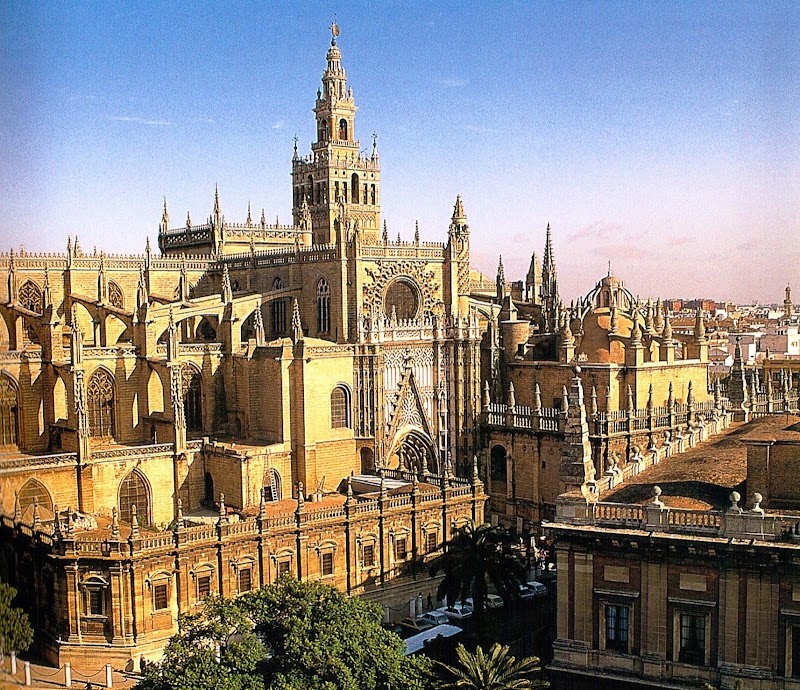
The council that organises Holy Week publishes the day-by-day timetable and itineraries closer to the date. Check that schedule the week before you travel, then plan around two or three processions — and keep a few streets away from the official route as your relaxed alternative. Our Giralda and cathedral guide helps you picture the finish area and when daytime visits are easiest.
Want your Seville days arranged around specific processions and sightseeing, not random wandering?
Build itineraryThe Madrugá: the most intense night
The Madrugá is the night from Holy Thursday into Good Friday, and it is the emotional peak of the week. Some of Seville’s most beloved brotherhoods walk through the small hours, the crowd is at its densest, and a hush falls over the streets as the floats pass.
If you want to experience it, go in with a plan: eat early, bring a light layer, wear shoes you can stand in for hours, and accept that you will be surrounded by people. Many visitors choose one spot with good flow and stay put rather than chasing floats across town. If you are travelling with small children or limited mobility, an earlier procession on another day may be more comfortable.
Where to stay — and why to book early
Holy Week is one of the busiest times of the year in Seville, and central rooms near the cathedral, Santa Cruz and the official route go first. Book as soon as your dates are firm, and favour flexible cancellation so you can adjust once the procession schedule is published.
Staying in or near the old town saves you a lot of walking against the flow of crowds; staying a bit further out is calmer and usually easier on the budget, as long as you plan your way back after the evening processions. Compare options in hotels in Seville now for 21–28 March.
Etiquette and what to wear
For locals this is a religious week, even when the streets feel like a festival. Dress respectfully: covered shoulders and knees, no beachwear, and comfortable closed shoes for cobblestones. You do not have to wear black — just avoid anything flashy.
- Keep quiet and still while a float is passing; do not talk loudly over the music.
- Never step into the procession or cross between the nazarenos and the float.
- Photos are fine from a distance and without flash — keep phones low behind others.
- Do not touch the floats, candles or costumes, and leave penitents their space.
Crowds, chairs and practical tips
Expect crowds, especially on Holy Thursday, the Madrugá and Good Friday. Arrive early for a good spot, carry water and snacks, and keep your valuables in front pockets or a zipped bag. A portable phone charger is handy, since you will be using maps and timetables all day.
Seats (sillas) on the official route are rented through the organising council. We mention them for information only — they are not an affiliate offer, and you do not need one to enjoy Holy Week; many people simply watch from side streets and squares.
Pair it with flamenco, the Giralda and more
Holy Week days are long, so leave room for gentler moments. A morning on the Giralda and cathedral before the crowds build, an evening of flamenco when processions end, and long lunches in between make the week balanced.
If you love big Spanish spring festivals, the same month also brings the fire and fireworks of Las Fallas in Valencia — check the dates and decide which one suits your trip better.
Ready-made routes
Routes for your destination
Day-by-day plans you can adapt to your dates right away.
FAQ
When is Semana Santa in Seville in 2027?
Holy Week runs from Palm Sunday, 21 March 2027, to Easter Sunday, 28 March 2027. It falls in March this year, not April — plan flights and hotels for that week.
Which night is the busiest?
The Madrugá — the night from Holy Thursday into Good Friday — is the most intense and the most crowded. Several of the best-known brotherhoods walk through the small hours, and the streets around the official route fill up early.
How early should I book a hotel in Seville?
As early as you can. Holy Week is one of the busiest weeks of the Seville year, and central rooms near the old town and the official route go first. Free-cancellation rates let you lock a base now and adjust later.
What should I wear to the processions?
Dress respectfully: covered shoulders and knees, no beachwear, and comfortable closed shoes — you will stand and walk a lot on cobblestones. You do not need to wear black, but bright party outfits stand out. Add a light layer for cool evenings.
Do I need a chair on the official route?
No. Seats (sillas) along the official route are rented through the organising council and are informational here — we do not sell or earn from them. Many visitors watch from side streets and squares for free; just arrive early and expect to stand.
Is it okay to take photos and videos?
Yes, from a respectful distance and without flash. Do not step into the procession, touch the floats or cross between nazarenos and the float. Keep phones low behind other people when you can.