
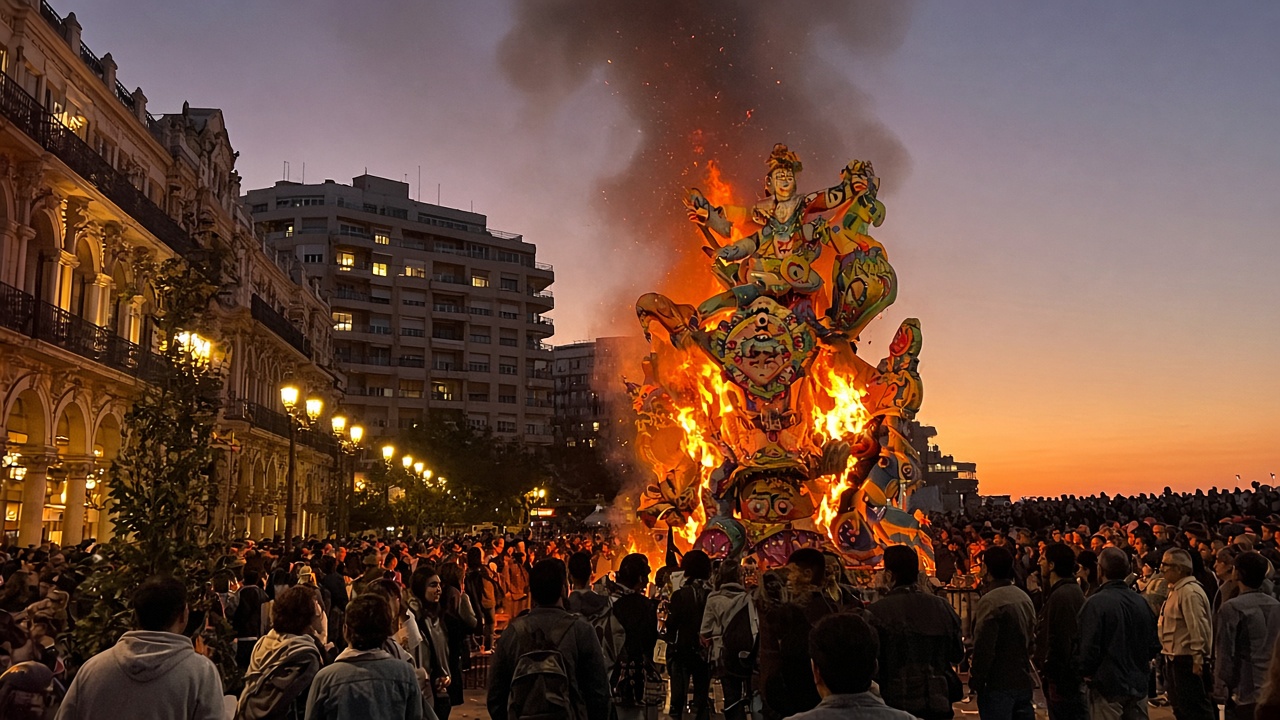
What Fallas actually is
Las Fallas is Valencia’s spring festival: each neighbourhood commission (a comisión, with its casal faller clubhouse) spends the year building a huge satirical monument of wood, cardboard and papier-mâché. Streets are closed, marching bands appear at dawn, firecrackers go off all day, and on the last night nearly all the monuments are burned. It is on UNESCO’s intangible heritage list for a reason — and it is not a quiet city break.
Think of it as three layers: the monuments (the fallas and their small ninots figures), the fire and sound (mascletà, fireworks, Cremà) and the traditions (flower offering, costumes, paella and buñuelos). You do not need to see everything — pick a rhythm and enjoy it.
2027 calendar: 1–19 March
The whole cycle runs 1–19 March 2027, with a daily mascletà at 14:00 on Plaza del Ayuntamiento. The week that matters most for visitors is 15–19 March:
- 15 March — Plantà (children’s monuments). Monuments for kids are finished and “planted” on the street.
- 16 March — Plantà (adult monuments). The big fallas must be fully standing, with judging that follows.
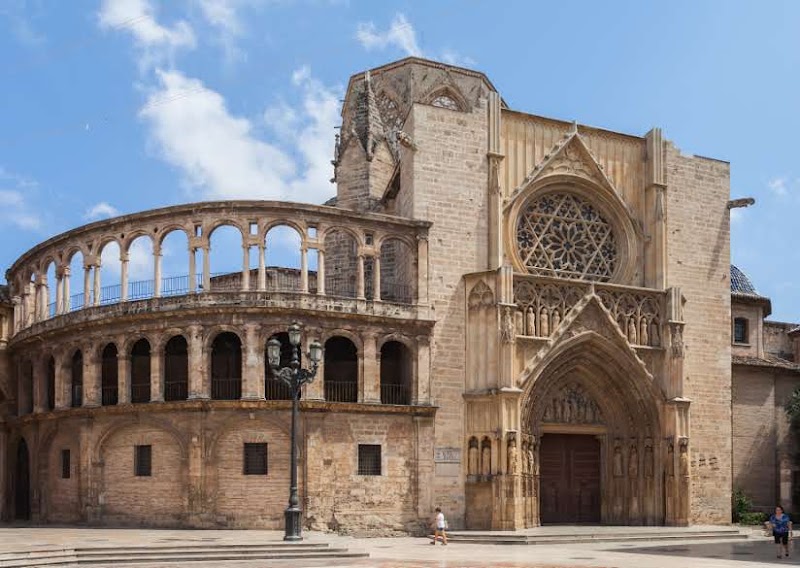
- 17–18 March — Ofrenda de flores. Falleras and falleros in traditional dress parade to the Plaza de la Virgen to offer flowers.
- Around 18–19 March — Nit del Foc. The “Night of Fire” fireworks, the most spectacular show of the week.
- 19 March (Friday) — Cremà. Children’s monuments burn first in the evening, then the large ones late at night, with the main Plaza del Ayuntamiento monument last.
Heads-up: exact hours for the Plantà judging, parades, fireworks and Cremà are published by the city and the Junta Central Fallera. This guide reflects what is known as of 11 November 2026 — confirm the official programme closer to the dates.
Want a day-by-day plan that fits your dates, budget and group — not a random checklist?
Build itineraryHow to watch: mascletà, ninots and the Cremà
Mascletà (daily, 14:00). It is free and happens on Plaza del Ayuntamiento. The square fills up long before 14:00, so arrive around 12:30–13:00 if you want a decent spot, or stand on one of the streets leading into the plaza. It is about rhythm and sound more than light: it lasts roughly ten minutes and ends with a thunderous “terremoto”.
Ninots and monuments. Walk the neighbourhoods rather than just the centre — Ruzafa, Carmen, Extramurs and Cabanyal all have large fallas with different styles and humour. Visit in daylight to see details, and again at night when lit. In recent years the small ninots have also been shown in an exhibition at the City of Arts and Sciences; check this year’s programme and read our City of Arts and Sciences guide for the visit itself.
Nit del Foc. Large fireworks near the Turia gardens around the night of 18–19 March. Come early, wear layers and plan how you will get home before the crowd.
Cremà (19 March). Neighbourhood monuments burn through the evening and night, and the city’s big monument closes the festival. Stand upwind where you can, keep a respectful distance from the heat and sparks, and expect firefighters to hose down nearby facades. Pick a neighbourhood falla near your hotel for a calmer experience, and treat the centre as the “big show”.
Where to stay during Fallas
Book as early as you can — the big week (15–19 March) fills first and prices climb. Search for a hotel in Valencia with free cancellation, and check the neighbourhood: many streets will have monuments, tents and late-night music.
- Ciutat Vella (Carmen, Mercado Central). Walkable to almost everything and full of atmosphere, but loud late into the night.
- Eixample / Gran Vía. Easier to sleep, still a short walk or metro ride from the Plaza del Ayuntamiento.
- Ruzafa. Great food and bars, plus a very active falla; expect noise until the early hours.
- Benimaclet, Algirós, Cabanyal. Quieter, local and cheaper, with good metro or tram links; Cabanyal also puts on its own lively festival atmosphere near the beach.
Coming from abroad? Compare flights to Valencia (VLC), get an eSIM for maps and tickets on the go, and consider travel insurance for a trip that depends on dates.
Getting around, noise and earplugs
Fallas means street closures — the centre becomes a maze of detours and temporary barriers. Metro and tram are your friends; buses and taxis can crawl. Walk when you can, and plan your return before the Cremà, because a lot of streets are closed or crowded afterwards.
Noise is part of the experience: firecrackers (petardos) go off from morning onwards, the despertà brass bands wake up neighbourhoods, and the mascletà is designed to shake your chest. Pack earplugs (and kid-size ear defenders if you travel with children), choose a hotel with good windows, and consider a room facing an inner courtyard. Light sleepers should avoid ground-floor rooms near the main squares.
Practical tips from a local-guide view
- Wear comfortable shoes and layers — you will walk many kilometres, and March nights can be chilly.
- Keep your phone charged and your valuables close; crowds attract pickpockets.
- Eat early or book ahead — restaurants fill up, but street food such as buñuelos de calabaza with hot chocolate is part of the fun. Our paella guide helps you avoid tourist traps.
- Respect the fire: do not stand too close to burning monuments, and never throw firecrackers of your own.
- The festival is free to enjoy from the street. Be careful with anyone selling “official tickets” for the mascletà or Cremà — follow the city’s official information instead.
- Planning more than one festival in Spain? See our festival trip logistics guide.
Valencia beyond the fire
If you stay a few days, mix the festival with the city’s calmer sides: a morning at the Central Market, a sunset boat ride on the Albufera lagoon, and the modern architecture of the City of Arts and Sciences. These are also your “quiet hours” between mascletà and the late-night shows.
Below you will find ready two-day Valencia plans that you can adapt to the festival week — add one fallas neighbourhood walk, one mascletà and keep the rest flexible.
Ready-made routes
Routes for your destination
Day-by-day plans you can adapt to your dates right away.
FAQ
When are Las Fallas in Valencia in 2027?
The festival cycle runs 1–19 March 2027, with the big week on 15–19 March. The mascletà fires daily at 14:00 on Plaza del Ayuntamiento, and the Cremà (burning of the monuments) is on the night of Friday 19 March. Confirm the official programme closer to the dates.
What is the best day to visit if I only have one?
If you have only one day, Thursday 18 March or the Cremà night of Friday 19 March are the strongest picks: the monuments are fully built, the Ofrenda is wrapping up and the city is at peak atmosphere. Be ready for crowds and a very late night.
Do I need a ticket for the mascletà, ninots or Cremà?
No. Street monuments, the daily mascletà and the Cremà are free and watched from the street. Some special viewing areas, paid terraces or exhibitions can have their own rules — check the official programme, and do not buy "festival tickets" from random resellers.
How loud is the mascletà and do I need earplugs?
It is a ground-shaking, deliberately loud daytime fireworks show, designed to be felt in your chest. Bring earplugs (or ear defenders for children), stand a bit further back from the Plaza del Ayuntamiento centre if you are sensitive, and open your mouth slightly during the final "terremoto" to ease the pressure.
Where is the best area to stay during Fallas?
For walking distance to the main events pick Ciutat Vella, the area around Plaza del Ayuntamiento or the Eixample. Ruzafa is lively but noisy late. Quieter, still well-connected options include Benimaclet, Algirós or hotels near Xàtiva station. Book early — the big week sells out first.
Is Fallas suitable for kids and older travellers?
Yes, with planning. Children’s monuments, the Ofrenda and daytime street life are family-friendly; the mascletà and the Nit del Foc fireworks are very loud, and late nights get crowded. Use ear protection, agree a meeting point and keep the evenings short.
How do I get from Valencia airport to the centre during Fallas?
The metro (lines 3 and 5) from Aeropuerto to the centre takes roughly 25 minutes and avoids street closures. Taxis and buses can be slow around closed streets in the big week, so use the metro whenever you can and check for temporary service changes.