
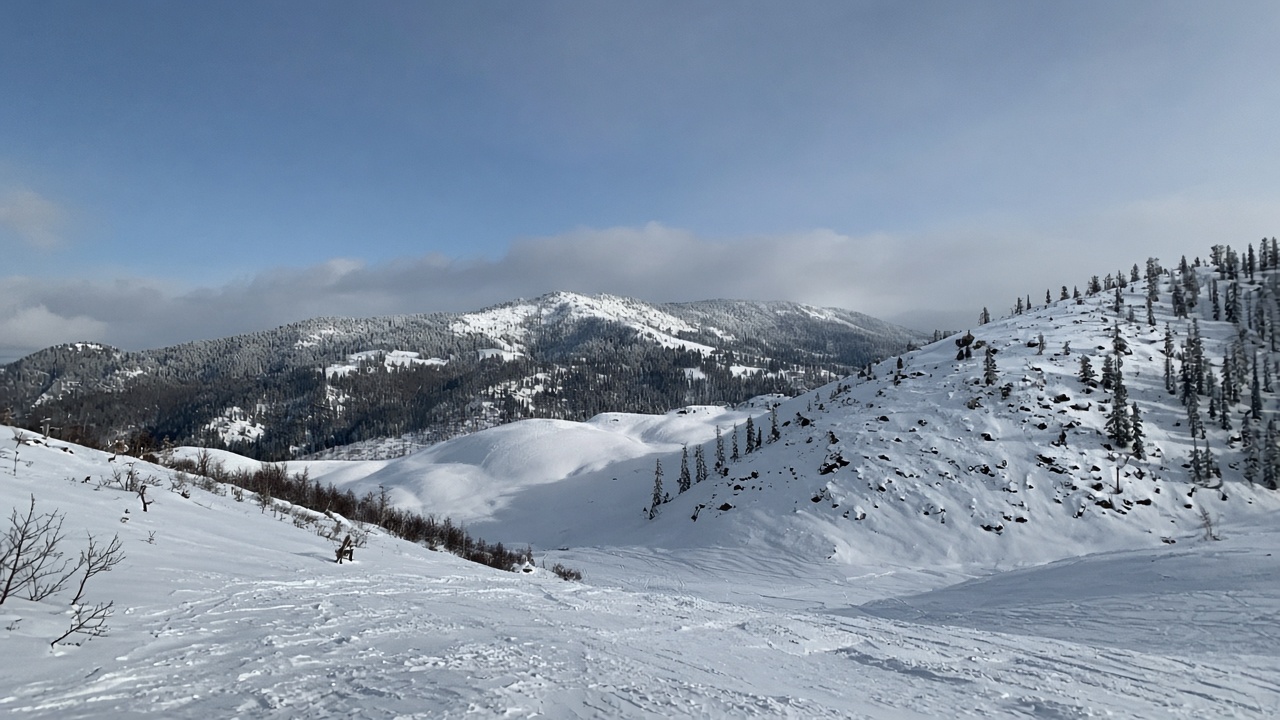
Sakhalin winter weather: what to expect
Winter here is not just a number on the thermometer. Ocean wind strips heat faster than inland cities at similar latitudes. A blizzard can erase a day trip, and short daylight ruthlessly trims what fits.
| Month | Daylight | How to plan |
|---|---|---|
| December | ~8.5–9 h | Leave by 09:00; dusk settles near 16:00 |
| January | ~8.5–9.5 h | Cold peak; prioritize icefalls and ski days |
| February | ~9.5–11 h | Best snow-and-daylight compromise |
| March | ~11–13 h | Longer days, but lake/sea ice grows unreliable |
Practical rule: one major outing per day, early start, back before dark. Keep evenings for town, lit slopes, or dinner. Buy travel insurance that covers winter activities — it matters more than saving on minor bookings.
What to see on Sakhalin in winter
Yuzhno-Sakhalinsk and Gorniy Vozdukh
The default winter base. Gorniy Vozdukh delivers a full ski day without long transfers: runs, rentals, cafés. Even without skiing, the viewpoint is worth it — town and ridges look different under snow. Book a hotel near the lifts or downtown so transfers do not steal your daylight.
Tikhaya Bay icefalls and Smely peak
The winter signature of the east coast. You need an early start, prepared transport, and the humility to cancel when a blizzard arrives. Do not stack Tikhaya with another distant stop on the same short day.
Aniva Lighthouse in winter
In summer Aniva is its own adventure day; in winter access is often cut by snow and vehicle limits. Treat it as “if confirmed,” not as the spine of the trip. Viewpoints and a flexible museum day are better backups.
| Day | 5 days | 7 days |
|---|---|---|
| Day 1 | Arrive, Yuzhno-Sakhalinsk, settle in, evening crab | Same pace + an easy city walk |
| Day 2 | Gorniy Vozdukh: ski / snowboard or slope walks | Full day at Gorniy Vozdukh |
| Day 3 | Tikhaya Bay icefalls (early start) | Tikhaya with weather buffer |
| Day 4 | Aniva winter option / viewpoints or flexible city day | Kholmsk: port food and west coast |
| Day 5 | Food day / departure | Poronaysk or start the northern rail leg |
| Day 6–7 | — | Train via Tymovskoye–Nogliki; optional Aleksandrovsk / Okha |
Summer hikes such as the Devil and Witch Bridges are usually closed or unsafe in winter — do not paste a summer trek onto January. Boats to Moneron barely run in winter.
Heading north: Aleksandrovsk-Sakhalinsky and Okha
The north is for travelers who already covered the south and accept long logistics. Aleksandrovsk-Sakhalinsky draws people for history and the Three Brothers rocks; Okha for the end-of-the-map feeling. In winter distances feel harder: fuel, signal, and weather decide more than “one more stop.”
Without winter driving experience on the island, prefer the train plus local transfers over improvising in a sedan. Road basics live in the Sakhalin road trip guide.
Winter fishing and food in Kholmsk and Poronaysk
Winter feeding is different from summer: fewer “from the water” moments, more market, restaurant, and port-town cooking. In Kholmsk look for port kitchens and Korean accents; in Poronaysk, a calm seafood dinner after the road. Crab, smelt (in season), and pyanse still show up — the fuller food frame is in the Sakhalin food tour guide.
Ice fishing only with locals and known ice thickness. Wandering out “to check the cracks” ends worse than a boring café afternoon.
Logistics: Nogliki and Tymovskoye by train
The Yuzhno-Sakhalinsk–Nogliki train via Tymovskoye is the most predictable way north in winter. It is a working long haul, not a scenic express: pack food, water, and a warm layer for the window seat.
Nogliki is often a base toward the Dagi hot springs and further points — but winter connections must be confirmed early. Recheck timetables close to travel dates; weather and track work shift the windows.
Practical tips: clothing, transport, and budget
- Base layer + fleece + shell (ocean wind hits harder than inland frost)
- Waterproof boots with grip and spare socks
- Buff, hat, gloves — pack a second pair
- Sunglasses for snow glare on the slope
- Power bank and offline maps — cold kills batteries
- Headlamp for short daylight returns
| Item | Range | Notes |
|---|---|---|
| Lodging / night | 4,000–11,000 ₽ | Yuzhno-Sakhalinsk double room |
| Ski pass / day | 2,500–5,500 ₽ | Gorniy Vozdukh; rentals extra |
| Snowmobile / tour | 6,000–15,000 ₽ | Depends on route and group size |
| Food / day | 2,000–6,000 ₽ | Cafés plus one seafood dinner |
| Northbound train | 1,500–4,500 ₽ | Yuzhno-Sakhalinsk → Nogliki by class |
Compare flights and consider an eSIM. For winter day trips outside town, a tour or prepared 4WD beats whatever sedan is left on the lot.
Ice safety: January vs March
January through mid-February usually offers more stable ice on spots locals already use. March brings longer daylight but moving ice: surface water, cracks, and false strength near shore. Simple rule — no thickness confirmation, no walking out.
For shoreline walks, warm boots and common sense are enough: a photo from the edge of fast ice is not worth the risk. If fishing is the goal, hire a guide and keep a weather backup day.
Shape winter Sakhalin around your dates
Tell AlpacaBag your days and whether you want skiing or a calmer pace — and get Gorniy Vozdukh, Tikhaya, and town evenings sequenced for short daylight.
FAQ
Is winter a good time for a first Sakhalin trip?
Yes if you like skiing, snow landscapes, and a slower city rhythm. Summer is about coast loops; winter centers on Gorniy Vozdukh, icefalls, and warm seafood evenings. Budget short days and storm buffers.
How many days do you need in winter?
Five days cover Gorniy Vozdukh, Tikhaya, and town without rushing. Seven days open the west coast or the northern train. Aleksandrovsk and Okha only make sense with winter-road experience and flexible plans.
Can you reach Aniva Lighthouse in winter?
Not reliably. Access depends on snow, vehicles, and operators. Often you get a shore viewpoint program or swap the day entirely. Do not treat Aniva as a locked checklist item without confirmed conditions.
Is ice fishing safe?
Only with local rules, verified ice thickness, and no freelancing on unfamiliar bays. January is usually more stable than late March, when the ice starts to move. Do not walk thin ice without a guide.
Do you need a car in winter?
In town, taxis and slope transfers can be enough. For Tikhaya and longer day trips you need a prepared 4WD or an organized tour. A regular sedan is a poor winter choice on Sakhalin.