
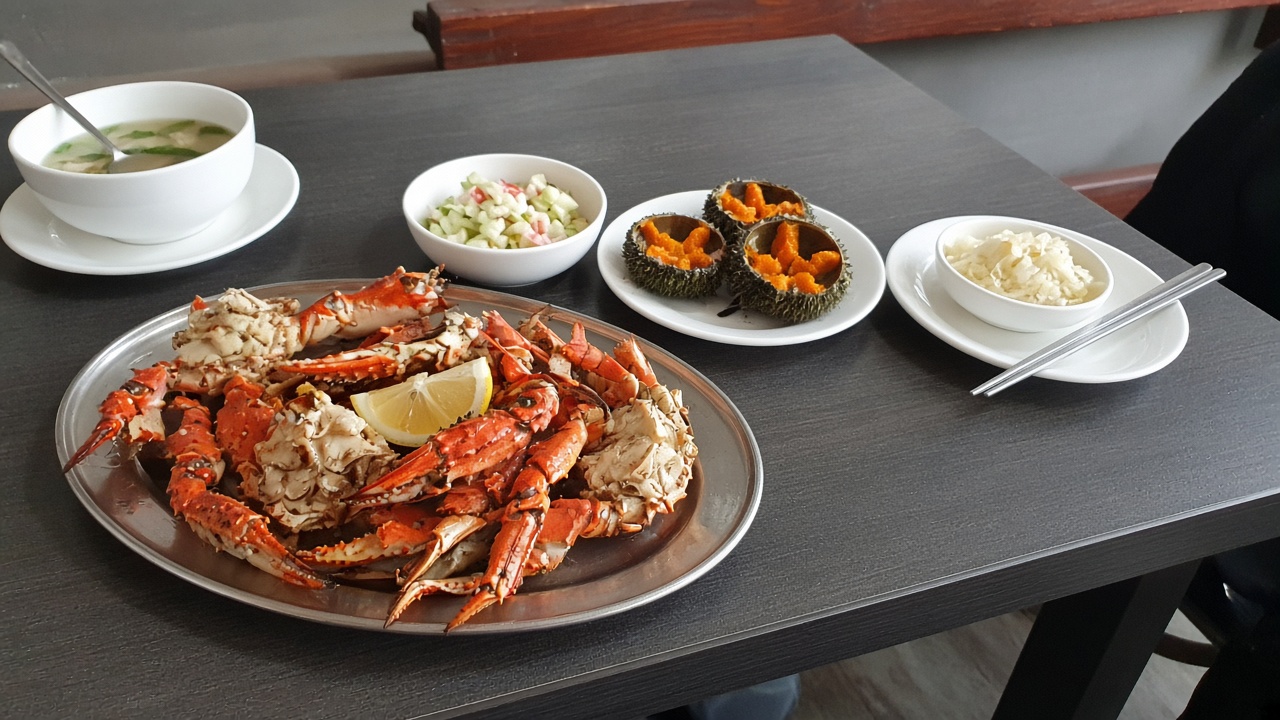
Why Sakhalin is Russia’s seafood capital
Cold Okhotsk and Tatar Strait waters create a short, intense season: crab, scallop, oysters, sea urchin, and smelt. Alongside that sits Sakhalin’s Korean food culture — pyanse, hoe, spicy salads — which fills the gaps between longer day trips.
A food tour here is not a single restaurant strip. It is a chain of market mornings, tide-driven outings, and one or two carefully chosen dinners. For prices and caviar selection before you leave town, start with the Yuzhno-Sakhalinsk fish markets guide.
When to go: a seafood seasonality calendar
The island’s plate changes month by month. Summer favors Busse and coastal day trips; autumn brings stronger crab and caviar; spring is the brief smelt window. Winter food still works, but it shifts toward restaurants and reliable frozen product — see Sakhalin in winter.
| Product | Season | Notes |
|---|---|---|
| Smelt (koryushka) | May – early June | Short peak; look for fried smelt on waterfronts and in cafés |
| Crab (King / snow) | July – October (peak Aug–Sep) | Fresh boiled crab at markets and suppliers; winter is mostly frozen |
| Oysters (Lake Busse) | June – September | Best with low tide; off-season means restaurant batches |
| Sea urchin | June – September | Often paired with the same Busse day trip |
| Scallop / trepang | Summer – early autumn | Ask about harvest date and origin before buying |
| Salmon caviar | Autumn run + packed year-round | Date and smell beat a pretty jar every time |
A 5–7 day food itinerary: markets to Iturup
Base yourself in Yuzhno-Sakhalinsk: markets, restaurants, and day trips all radiate from there. Do not force Iturup into a five-day plan. On seven days, add it only with tickets in hand and a spare day for weather cancellations.
Day 1. Yuzhno-Sakhalinsk: Korean street food and the market
Morning at the market (Uspekh and nearby stalls): crab, caviar, scallops. Afternoon pyanse and hoe. Evening crab at a restaurant — or in your room if the kitchen is usable. Book a central hotel with a fridge; it quietly unlocks half your market plans.
Day 2. Lake Busse: oversized oysters and sea urchin
Time the outing to low tide. Pack waterproof shoes and more water than you think you need. First-timers usually prefer a guided Busse excursion: safer access and better timing. Oysters “from the water” are the emotional center of the whole trip.
Day 3. Cape Velikan: lunch facing the Okhotsk Sea
A nature day with a food pause: thermos, local snacks, dinner back in town. East-coast weather swings hard — without a prepared vehicle, take a transfer or jeep tour. Road logistics are covered in the Sakhalin road trip guide.
Day 4. Crab hunting in Vzmorye
Vzmorye is where fresh boiled crab from suppliers often undercuts city markups. Buy for tonight plus a small portion for the cooler. Do not stack Busse and Vzmorye on the same day — each outing eats daylight.
Days 5–7. Kholmsk, Moneron, or a hard Iturup option
Keep day five flexible: another market pass, a chef dinner, or the west coast. Moneron is a separate boat story with frequent weather cancels — details in the Moneron Island guide. Iturup only makes sense with confirmed flights and spare hours; otherwise you trade your best southern food days for airport waiting rooms.
| Day | 5 days | 7 days |
|---|---|---|
| Day 1 | Yuzhno-Sakhalinsk: market, Korean street food, evening crab | Same pace + a slower chef-driven dinner |
| Day 2 | Lake Busse: oysters and sea urchin timed to the tide | Busse with buffer for picnic weather and the drive back |
| Day 3 | Cape Velikan + a seaside lunch stop | Velikan in the morning, seafood dinner back in town |
| Day 4 | Vzmorye: crab from local suppliers | Vzmorye plus caviar/scallop tasting |
| Day 5 | Flexible food day or departure | Kholmsk / west coast port cooking |
| Day 6–7 | — | Optional Iturup (hard logistics) or Moneron |
What to taste: a delicacy checklist
- Boiled crab — whole or legs; clean sea smell, no ammonia.
- Busse oysters — large, tide-fresh; lemon optional.
- Sea urchin — same day as oysters when possible.
- Smelt — if you hit the May peak.
- Fresh caviar — check date, grain, and excess liquid.
- Pyanse and hoe — the everyday layer between big tastings.
- Trepang / scallop — only when a truly fresh batch is available.
For flights, pack a soft cooler and ice packs and re-check airline seafood rules. Factory-sealed caviar is usually easier than open crab.
How to eat Sakhalin crab without special tools
1) Flip the crab shell-side down and remove the apron. 2) Snap legs at the joints and push the meat out with a finger or spoon handle. 3) Crack claws with the back of a knife or a nutcracker if you have one. 4) Taste plain before drowning everything in sauce.
For two people, one medium crab plus salad and bread is usually enough. A “just in case” second crab often becomes tomorrow’s heavy cooler and a slower start.
Practical notes: prices, restaurants, and kit
Markets win on product price; restaurants win on consistency and service. The market-morning + one strong dinner combo usually beats three restaurant meals in a row on both taste and cost.
| Item | Range | Notes |
|---|---|---|
| Market haul (couple) | 3,000–8,000 ₽ | Crab, caviar, and snacks without restaurant markup |
| Restaurant dinner | 4,500–12,000 ₽ | For two with crab or a tasting set |
| Busse day trip | 8,000–18,000 ₽ | Jeep/tour per group plus tasting fees |
| Lodging / night | 4,500–12,000 ₽ | Yuzhno-Sakhalinsk double outside peak weekends |
| Food / person / day | 2,500–7,000 ₽ | Market + one dinner vs restaurants only |
In town, focus on three to five reliable seafood and Korean spots instead of collecting random cafés. 2026 prices move with catch and season — keep a 15–20% buffer.
Transport tips for food day trips
Busse, Velikan, and Vzmorye do not combine cleanly on city buses in one day. Realistic options are a prepared rental car, a jeep tour, or a timed transfer. Compare flights, add travel insurance, and consider an eSIM — coverage thins quickly outside town.
Full road and ferry logistics live in the Sakhalin road trip guide. For a boat day, read Moneron separately.
Build a food itinerary around your tastes
Tell AlpacaBag your dates, spice level, budget, and pace — and get markets, Busse, and crab days sequenced without wasted transfers.
FAQ
How many days do you need for a Sakhalin food trip?
Five days cover markets, Busse, Cape Velikan, and Vzmorye without rushing. Seven days add weather buffer, Kholmsk, and an optional side trip. Treat Iturup as a separate plan—flights and fog regularly break connections.
When is the best season for crab and oysters?
Oysters and sea urchin are easiest in summer around Busse low tides. Crab tastes best in late summer and early autumn; winter leans on good frozen product. Smelt has a short May peak.
Is the market cheaper than restaurants?
You pay for the product at the market and for service and consistency in restaurants. The sweet spot is a morning market run, one strong dinner, and day-trip tastings in between.
Can you forage oysters at Lake Busse yourself?
Yes in permitted areas, timed to the tide and weather. First-timers usually do better with a guide who knows safe spots and turnaround times. Always re-check access rules before you go.
Should you add Iturup to a first food itinerary?
Only with confirmed tickets and spare days. Weather cancels flights, and Iturup rewards wilderness more than a deep restaurant scene. Most first food trips work better staying on southern Sakhalin.