
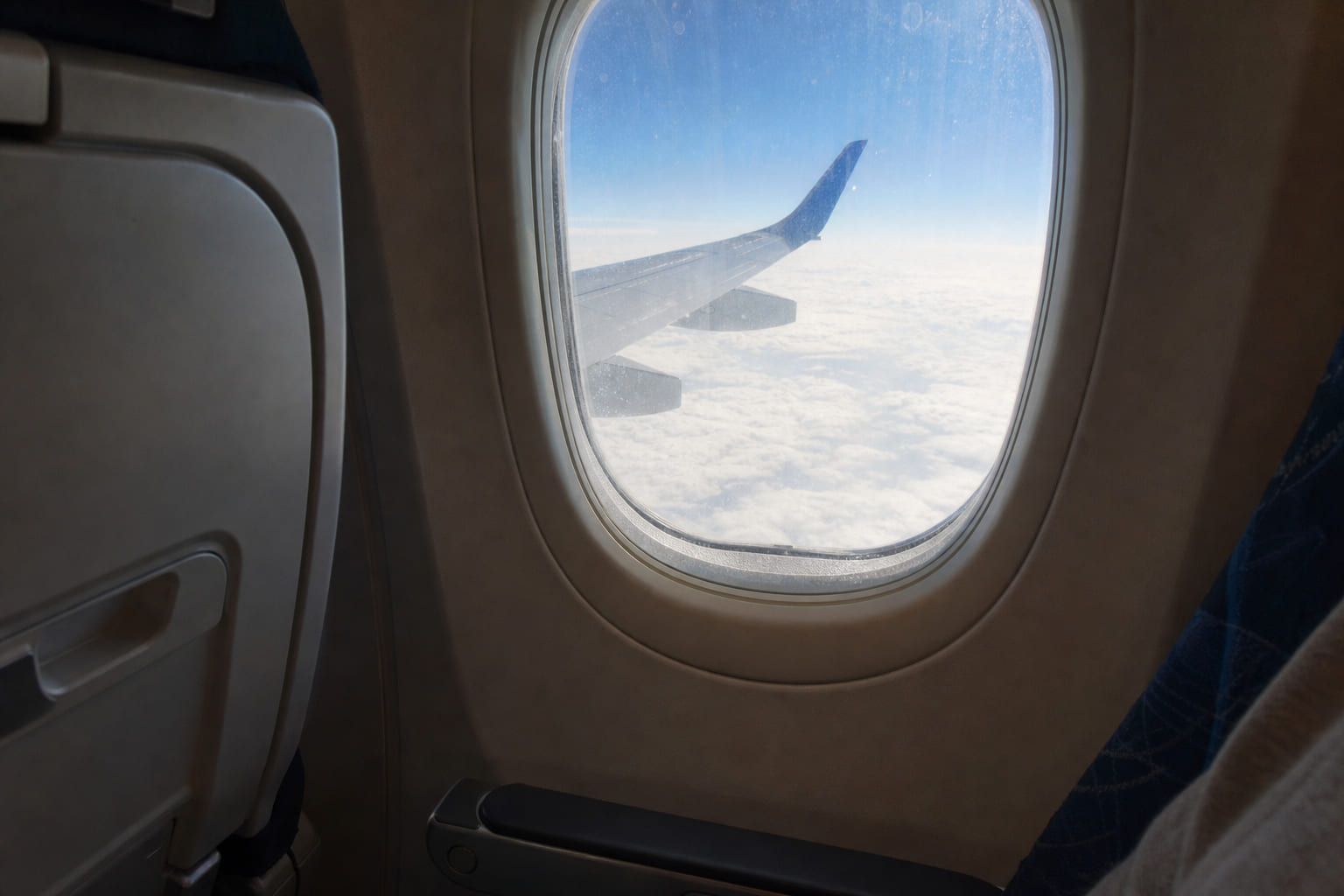
If you searched best seats on a plane or what is the best seat on a plane, you want a clear pick — not a vague “it depends.” The best airplane seat is the one that matches this flight's priority. Open the airline seat map for your exact aircraft (a 737 and an A320 do not share the same exit rows), then choose from the table below.
Seat selection starts when you buy your flight ticket: budget airlines often charge for seats; many full-service carriers unlock free selection at online check-in. Pair this with our airport layover guide, carry-on suitcase guide, duty free explainer, and long-flight comfort guide.
Best seats on a plane by goal
Start with your priority — sleep, movement, smooth air, legroom, or a fast exit — then confirm the pick on the seat map.
| Goal | Best pick | Why |
|---|---|---|
| Sleep / privacy | Window | Lean on the wall; fewer aisle interruptions |
| Move, laptop, or lavatory access | Aisle | Stand up without climbing over neighbors |
| Less turbulence | Over the wing (mid-cabin) | Closest to the aircraft center of gravity / lift |
| Extra legroom | Exit row or suitable bulkhead | More pitch — check fees, recline, and eligibility |
| Fast deplane / tight connection | Forward cabin, aisle | Shorter walk to the door; fewer people ahead |
Window vs aisle vs middle: which is better?
- Window — best for sleep, natural light, and leaning on the wall. Trade-off: you climb over neighbors to get up.
- Aisle — best if you stretch, work on a laptop, or walk often. Trade-off: cart bumps and neighbors climbing past.
- Middle — usually the worst solo option (no wall, no aisle). Fine for short hops when splitting a row with companions.
Solo travelers: default to window for red-eyes and aisle for daytime work flights. On light loads, ask at check-in about emptier rear blocks — entire empty rows sometimes remain. More solo logistics: solo travel guide. Ready-made itinerary: Tokyo, 3 days — solo trip.
Where to sit on a plane: front, wing, or tail?
Cabin position changes noise and how strongly you feel bumps. Pick the zone that matches your goal, then verify lavatory and galley icons on the map.
| Zone | Pros | Cons |
|---|---|---|
| Front of cabin | Faster exit after landing; quieter on many jets; meal service often starts here | Slightly more pitch/roll feel on takeoff and landing than mid-cabin |
| Over the wing | Smoothest ride in turbulence — nearest the center of gravity | Wing can block part of the window view |
| Rear of cabin | Sometimes fills last (more empty-neighbor odds on light loads) | More sway in bumps; nearer lavatories and galley noise on many layouts |
| Emergency exit rows | Extra legroom | Often paid; may not recline; limited under-seat storage; able-bodied adults only |
| Last row | Occasionally easier to get a blocked middle on light loads | Seats often do not recline; constant lavatory queue |
For less turbulence, prioritize over the wing. For a quick exit, sit as far forward as your fare allows on an aisle. Avoid the last row if you want a seat that reclines.
Are exit row seats worth the fee?
Exit rows buy pitch — often the best economy legroom — but only when legroom is your top goal and you meet the rules.
- Expect a fee on most airlines; compare against a cheaper standard seat plus stretch breaks.
- Some exit seats do not recline, or the row ahead cannot recline into you.
- Under-seat bag space may be limited for takeoff and landing — bags go in the bin.
- You must be willing and able to assist in an evacuation; kids, elderly, and pets are barred.
If you only need a little more space and do not qualify for an exit row, check bulkhead economy (more room ahead, sometimes bassinet hooks) and read the seat-map tooltips carefully.
When should you reserve your airplane seat?
- Budget / LCC — paid seat maps often open at purchase; waiting usually means middle seats.
- Full-service — free selection may unlock at online check-in (commonly 24–48 hours before departure). Set a reminder.
- Always open the real aircraft seat map for your flight, not a generic diagram — exit rows and non-reclining seats move by type.
Flying with kids
- Prefer bulkhead economy for space and bassinet hooks on long-haul flights.
- Many airlines seat children next to adults at no extra seat fee — confirm before paying for extras.
- Never book exit rows with children.
After landing, see our family travel routes atlas, plus Paris with kids and London with kids.
Fear of flying and turbulence
- Sit over the wing (or just forward of it) for the least motion.
- Prefer an aisle if looking out the window increases anxiety.
- Avoid the far tail where sway feels strongest.
Consider travel insurance with cancellation cover if postponing a flight reduces stress.
Couples and small groups
- Book window and aisle in one row — the middle often stays empty on partial loads.
- If someone is assigned the middle, they usually swap for window or aisle gladly.
- Check in online 24–48 hours ahead to lock seats together.
Looking for a travel buddy? Travel companion guide. Couple itinerary: Rome, 3 days for a couple.
Flying with a pet
- Carriers are usually assigned window seats so the pet does not block the aisle in an evacuation.
- Exit rows and front rows without a seat ahead are off limits — the carrier must fit under the seat.
- Confirm airline pet rules before purchase; violations can cost more than the ticket.
Plan the trip with AlpacaBag
A good seat is only the start. AlpacaBag builds day-by-day routes for your group size, pace, and budget — from family flights to solo adventures. Less guessing on the seat map, more time for the destination.
Ready-made routes
Routes for your destination
Day-by-day plans you can adapt to your dates right away.



FAQ
What is the best seat on a plane?
Sleep → window. Move freely → aisle. Less turbulence → over the wing. Extra legroom → exit row or bulkhead. Tight connection → forward aisle. Match the seat to your goal for that flight.
Which seat is best for turbulence?
Sit in the mid-cabin over the wing, near the aircraft center of gravity. The tail usually feels the most motion. Aisle vs window in the same row matters less for bumps than cabin position.
Window or aisle — which is better?
Window is better for sleep, views, and fewer interruptions. Aisle is better if you stretch often, work on a laptop, or need lavatory access. Middle is usually the worst option when flying alone.
Where should families sit in economy?
Prefer bulkhead rows in economy for space and bassinet hooks on long-haul flights. Many airlines seat children next to adults at no extra fee. Never book exit rows with kids — safety rules prohibit it.
When should I reserve my airplane seat?
As early as you can: at ticket purchase on budget airlines (often paid), or at online check-in 24–48 hours ahead on carriers that unlock free seats then. Popular window and aisle seats go first.
Are exit row seats always better?
Only if legroom is your priority and you meet the rules. Exit rows are often paid, may not recline, can lack under-seat bag space, and require able-bodied adults willing to help in an evacuation — no kids, elderly, or pets.
Where is the best place to sit on a plane?
For the smoothest ride, over the wing. For quiet and a faster exit, forward cabin. For sleep, a window seat in a quiet zone away from galleys and lavatories.