
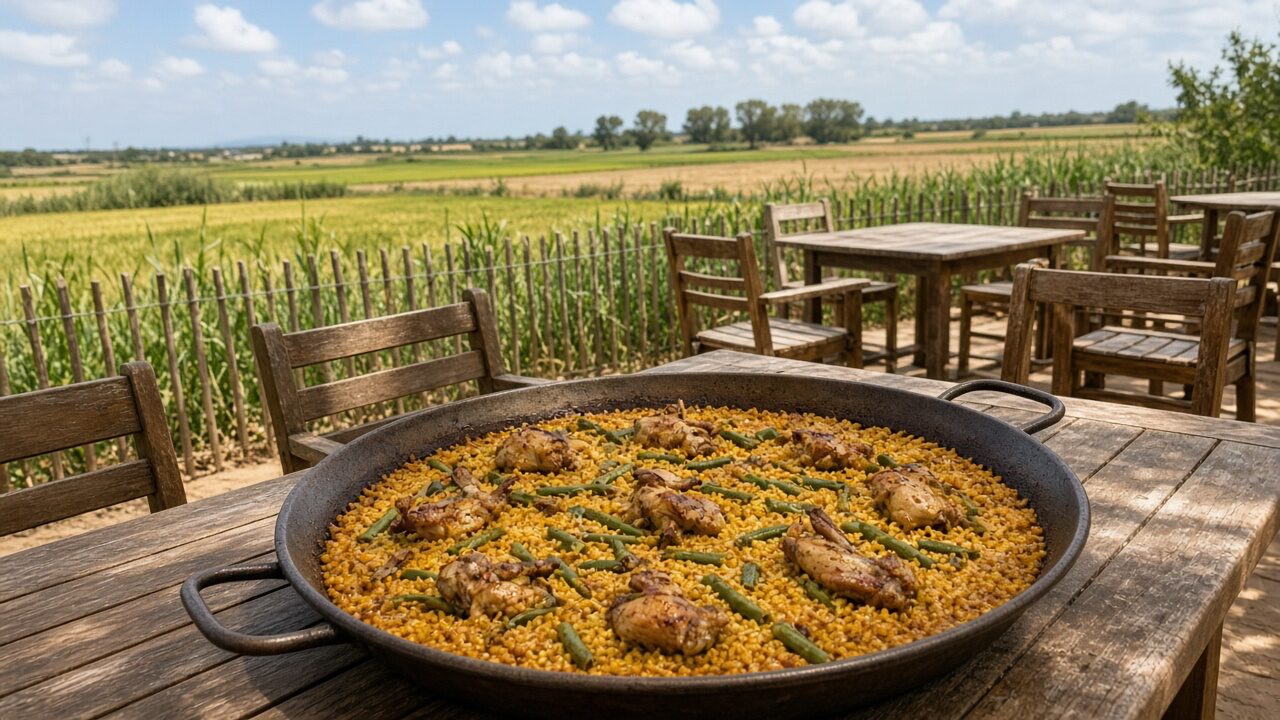
First choose the rice dish, not the photograph
Paella began in the agricultural landscape south of Valencia, where rice from the Albufera fields met ingredients available inland. A recognisable paella valenciana normally contains chicken, rabbit, flat green beans and large garrofo beans. Snails and artichokes appear in some kitchens and seasons. Seafood is not part of that traditional recipe, but that does not make Valencia's seafood rice dishes inauthentic.
Order by appetite. Arroz a banda is rice cooked in fish stock, generally served without a heap of shellfish. Arroz del senyoret comes with peeled seafood, so it is easier to eat. Arroz negro uses squid ink. Fideua replaces rice with short noodles. A dry, thin layer of grains is the goal in these dishes; a creamy arroz meloso is a different, deliberately softer style.
Socarrat is the toasted layer at the bottom, not a licence to serve burnt rice. Ask what the kitchen recommends that day and whether the listed amount is per person. One pan is usually shared by everyone who chooses that rice, so a table cannot always split four different versions.
Where to eat: landscape, beach or city convenience
El Palmar and Albufera
Choose El Palmar if paella is one of the main reasons for the trip. The village sits among rice fields in Albufera Natural Park and has many specialist rice restaurants. Visit Valencia lists Restaurante El Palmar at about €30 average spend and Llar del Pescador at about €35; these are orientation figures, not fixed menus. Check each restaurant directly for its current opening days, rice minimum and reservation policy. Bus 25 reaches El Palmar, but the timetable makes this a half-day rather than a quick lunch detour. Pair it with a boat ride using our Albufera transport guide.
Cabanyal and Malvarrosa
The seafront is logical after a beach morning. It offers sea views and strong rice kitchens, but the location alone proves nothing. Reserve a named restaurant, read the current rice menu and avoid choosing from a photograph board after you are already hungry. Tram and bus connections make the return easier than El Palmar.
Old town and Ruzafa
A central arroceria is the efficient answer on a museum day. It will not provide the rice-field setting, but it can save two hours of transport. Ruzafa is useful for a later drink; lunch near the old town pairs naturally with the Central Market. Judge the restaurant by how clearly it explains its rice, cooking time and per-person price, not by whether the menu happens to be multilingual.
How to order without turning lunch into a trap
- Reserve for roughly 1:30–2:30 pm, especially at weekends.
- Ask whether the rice must be pre-ordered and how many people the minimum serves.
- Confirm whether the displayed price is per person or per pan.
- Expect roughly 30–45 minutes if the kitchen starts the pan after you arrive.
- Choose one rice for the table and add only a light starter; portions are often generous.
A fast arrival is not automatically suspicious if you pre-ordered. More useful warning signs are staff who cannot explain the ingredients, a menu that calls every yellow rice “paella valenciana”, or an unexpectedly cheap offer that becomes expensive through mandatory add-ons. Colour alone is also a poor test: saffron is subtle, but recipes use other permitted seasonings too.
Useful questions are ¿Hay que encargar el arroz? (must the rice be ordered in advance?), ¿El precio es por persona? and ¿Para cuantas personas es?. If you do not eat rabbit, shellfish or snails, say so before the pan is prepared rather than trying to remove ingredients at the table.
A Valencia food day that actually fits together
Start at 9:00–9:30 am at Mercat Central for seasonal fruit, cheese, olives and a look at bomba and senia rice. Continue through La Lonja and the old town. For a city lunch, sit down around 1:30 pm and spend about two hours at the table. Afterwards, choose the Turia Gardens or the exterior of the City of Arts and Sciences; a heavy ticketed museum programme immediately after lunch is rarely enjoyable.
For El Palmar, leave central Valencia before noon, take the bus or a taxi, eat lunch and add a lagoon boat ride before returning. In summer, reverse the sightseeing logic: avoid a long exposed walk at midday and keep the evening for the city. Families can use the lower-pressure options in our Valencia with kids itinerary.
Budget, solo diners and good alternatives
Use €20–35 per person as a realistic planning band for rice, a shared starter and a drink. A premium seafood pan, beachfront table or tasting menu can exceed it. There is no official citywide paella tariff, and restaurant menus change with ingredients, so treat every range here as guidance and check the current menu before travelling across town.
Solo travellers should search for a weekday menu del dia that includes rice, or ask whether an individual portion is available. If your companion does not want paella, choose a rice specialist with other mains rather than pressuring a paella-only restaurant to divide one pan. On a short visit, a well-made arroz a banda in town is a better decision than losing half a day chasing an invented “secret local” address.
These ready-made routes help place lunch in context: first visit to Valencia, a couples' weekend and Valencia with children. If the meal determines where you stay, compare hotels near your chosen neighbourhood after deciding between the centre, beach and Albufera.
Build your day
Build the day around your pace in AlpacaBag — sights, food, and logistics in one itinerary.
Ready-made routes
Routes for your destination
Day-by-day plans you can adapt to your dates right away.



FAQ
When should I eat paella in Valencia?
Book it for lunch, normally between 1:30 pm and 3:30 pm. Many specialist rice restaurants cook each pan to order and may ask you to choose the rice dish when reserving.
How much should I budget for paella?
About €20–35 per person is a useful planning range for a rice lunch with a drink, although waterfront restaurants and elaborate seafood rice can cost more. Menus and seasonal ingredients change, so confirm the price per person before ordering.
Does authentic Valencian paella contain seafood?
Traditional paella valenciana is usually made with chicken, rabbit, garrofo beans and green beans; snails are common but not universal. Seafood paella, arroz a banda and fideua are valid local dishes, but they are different orders.
Where is the best area for a first paella?
El Palmar is best for the rice-field context and combines naturally with Albufera. Cabanyal and Malvarrosa work for a beach day; the city centre is easier when time is short, but restaurant choice matters more than postcode.
Can one person order a paella?
Sometimes, but many restaurants set a two-person minimum because one pan is cooked as a single order. Solo diners can look for a lunch menu with an individual rice portion or choose arroz del senyoret, arroz a banda or another daily rice dish.