
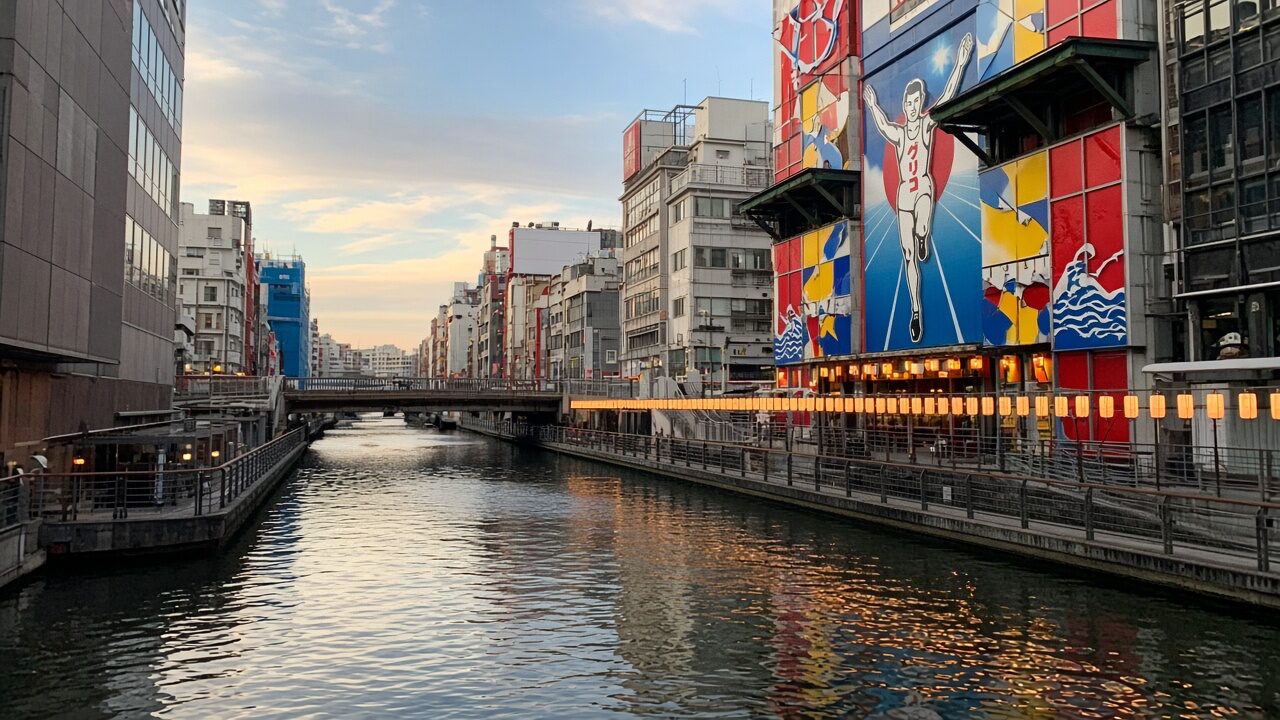
How to plan the visit
Dotonbori works as an evening walking district where the canal, signs, small dishes and quiet Hozenji create useful contrast. A long queue does not automatically mean better food.
The key decision is a realistic pace. It suits groups, neon photography and food-focused travellers; families are more comfortable in early evening. Noise and crowd density rise later at night. Confirm access, weather and transport on the day, then remove secondary stops if the schedule begins to slip.
Transport and timing
Namba is closest to the canal; Shinsaibashi works for an approach through the shopping arcade. Groups should choose an exact station exit because the underground complex is extensive.
Do not place connections immediately against a ticket slot or final service. Keep one fallback for Namba and Shinsaibashi: Kuromon works better as a daytime market; Shinsekai offers a rougher retro atmosphere. With dietary restrictions, choose a restaurant with a clear menu rather than a random stall. This protects the day without risky improvisation.
Before setting out, check:
- official opening information and final admission;
- weather, road or sea notices when relevant;
- return transport and accessibility for your group.
Route order
Begin at Hozenji before dinner, reach the canal through the narrow lanes and arrive at Ebisubashi around blue hour. After the neon view, continue north through Shinsaibashi-suji instead of turning around at the densest point.
- Stage 1. Hozenji and Yokocho before dinner. Reassess energy and actual time before continuing.
- Stage 2. canal and Glico sign around blue hour. Reassess energy and actual time before continuing.
- Stage 3. two small food stops. Reassess energy and actual time before continuing.
- Stage 4. Shinsaibashi arcade or quieter Namba side streets. Reassess energy and actual time before continuing.
Split takoyaki and okonomiyaki into two stops rather than spending the evening in one famous queue. If a kitchen has stopped taking orders, move on; Namba has enough nearby venues with clear menus.
Who it suits and alternatives
It suits groups, neon photography and food-focused travellers; families are more comfortable in early evening. Noise and crowd density rise later at night.
An alternative is not an inferior plan; it is a route for different constraints. Kuromon works better as a daytime market; Shinsekai offers a rougher retro atmosphere. With dietary restrictions, choose a restaurant with a clear menu rather than a random stall. Families, travellers with limited mobility and anyone facing heat or cold should reduce transfers before reducing the meaningful parts.
Local rules and practical details
- Do not eat while pushing through crowds; stop beside the vendor.
- Never jump into the canal or sit on barriers.
- Ask about sauces for allergies because dashi often contains fish.
JNTO explains the Namba and Shinsaibashi approaches, while Osaka Info is useful for canal events and closures. Check each kitchen directly because the district has no single market closing time.
Where to stay and protect the trip
Namba allows a late walk home, Shinsaibashi suits shopping, and Umeda requires a metro ride after dinner. Compare Osaka bases · Review Japan travel cover
Build the day without unnecessary transfers
Add the essential stop, entry time and hotel area, then let the planner arrange a route around your pace.
Ready-made routes
Routes for your destination
Day-by-day plans you can adapt to your dates right away.
Frequently asked questions
How much time should I allow?
It suits groups, neon photography and food-focused travellers; families are more comfortable in early evening. Noise and crowd density rise later at night. Keep at least two hours for a short visit and half a day or more for the complete route.
What is the best way to get there?
Namba is closest to the canal; Shinsaibashi works for an approach through the shopping arcade. Groups should choose an exact station exit because the underground complex is extensive.
Do I need to book ahead?
Check the official source before travel. Reserve ahead where timed entry or limited capacity applies; do not rely on old blog prices or opening hours.
What should I do if conditions change?
Kuromon works better as a daytime market; Shinsekai offers a rougher retro atmosphere. With dietary restrictions, choose a restaurant with a clear menu rather than a random stall.