13:00
🚕 Transfer to Hotel & Check-in
Fast taxi connection from your arrival terminal into the historical Haicheng District, allowing a relaxed check-in and luggage drop-off before hitting the colonial avenues.

BudgetMediumGroupCouple
Welcome to Beihai, an ancient maritime departure point of the Maritime Silk Road where century-old colonial treaty-port arcades meet enduring coastal fishing traditions. Specially curated for two travelers passionate about architecture and history, this three-day journey invites you to explore remarkably preserved Lingnan-Baroque shophouses, Victorian consular mansions, and archaeological Han Dynasty treasures.
🌤 WEATHER SUMMARY & TRAVEL ADVICE: November in Beihai offers prime autumn walking conditions, with comfortable daytime highs of +24°C to +26°C (75°F–79°F) and crisp evening lows around +18°C to +20°C (64°F–68°F). Rainfall is negligible ( 30–40 mm across the month), ensuring dry avenues and clear skies. Sunset arrives punctually at 18:02–18:03, with civil twilight fading rapidly by 18:25. Pack breathable cotton or linen clothing for daytime exploration, comfortable walking shoes for historic stone flagstones, and a light windbreaker or layer for refreshing coastal breezes along the seawalls after dusk.
2026-11-10
Fast taxi connection from your arrival terminal into the historical Haicheng District, allowing a relaxed check-in and luggage drop-off before hitting the colonial avenues.
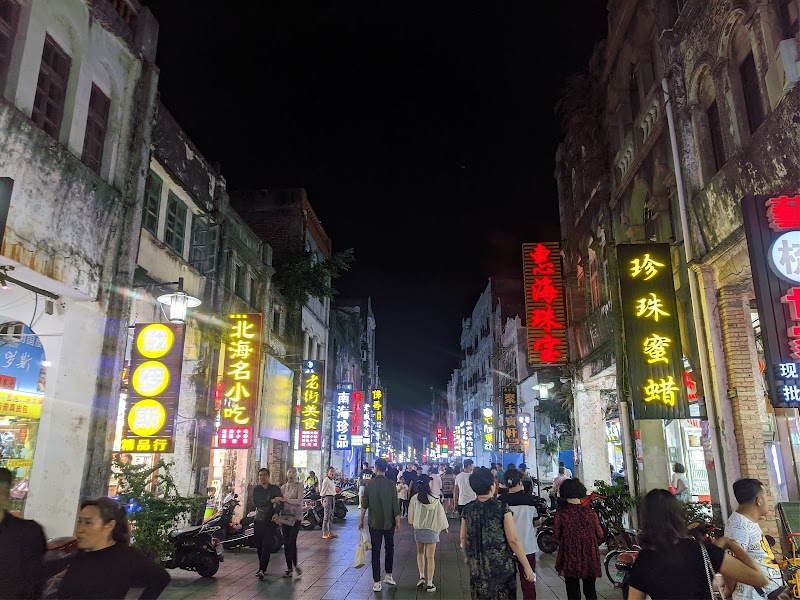
Established in 1821 and developed into its current form after Beihai became a treaty port under the 1876 Chefoo Convention, this 1.44-kilometer avenue represents southern China's most intact Qilou (arcade) corridor. Wander beneath shaded colonnades to admire Lingnan-Baroque pediments featuring stucco sea monsters, Romanesque arches, and neoclassical pilasters. Look above the ground-floor commercial signs to spot faded late-Qing merchant guild marks and original bilingual shop transoms preserved in plaster.
A pleasant eastward walk along the quieter continuation of Zhuhai East Road, moving from bustling street-level shops into residential courtyards.
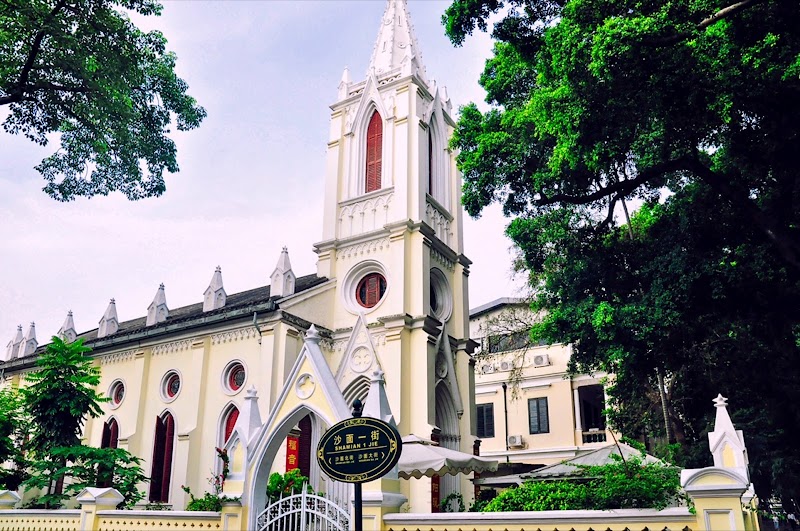
Erected in 1883 by French missionaries of the Paris Foreign Missions Society, this Gothic-revival chapel stands as one of the earliest Western ecclesiastical buildings along the Gulf of Tonkin. Its austere pointed-arch facade conceals an ingenious local adaptation: structural walls built using marine coral limestone quarried from nearby coasts paired with kiln-fired Lingnan grey bricks. The secluded tree-shaded courtyard offers a quiet cloistered space away from the arcade thoroughfare.
Scenic bridge crossing over the tidal inlet connecting northern Haicheng to the historic fishing quarter.
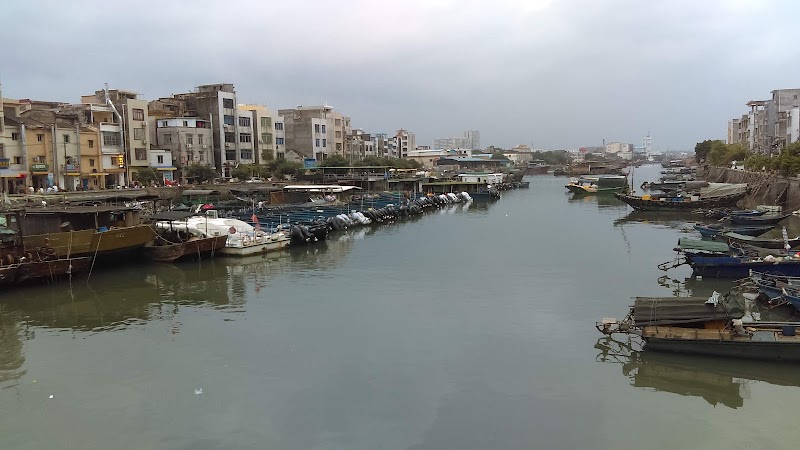
Once the primary coastal haven for Beihai's indigenous Tanka (boat-dwelling) population, Waisha Island retains working timber boatyards, marine slipways, and anchorage basins. It provides an unfiltered window into southern maritime naval carpentry, with classic wooden longline trawlers tied gunwale-to-gunwale along the seawall. Timed perfectly for golden hour, the seawall offers panoramic vantage points across the Tonkin Gulf right as the sun touches the horizon at 18:03.
Quick stroll crossing back over the canal toward the illuminated colonnades of Zhuhai Road.
This route is yours now
Save it so you don’t lose it. Add dates and a hotel — we’ll help adapt the plan to your trip.
No manual copying of addresses and notes.
Getting ready for your trip? Checklists and tips
Google Maps Photo: Kevin Kung, John B, Savoir Aimer (Admin), Shiva, PERRY KC LEE (李國柱)