
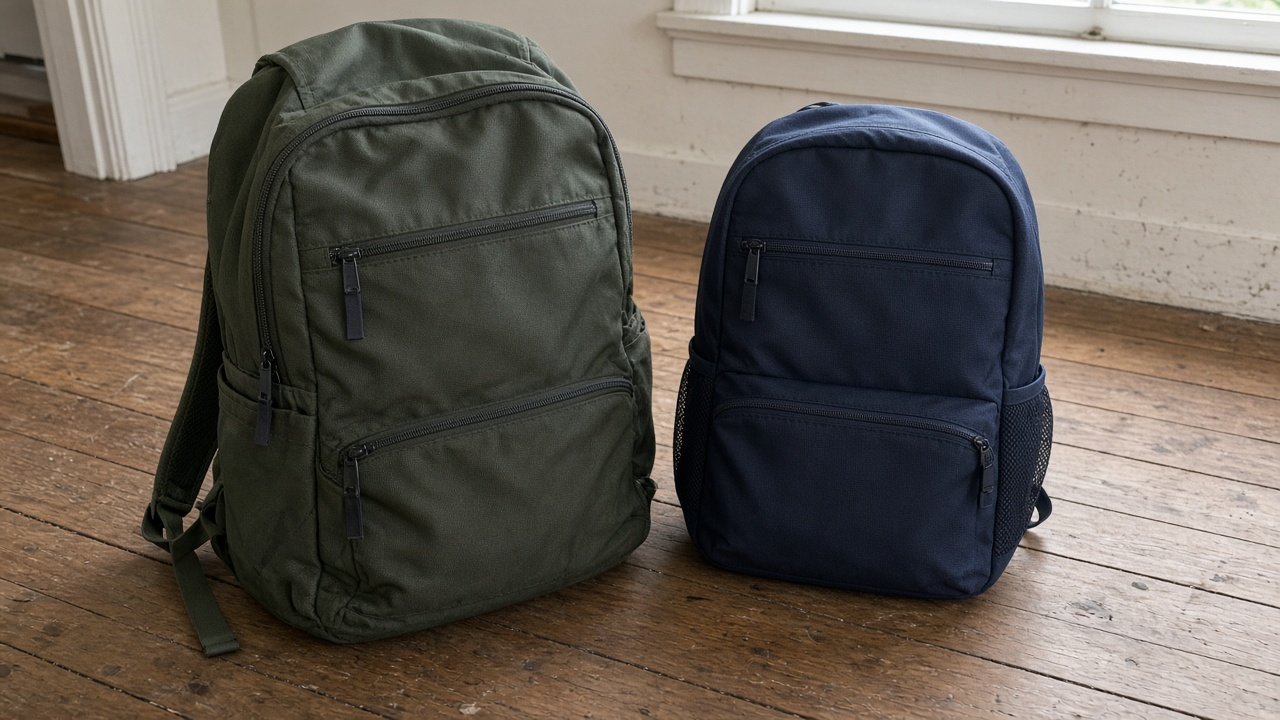
Why a 40-litre bag fills itself
Forty litres is an invitation. The bag looks reasonable on the bed, the hip belt is comfortable, and there is still a gap after the clothes go in. That gap is where the second jeans, the laptop, and the full wash kit disappear. You did not decide to take them. The volume decided, because nothing stopped the zip.
Litres are the space inside. They are not the metal box at the gate. Two packs both labeled 40L can have different outside dimensions once a frame, a lid, and a stuffed front pocket are on. A travel pack in that size is commonly deeper than the 20 cm a personal-item sizer allows. Soft fabric does not save you if the bag only closes when you kneel on it.
The useful comparison is not 40 against 40. It is 40 against about 26, the volume people aim at when the bag has to live under the seat. Fourteen litres is the gap. It is not fourteen souvenirs. It is usually the second pair of shoes, a laptop that will not open, a second pair of jeans, and toiletries still in the bottles from home. A 40-litre bag swallows all four and still zips. That is the overpack.
Full, then checked or gate-checked
A bag that left the house as cabin luggage becomes hold luggage when the outside no longer matches the fare. Two versions show up, and they are not the same thing.
- Checked at the desk: you hand the pack over before security. It rides in the hold and comes back on the belt. On a basic fare this is often a paid add-on. The price online and the price at the airport are different numbers, and both move.
- Gate-checked: the pack got through the airport, then failed the sizer, or the bins were already closed. Staff tag it and put it below for the flight. You may see it at the aircraft door or on the belt, depending on the carrier. A fee at that moment is common on low-cost fares, and it is often higher than the cabin bag you could have added when you booked. Some airlines refuse the bag instead of taking it for a fee. Read the page for your ticket.
Either way you are separated from the pack for the flight. Power banks and spare lithium batteries are the items to pull out before it goes below. Airlines generally want those in the cabin. The usual watt-hour line people plan around is 100 Wh. Between 100 and 160 Wh many carriers want you to ask first. The airline on your ticket can set a lower line. Medicines, documents, and a layer stay in a bag that is still with you. Do not sort that pile in the boarding queue.
Rules and fees were checked against the way carriers describe this on 17 November 2026. They change. The sizer in front of you is newer than this page.
What a 26-litre bag forces
A 26-litre personal-item bag does not make you a better packer. It removes the hiding place. If the second shoes do not fit, they stay on the bed, and that is a decision you can see. In the 40-litre pack the same shoes were a maybe that the zip forgave.
Twenty-six litres is a ceiling for the list, not a promise at the gate. The personal-item backpack guide already shows the catch. Osprey lists the Daylite 26+6 at 43 × 33 × 16 cm unexpanded. Ryanair’s free bag, checked the same day, is 40 × 30 × 20 cm. That pack is over on height and width before you fill it. A framed hiking pack sold as 26 litres can be too deep for the same box. Use the smaller volume to cut the list, then measure the packed bag. The gate does not grade litres.
What people were glad they left out of a two-week Europe bag — the extra trousers, the laptop that stayed shut, the heavy extras — is written out in the two-week one-bag regrets guide. This page is the step before that list: pick the bag that cannot hide the extras.
What leaves first
Cut in the order of weight and regret, not in the order the items were packed. Wear the heavy pieces. They do not count against the zip until you take them off.
| Piece | 40L habit | 26L list |
|---|---|---|
| On you | Coat and a second layer in the pack. | Coat, trousers, and walking shoes worn. |
| Clothes | Second jeans, outfit shoes, “just in case” shirt. | One lighter spare bottom. Four or five tops. Laundry once. |
| Tech | Laptop that opens for a boarding pass you have on the phone. | Phone, one 100–240V charger, the cables you will use. Laptop only if work, and then something else leaves. |
| Wash | Bottles from the bathroom shelf. | Decanted. Many airports still want 100 ml in the cabin. Check the one you depart from. |
| The zip | Closes with a knee. No corner left. | Closes with one hand. A corner stays empty for the way home. |
A second pair of shoes is the usual surprise. They are a large share of those 14 litres, and they are the pair you will not walk in. One pair, on your feet, is the cut that makes the smaller bag possible.
Downsize in one evening
Do this the night before, on the bed, not in the airport queue. Start from empty. Do not pack the 40-litre bag and then try to compress it.
- Empty everything you would have put in the 40L onto the bed.
- Put on the trousers, the walking shoes, and the coat you will wear to the airport.
- Move the rest into the 26-litre bag, or into a box taped to the personal-item size on your ticket. The personal-item guide has the published boxes.
- Whatever does not fit stays home. The empty space in the 40L is not a reason to put it back.
- Close the small bag with one hand. A knee means something else still has to leave.
- Leave a corner empty on purpose, for a book or a shirt on the way home.
- If the list fits and the outside still misses the box, the pack’s shape is the problem. A thick back panel is not another pair of socks. That is when you change the bag, not the list.
Wear-test the shoes you are keeping. A pair that hurts on the walk to the station becomes a second pair you buy on day two, and the 26-litre bag is full again.
If you are already at the airport with the 40L
Use the sizer before you are at the front of the queue, if the airport has one you can reach. If the pack fails, pull the cabin-only pile out first: power banks, spare batteries, medicines, documents, a layer, and the valuables. Then accept the hold, the fee, or a smaller bag you can still carry on. Hoping the agent skips the box is not a plan.
The next trip is the one to build around the bag that passed. A city string in Europe is easier to pack once the nights are real and the laundry stop is on the list, instead of a 40-litre “just in case” that you fill because it closes.
Build the trip around the bag that closes with one hand.
Build an itineraryReady-made routes
Routes for your destination
Day-by-day plans you can adapt to your dates right away.
FAQ
Does a 40-litre backpack count as a personal item?
Litres are the inside of the bag. The gate measures the outside. A filled 40-litre travel pack is commonly too tall or too deep for an under-seat box. Ryanair publishes 40 by 30 by 20 cm for the free bag, and other airlines publish a different box. Both numbers move. The sizer on the day is the result.
Will a full 40L bag be checked or gate-checked?
If it fails the sizer, many airlines put it in the hold, either at the desk or at the gate, and a basic fare often charges for that. Some refuse the bag instead of checking it. The fee and the option change by carrier. Pull power banks, spare lithium batteries, medicines, and documents out before the bag goes below.
Is 26 litres small enough for under the seat?
26 litres is a ceiling for the list, not a pass. Osprey lists the Daylite 26+6 at 43 by 33 by 16 cm unexpanded, which is already over Ryanair 40 by 30 by 20 cm on height and width. A framed hiking pack in the same volume can be too deep. Measure the packed bag. The personal-item guide sets published sizes next to the box.
How do I cut a 40L pack down to 26L?
Empty the large bag onto the bed. Wear the trousers, shoes, and coat. Move only what you would defend at the gate into the smaller bag. Whatever is still on the bed stays home. Close the small bag with one hand. If you need a knee, it is still the 40-litre habit.
What should stay out of a bag that might be gate-checked?
Power banks and spare lithium batteries stay in the cabin. Airlines generally treat those as cabin-only. The usual line people plan around is 100 Wh, and the carrier on your ticket can set a lower one. Medicines, documents, a layer, and anything you cannot replace on landing stay with you too.