
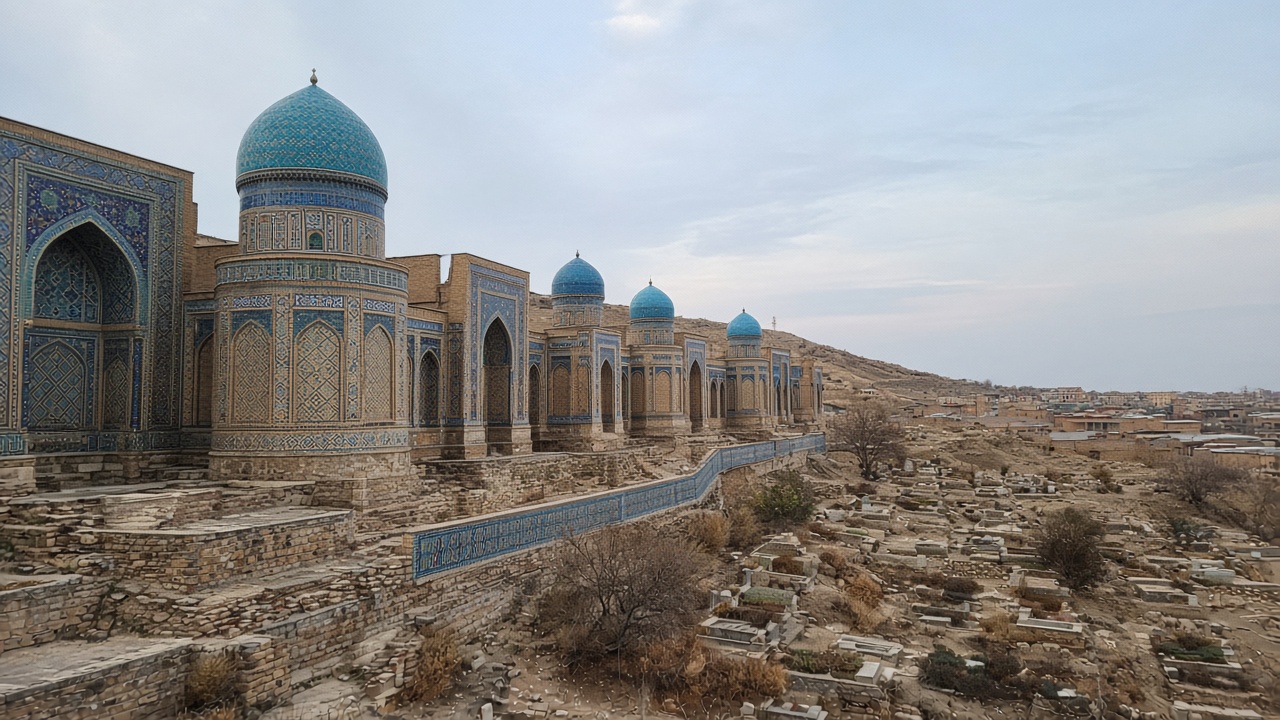
History and the “Living King” legend
Shahi-Zinda (“Living King”) grew around the shrine of Kusam ibn Abbas, a cousin of the Prophet in local tradition who preached Islam in Samarkand. From the 14th–15th centuries Timurids and elites lined the hillside with mausoleums — a necropolis that reads like a street of façades.
Stair legend: visitors count steps going up and down; folklore says the numbers should match. Treat it as a playful ritual, not an entry rule — respect for active shrine spaces matters more.
What to see: key mausoleums
Kusam ibn Abbas mausoleum
The upper ensemble is the spiritual core. Expect quieter voices, modest dress, and occasional gender-separated zones. Do not photograph people praying without permission.
Timurid royal and family tombs
The middle corridor is the tile showcase: 14th–15th-century façades with carved terracotta and glaze. Step back a few metres — details read better away from the entrance bottleneck.
Internal flow is simple: lower chartak → middle corridor → upper Kusam complex. Without rushing, 90–120 minutes is enough.
2026 logistics: hours, tickets, dress code
As of September 2026 the complex is usually open daytime hours (often roughly 8:00–9:00 until evening). Foreign tickets are typically tens of thousands of som — confirm the exact fee and schedule at the desk on the day. AlpacaBag does not affiliate official monument tickets.
| Item | Ballpark | Note |
|---|---|---|
| Site visit | 1.5–2 hours | Without rushing the mausoleum corridor |
| Foreign visitor ticket | ballpark 40–60k UZS | Prices change — confirm at the ticket desk |
| Taxi from centre / Registan | ~15–25k UZS | Or 20–30 min walk / city bus |
| Local guide at entrance | negotiable | Optional; agree the price first |
Getting there and what to pack
The necropolis sits northeast of Registan on the Afrasiab hills. From the centre: taxi, city bus, or a 20–30 minute walk. Bring water, covered clothing, and shoes for steep steps. For maps and rides, set up an eSIM or Yesim before you arrive.
One day: Shahi-Zinda + Ulugh Beg Observatory
Morning — Shahi-Zinda while groups are thin. Then walk or take a short transfer across the Afrasiab hills to the Ulugh Beg Observatory: museum, sextant trench, and Kokhak hill views. Leave Registan for sunset or another day — rushing plaza light after necropolis stairs rarely works.
Want a ready “Samarkand in 48 hours” scaffold with Bibi-Khanym and Siab Bazaar?
Build itineraryFrom Tashkent to Samarkand and on to Bukhara
Classic loop: Tashkent → Samarkand (Afrosiyob ~2–2.5 h) → Bukhara. In the capital, metro maps and a hotel near the station help early train mornings; international arrivals often land via Uzbekistan Airways before domestic rail. Documents and city order live in the Uzbekistan trip 2026 guide; drivers should read the Uzbekistan road-trip guide.
After Samarkand, Bukhara’s natural hub is the Poi-Kalyan ensemble. Optional day trips: Shahrisabz or Karshi; for mountains after culture, Chimgan near Tashkent. Spring and autumn beat midsummer heat — useful even when you check weather for other regional cities like Andijan.
Book flights and a hotel near Registan or the station before peak season. Seasonal pacing is covered in the Uzbekistan in autumn guide.
What to see nearby
Short hop: Siab Bazaar, Bibi-Khanym Mosque, Afrasiab museum / ruins, Ulugh Beg Observatory. For a three-day architecture scaffold use the Samarkand architecture route or the independent 3-day Samarkand plan.
FAQ
How long do I need at Shahi-Zinda?
Plan 1.5–2 hours for the stairs, corridor and photos. Pairing with Ulugh Beg Observatory the same day works well: morning at the necropolis, afternoon at the observatory and Afrasiab hills.
Is there a dress code?
Yes. Cover shoulders and knees, and follow staff guidance near the Kusam ibn Abbas shrine (sometimes separate zones). Wear shoes you can climb steep steps in.
When is the best time to visit?
Right at opening: fewer tour groups and softer light on the blue tilework. Midday summer heat is tiring; spring and autumn are kinder for Samarkand overall.
How do I combine it with Registan and Ulugh Beg?
Classic day: morning Shahi-Zinda, then Siab Bazaar / Bibi-Khanym, afternoon Ulugh Beg Observatory near Afrasiab. Save Registan for sunset on another block or the previous evening.
Do I need to buy tickets in advance?
Usually you buy on site. AlpacaBag does not sell monument tickets — verify live prices and opening hours at the desk or official sources before you go.