
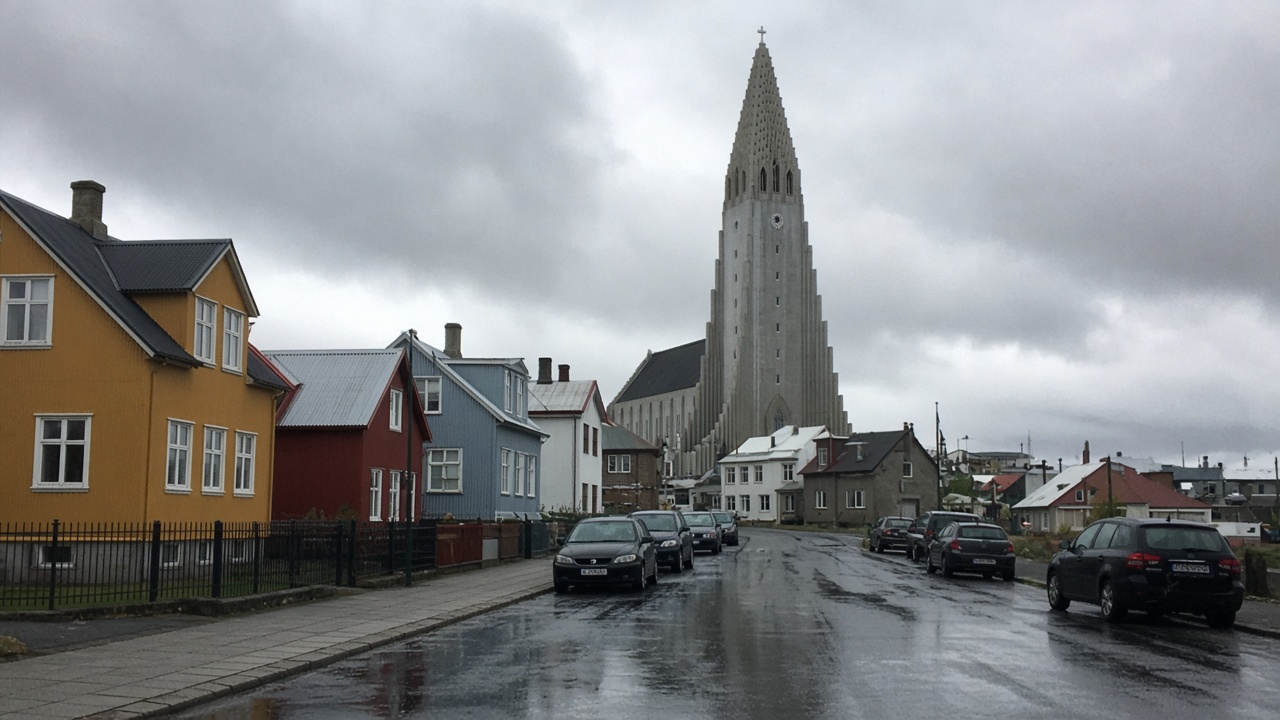
Reykjavik at a glance
Format
Walkable centre + 1–2 day trips
Base
Centre / Miðborg — easy without a car
Day icons
Hallgrímskirkja → Harpa → Sun Voyager
Museums
Perlan + National Museum
Budget
Expensive city; strong free layer
Nearby
Golden Circle, geothermal baths
Where Iceland sits on the map — and how to reach the capital
Iceland sits in the North Atlantic between Greenland and Scandinavia, straddling tectonic plates. Reykjavik is the world’s northernmost capital — on the island’s south-west, facing Faxaflói with mountains on clear days.
The main hub is Keflavík Airport (KEF), about 45–50 minutes by Flybus or car to the centre. Most stops in this guide sit inside a comfortable walk; Strætó buses help mainly for Perlan on the hill or outer neighbourhoods.
Versus the Faroe Islands or Stockholm: Reykjavik has less big-capital scale, but nature starts just beyond the suburbs. The Faroes are a separate archipelago with their own flag and logistics; Reykjavik is the easier base for museums, cafés and Golden Circle day trips.
City icons: what to see in one day
One full day needs three anchors: the church tower, glass Harpa by the water, and Sun Voyager on the shore path. Between them — murals and coffee.
Hallgrímskirkja — the skyline anchor
The tower echoes Iceland’s basalt columns and is visible from almost everywhere downtown. Inside is a calm Lutheran nave (the city’s spiritual landmark, not a religion museum). The paid observation deck is best in the morning before wind and queues build.
Harpa Concert Hall and the harbour
Harpa’s glass façade plays with colour even on grey days. Step into the atrium for free, then walk the harbour toward the old port — classic Reykjavik without a ticket.
Sun Voyager sculpture
The steel “ship” on the waterfront is a sunrise/sunset stop between Harpa and the eastern shore path. Free; bring a hood on windy days — photo queues rarely stop.
Museums and culture: sagas to modern art
On a second day or a rainy window, add Perlan and the National Museum. Near Hallgrímskirkja, Einar Jónsson’s sculpture garden is an easy add: northern myth reads differently from Greece’s Olympian pantheon, but heroes and stories land just as clearly.
Perlan and the indoor ice cave
Perlan on Öskjuhlíð hill mixes panorama, planetarium and exhibits on ice, volcanoes and aurora. The indoor ice cave is an interactive preview — not a substitute for real glaciers — useful before a South Coast trip. Check tickets and hours on the official site; budget a bus or uphill walk.
National Museum of Iceland
Þjóðminjasafnið ties settlement, sagas and everyday life together. It is a quieter counterpoint to postcard spots: less crowd, more context for why Icelanders guard the landscape so carefully.
Where to wander: easy urban walks
Tjörnin lake and City Hall
Tjörnin is the central lake with ducks, bridges and City Hall views. Free morning or post-lunch loop; cafés sit nearby on the way back to the old centre. On windy days the water behaves like a mini sea — grip your phone.
Laugavegur: shopping and street art
Laugavegur is the main shopping artery: souvenirs, lopapeysa wool, murals on side streets. Prices are high — window-shop and pick one or two intentional buys. Evenings bring bar energy after a full sightseeing day.
Ideal centre-day timing
A dense one-day skeleton without a car. Shift slots for light and rain: summers are long; in autumn and winter prioritise morning light and an earlier dinner.
09:00
Hallgrímskirkja: nave + observation deck if open. Coffee nearby.
11:00
Walk down to Harpa and along the shore to Sun Voyager.
13:00
Lunch: soup in bread or a Bæjarins Beztu hot dog — fast and local.
14:30
Tjörnin → Laugavegur for murals and unhurried browsing.
16:00
Perlan on the hill — views and exhibits before closing.
19:00
Dinner downtown; on clear autumn/winter nights, a short aurora window.
Budget: what costs — and what does not
Reykjavik is pricey, but the free layer is strong. Figures below are orientation only — confirm before you buy. AlpacaBag does not sell museum or lagoon tickets.
Hallgrímskirkja tower
Paid lift to the viewing platform (typically a few thousand ISK for adults). The church itself is free outside service times.
Perlan
Combo tickets cost more than the church tower. Worth it for panorama + exhibits; otherwise save budget for a day trip.
Bæjarins Beztu and street food
The famous hot dogs are one of the most predictable quick-lunch cheques. A sit-down dinner downtown climbs fast.
How to save
Drink tap water — it is excellent. Harbour walks, Sun Voyager, Tjörnin, Harpa’s exterior and street art are free. Watch museum free/discount windows; pack a thermos and supermarket snacks.
Near the city: waterfalls and geothermal baths
The Golden Circle (Þingvellir — Geysir — Gullfoss) is the classic full day from Reykjavik. Gullfoss outpowers many European cascade stops such as Rhine Falls: spray, wind and cold on the platforms — dress for it.
Geothermal baths (from city pools to spots like Sky Lagoon / Blue Lagoon) sell out — book ahead. Blue Lagoon often pairs with KEF transfers; tickets are sold by the venue, not by AlpacaBag.
The South Coast (Seljalandsfoss, Reynisfjara) is already a long day or an overnight. Do not force the Circle and Vík into one autumn daylight window.
For shoulder season and aurora odds, see Iceland in October.
Practical tips: money, transport, weather
- Clothing: windproof shell, layers, grippy shoes — wind and puddles are normal.
- In town: walk + occasional bus; for day trips use a tour, rental or transfer.
- Connectivity: an eSIM covers maps and weather apps; keep an offline map layer.
- Weather: four seasons in a day — always have a café or museum plan B.
- Etiquette: stay off fragile moss and private lawns for photos; respect waterfall barriers.
Pack checklist
- Windproof shell + fleece mid-layer
- Waterproof walking shoes / light trail shoes
- Power bank and offline maps
- Thermos / bottle for tap water
- Sunglasses (glare even under cloud)
- Card or cash float for hot dogs and buses
Before you travel, compare flights into KEF, Reykjavik hotels, eSIM and travel insurance.
Build your Iceland itinerary
Describe “Reykjavik 3 days” or “Golden Circle + South Coast” — AlpacaBag sequences timing, a city base and weather buffers.
FAQ
How many days do I need in Reykjavik?
One full day covers the main centre icons. Two or three days are more comfortable for museums, an unhurried Laugavegur and one Golden Circle or lagoon day trip.
Do I need a car in the city?
Not for the centre. A car helps for trips outside town; downtown parking and one-way streets eat time.
What is worth doing for free?
The Harpa harbour walk, Sun Voyager, Tjörnin, Laugavegur street art and street-level views of Hallgrímskirkja. Pay for towers and major museums based on interest.
Is the capital enough on its own?
If you want Iceland’s “wow” landscapes, plan at least one outing. A pure city weekend still works — the island just opens up beyond Miðborg.
How does AlpacaBag help?
The planner builds a walkable centre day, slots day trips and suggests weather windows — especially useful in autumn and winter with short daylight.