
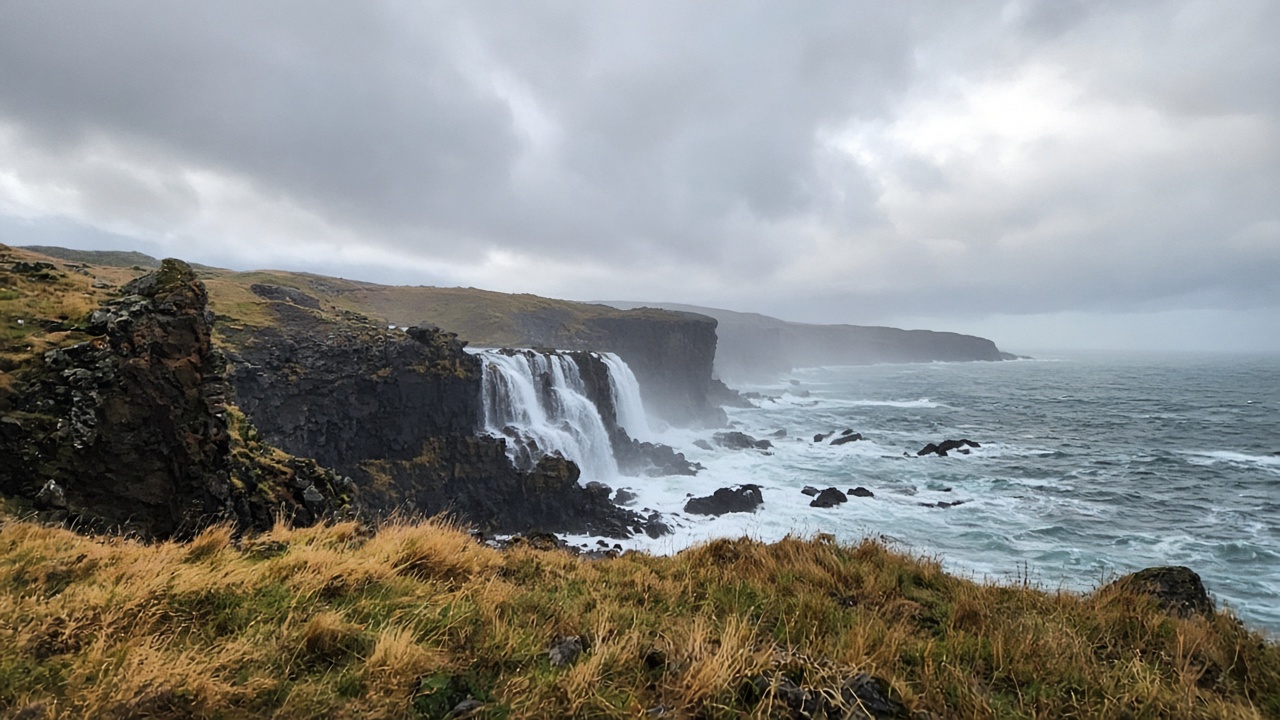
October in Iceland — at a glance
Season
Shoulder: fewer crowds, higher weather risk
Daylight
From ~11 h early month to ~8–9 h late
Aurora
Dark nights work; clouds decide
Prices
Lodging & cars often 30–40% below August
Roads
Highland F-roads usually closed
Base
Reykjavik + day trips / partial Ring Road
Is mid-autumn Iceland a good idea?
Yes — if you accept wind, short days and a flexible plan. No — if you need stable summer light and open highland F-roads.
Weather and daylight: what to expect
October is the slide into winter: fronts, rain, wet snow in the hills, and gusts that feel colder than the thermometer. Calm mornings can flip to storm warnings by lunch.
Daylight shrinks fast: around 11 hours early in the month, closer to 8–9 by the end. Put long drives in the morning–afternoon; keep evenings for baths, dinner and aurora windows.
Apps: Vedur.is (weather and aurora), SafeTravel (alerts), road.is (road conditions). Without them an October road trip is guesswork.
Prices and logistics: low season in practice
Reykjavik lodging and car hire often run about 30–40% below peak August — “cheaper” is still not cheap. Prefer flexible rates: a storm can reshuffle day trips.
Golden Circle and South Coast tours run through October; Vatnajökull ice caves depend on conditions and operators — check seasonality. Reykjavik stays a practical base, unlike remote archipelagos such as the Falklands where logistics are a different sport.
What to see in October: Golden Circle to ice caves
October success is not forcing the entire Ring Road in the dark — it is picking dense clusters: south-west + south, or capital + Circle + one hero outing.
Golden Circle
Þingvellir, Geysir and Gullfoss still fit a daylight day from Reykjavik if you leave early. Gullfoss platforms are cold and slick — good tread (or spikes) helps.
South Coast
Seljalandsfoss, Skógafoss, Reynisfjara near Vík. Budget wind and short stops; stay behind barriers and well back from sneaker waves at Reynisfjara.
Ice caves and glaciers
October starts the season for some glacier tours (ice stability dependent). Go only with licensed guides; never walk onto a glacier tongue alone.
Jökulsárlón
The glacial lagoon and Diamond Beach are powerful stops east of Vík — already a long day or an overnight. Calculate daylight for the round trip first.
Hunting the Northern Lights
Nights are dark enough: odds beat summer, but cloud cover and moonlight matter as much as the Kp index. Do not expect aurora every night — plan two or three windows.
Leave Reykjavik light pollution: coastlines, Reykjanes, Golden Circle pull-offs. A car or tour beats walking into a storm. Pack a warm shell and a thermos — waiting is colder than it looks.
Thermal baths and skyr: route pauses
Reykjavik city pools and lagoons like Sky Lagoon / Secret Lagoon are the best rainy plan B. Book peak evening slots ahead.
Skyr is a dense dairy snack that travels well between waterfalls. Add a banana or granola and you have a working road lunch without a restaurant cheque.
Planning notes: Iceland vs other northern trips
Why October in Reykjavik is not October in Scotland or Ireland
Scotland and Ireland are also wet and windy in October, but denser roads, shorter hops between highlights and fewer sudden highland closures make schedules stickier. In Iceland one storm can erase a South Coast day.
The landscape is harsher: lava, open plateaus, ocean without tree cover. October here feels like early winter with an aurora bonus — not a soft Edinburgh autumn. Compared with Greenland, Reykjavik is still the accessible option: daily KEF flights and city infrastructure.
For a walkable capital day, see Reykjavik attractions.
Practical tips: clothing, cars and safety
Clothing checklist (layering)
- Thermal base layer (top + bottom) every day
- Fleece / light insulated mid-layer
- Windproof shell jacket with a hood
- Waterproof trousers for waterfall spray
- Grippy shoes + spare socks
- Hat, gloves, neck gaiter — wind steals heat first
- Highland F-roads are usually closed by October — do not keep a summer Landmannalaugar line without checking.
- A normal car often covers the south and Circle; 4×4 matters for snowy passes or rough side roads — confirm rental rules.
- Drive in daylight; night rain and storms raise risk faster than reward.
- Insurance covering rental excess and remote medical care is baseline, not optional.
Before you fly, compare flights into KEF, October lodging, eSIM and road-trip insurance.
City October: Imagine Peace Tower and RIFF
The Imagine Peace Tower on Viðey usually lights around John Lennon’s birthday (9 October) and runs through autumn weeks — confirm seasonal dates on official pages. A short boat/tour from the city reframes the capital.
Reykjavík International Film Festival (RIFF) often lands in autumn: a cultural anchor when weather cuts outdoor plans. Pair screenings with a walkable centre day — see the Reykjavik attractions guide.
A 7-day Iceland sketch for October
A short-daylight skeleton. Slide days around storm warnings; do not try to “finish the island”.
Day 1 · Arrival + Reykjavik
KEF → centre. Easy harbour walk, Harpa, early sleep. Skip long drives on arrival day.
Day 2 · Dense city day
Hallgrímskirkja, Laugavegur, a museum or Perlan. Evening pool or aurora if skies clear.
Day 3 · Golden Circle
Early start: Þingvellir → Geysir → Gullfoss. Back before dark. Budget ~8–10 hours with buffers.
Day 4 · South to Vík
Seljalandsfoss, Skógafoss, Reynisfjara. Overnight near Vík beats racing the light.
Day 5 · Glacier / lagoon or return
Weather window: glacier/cave tour or a push to Jökulsárlón. Otherwise a slow return with a thermal stop.
Day 6 · Reykjanes or baths
Peninsula, hot springs, or a museum buffer day before departure.
Day 7 · Buffer + flight
Flexible morning, souvenirs, transfer to KEF. Do not bet your only aurora night on this day.
Build an October itinerary for your dates
Describe “Iceland, October, 7 days, aurora + south” — AlpacaBag sequences daylight windows, a base and storm buffer days.
FAQ
Is October a good time to visit Iceland?
Yes if you want prices below August, dark nights for aurora and can flex for wind. No if you need long days and open highland F-roads.
How much daylight is there in October?
Roughly 11 hours early in the month down to about 8–9 by the end. Schedule long drives in the first half of the day.
Do I need the full Ring Road in a week?
Not necessarily. For seven October days, south-west + south + buffers usually beats racing the entire circle in darkness and storms.
Are the Northern Lights guaranteed?
No. Odds beat summer, but clouds often block activity. Plan several night windows.
Which apps are essential?
Vedur.is for weather and aurora, SafeTravel for alerts, road.is for road status — plus offline maps on your phone.