
Essential facts about the route
The Camino de Santiago is a network of historic paths leading to the cathedral in Santiago de Compostela, Spain, where the relics of Saint James are believed to rest. The Portuguese Way is the second most walked after the French route and traditionally starts in Lisbon or Porto. Most modern pilgrims begin in Porto, leaving 240 to 280 kilometers to the finish depending on the trail you choose.
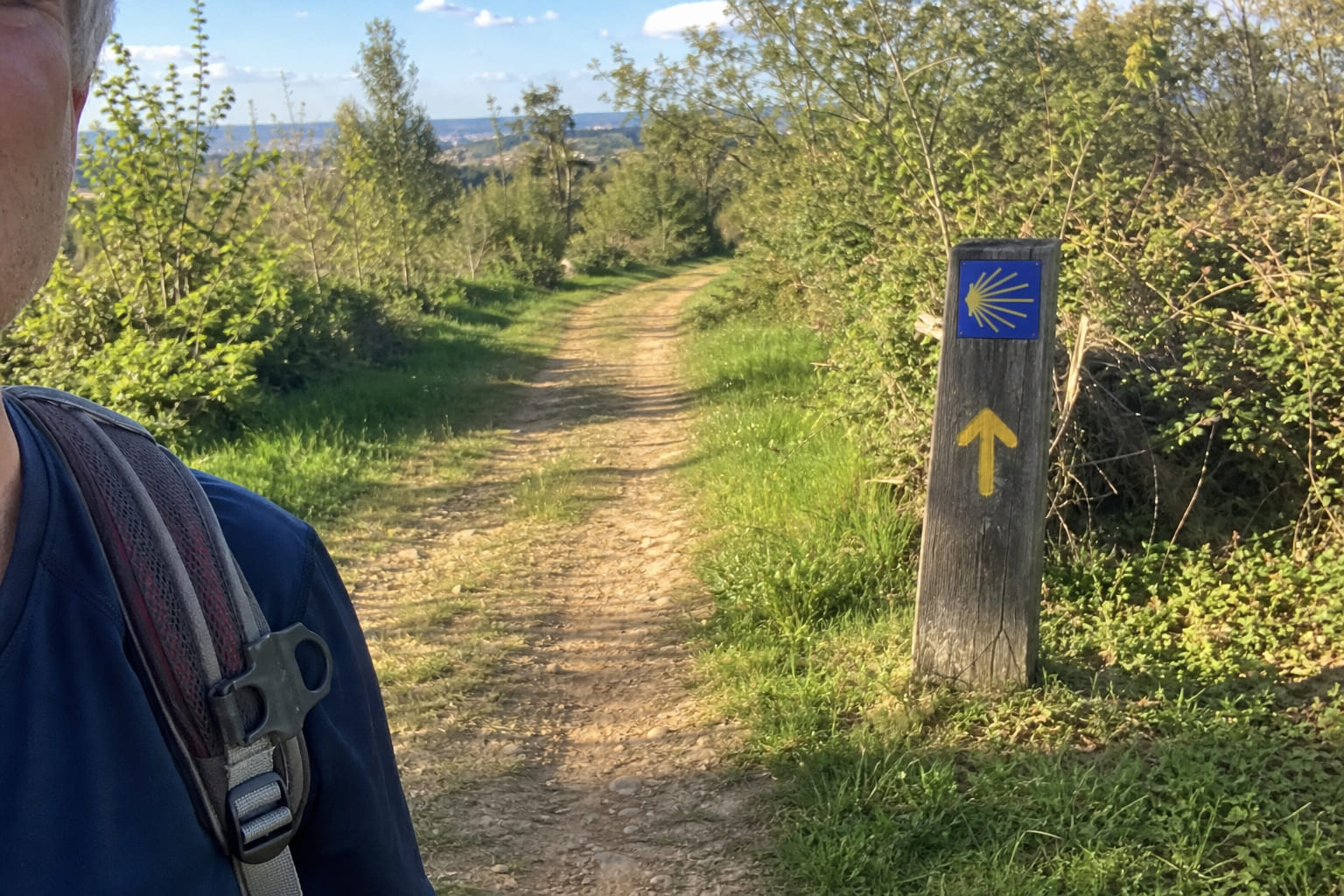
The way is marked with yellow arrows and scallop shells on trees, stones, and house walls — navigation is intuitive. Still, plan your flight into Porto, rest days in Lisbon or Barcelona, and your return trip: compare flights early and buy travel insurance that covers hiking. For a Spain add-on, try our 3-day solo Barcelona route or build a multi-city plan in our multi-city vacation guide.
Comparing routes from Porto
Two main branches leave Porto: the Central and Coastal (Costa) paths. They merge near the Miño River on the Portugal–Spain border, then continue through Galicia. Your choice depends on fitness, weather, and whether you prefer forest villages or Atlantic views.
| Feature | Central route | Coastal route (Costa) |
|---|---|---|
| Landscape | Forests, hills, fields, historic villages, cobbled roads | Boardwalks along the Atlantic, beaches, ocean wind |
| Distance | About 240 km | About 280 km |
| Infrastructure | Best developed: many albergues and cafés | Good, but albergues are slightly less frequent |
| Difficulty | Moderate, with sustained climbs | Easier: mostly flat terrain |
Timing for both options — in our best travel season guide. After the finish in Santiago, add a cultural block such as Rome beyond the Colosseum or 3 days in Barcelona for history lovers.
Credencial and where to sleep
To stay in pilgrim hostels (albergues) you need a credencial — the pilgrim passport. Buy one for about €1.50 at major churches or tourist offices at the start. Municipal albergues average €5–6 per night; private ones run €20–25. In peak season, book hotels on key stages in advance.
Stamps collected along the way unlock the Compostela — the official completion certificate in Santiago. You need at least 100 km on foot in one go (many start from Tui or Porto). Split cash and documents across hiding spots using tips from our travel money safety guide.
- Arrive at albergues before 2–3 p.m. — beds fill fast in season.
- Municipal hostels prioritize walking pilgrims with a credencial.
- Showers and kitchens are shared: pack a quick-dry towel and light cookware.
Packing your backpack
Your pack is your best friend or worst enemy on the Camino. These targets complement our long-trip packing guide — here minimalism beats capacity.
- 30–40 L pack with a supportive back panel. Total weight: no more than 10% of body weight; 5–8 kg is ideal.
- Broken-in shoes only — cushioned trail runners or light hiking boots. Bring sandals or Crocs for showers and hostel downtime.
- Sleeping bag or liner — bedding is rarely provided.
- Microfiber towel, rain jacket, and trekking poles to ease joints on rocky descents.
- High-capacity power bank — shared dorms rarely have enough outlets.
Plan your Camino and post-walk days
Use AlpacaBag for flights, nights in Porto and Santiago, and cultural days in Spain — day-by-day with map and PDF.
Practical tips for pilgrims
Eat at local cafés: the menú del peregrino (pilgrim menu) delivers a filling lunch or dinner for €6–12. It is cheaper than assembling snacks and part of Camino culture. More Europe food hacks in our budget food in Europe guide and travel budgeting article.
- Book private albergues in peak season (July–August, Easter) via booking sites.
- Activate an eSIM before departure — you need maps and daily check-ins.
- Pin laundry to your pack with safety pins while walking — clothespins blow off in coastal wind.
- Start early: heat and crowds rise sharply after noon.
- Walking solo? Our solo travel guide covers habits that fit pilgrimage perfectly.
After receiving your Compostela, book a cathedral tour or send your pack by transfer to Porto airport — an easy way to combine the walk with city time.
Smart planning with AlpacaBag
The Camino is not only the trail — it is flights, transfers, pre- and post-walk hotels, and rest days. AlpacaBag lays it all out day by day: from landing in Porto to flying home from Santiago with buffer for weather and fatigue.
Ready-made routes
Routes for your destination
Day-by-day plans you can adapt to your dates right away.
FAQ
How many days does the Portuguese Camino from Porto take?
At a typical pace of 20–25 km per day, plan 10–14 days. The Central route is shorter (~240 km); the Coastal route is longer (~280 km). Add 1–2 buffer days for weather and rest. AlpacaBag helps you lay out pre- and post-walk blocks day by day.
Central or Coastal route — which should I choose?
The Central path has more infrastructure and historic villages but includes climbs. The Coastal (Costa) route is flatter and easier on the legs, though windier and with slightly fewer albergues. First-timers often pick Central; ocean lovers who want flat terrain lean Coastal.
Can I walk the Camino solo?
Yes — it is one of the most common formats. You meet pilgrims daily on the trail and in albergues. Solo walkers should carry insurance, split cash and cards across hiding spots, and check in with someone at home — see our solo travel guide for more safety habits.
What is the Compostela and how do I get one?
The Compostela is the official certificate issued at the Pilgrim Office in Santiago de Compostela. You need a credencial stamped along the way, covering at least the last 100 km on foot (200 km by bike). The document is free; queues can be long — arrive early.
When is the best time to walk the Portuguese Camino?
April–June and September–October offer warm but not scorching weather. July–August is crowded and hot on the plains. Winter walking is possible but rain and short daylight make it harder. Compare months in our best-travel-season guide.