
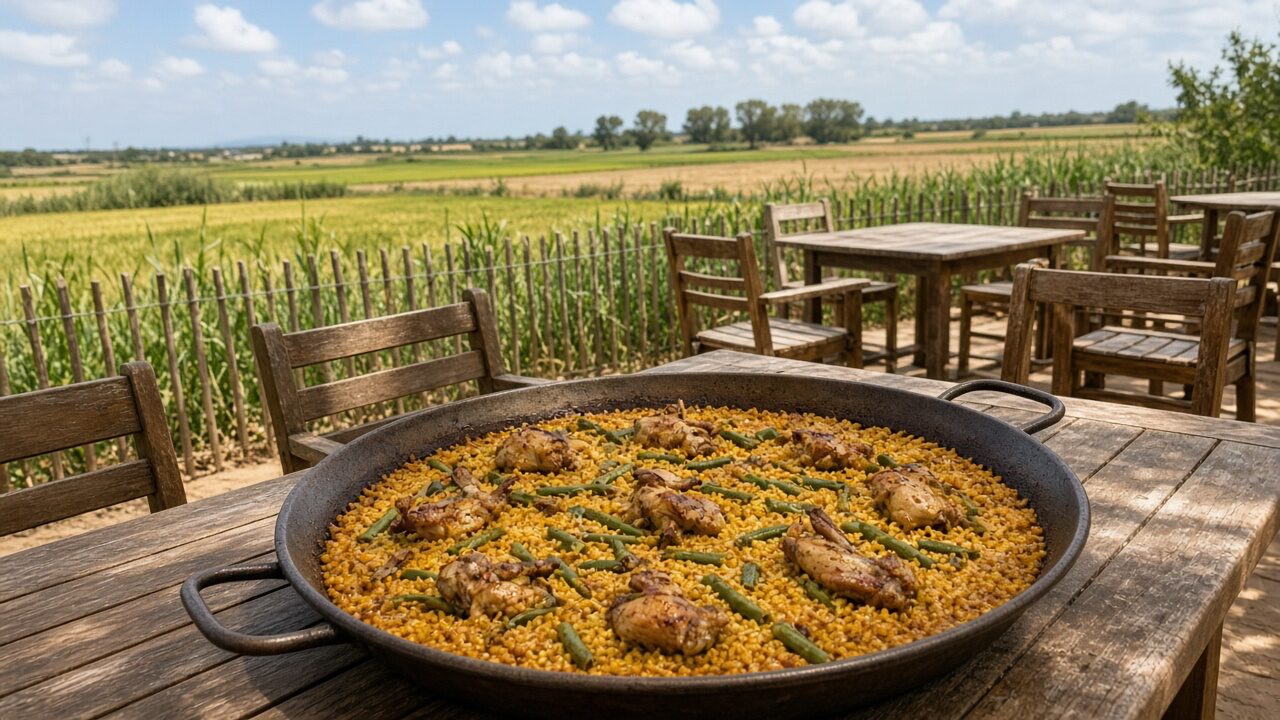
Why Valencia is the home of paella
The dish grew from Albufera rice fields and a farm lunch by the fire. What matters: rice variety (bomba or senia), olive oil, saffron or an honest substitute, and a proper stock — not a frozen seafood mix.
Ingredients: rice and local beans
Classic Paella Valenciana: chicken, rabbit, often snails, bajoqueta (green beans), garrofó (large white beans), sometimes artichokes. Buy rice to take home at the Central Market. Glossary: arroz a banda is fish-stock rice; fideuà is short-noodle “paella”.
Top neighbourhoods where locals eat
Albufera — cradle of the recipe
El Palmar and the lagoon edge are a natural half-day. Transport and boats: Albufera guide.
Malvarrosa beach: paella with a view
Malvarrosa / Cabanyal has terrace views — and traps. Look for places that cook to order (30–40 minutes), not five-minute plates. Ruzafa and Benimaclet skew toward urban lunch without beach markups.
- Spanish/Valencian-only menu is a good sign.
- No microwave “for one” portions.
- No neon-yellow rice or frozen prawns in a “Valenciana”.
How to tell the original from tourist rice
Chef rules: socarrat to wood fire
- Pre-order or wait 30–45 minutes — it is cooked now.
- Thin rice layer, not porridge.
- Socarrat scraped at the end; don’t stir constantly.
- Wood fire is a plus, not mandatory marketing.
- Minimum for two is normal, not greed.
One-day food route: Mercado Central to Ruzafa
- 09:00–11:00 — Central Market: juice, jamón, bomba rice to take home.
- Optional walk to the City of Arts or old town.
- 13:30 — paella (El Palmar / Ruzafa / Cabanyal).
- Evening — light tapas in Ruzafa, not a second paella.
With kids, slow the pace — see Valencia with kids. Ready 2-day frames: first time, couples, with kids.
Build a food day for your dates?
Before you order: prices, waits and siesta
| Item | 2026 guide | Note |
|---|---|---|
| Honest lunch | €15–25 | Per person, no beach markup |
| Tourist zone | €30–45 | Often weaker flavour |
| Wait time | 30–45 min | Normal for fresh paella |
Book weekends ahead. Useful phrases: “Una paella valenciana para dos, por favor”, “¿Cuánto tarda?”. Sleep in a food neighbourhood via hotel search; add insurance and flights. Food tours: excursions.
Готовые маршруты
Маршруты по вашему направлению
Готовые планы по дням — можно сразу адаптировать под свои даты.
FAQ
When should I order paella?
Locals eat it at lunch, roughly 13:30–15:30. Dinner paella is usually a tourist tell — evenings lean toward other rice dishes or tapas.
What does real paella cost in 2026?
Guide: €15–25 per person in honest spots, €30–45 in tourist beach and old-town traps. Usually ordered for two or more.
How is Paella Valenciana different from seafood rice?
Classic Valenciana: chicken, rabbit, often snails, green beans (bajoqueta), garrofó — not prawns or dye. Seafood rice is a coastal tradition, not the inland standard.
Where do locals eat paella?
El Palmar by Albufera, parts of Ruzafa, and vetted Cabanyal/Malvarrosa spots. Skip five-language menus by the cathedral and microwave “for one” plates.
What is socarrat?
The crispy rice crust on the pan bottom. Don’t stir all lunch — scrape it at the end. Neon-yellow wet rice usually means colouring, not saffron.