
The short answer
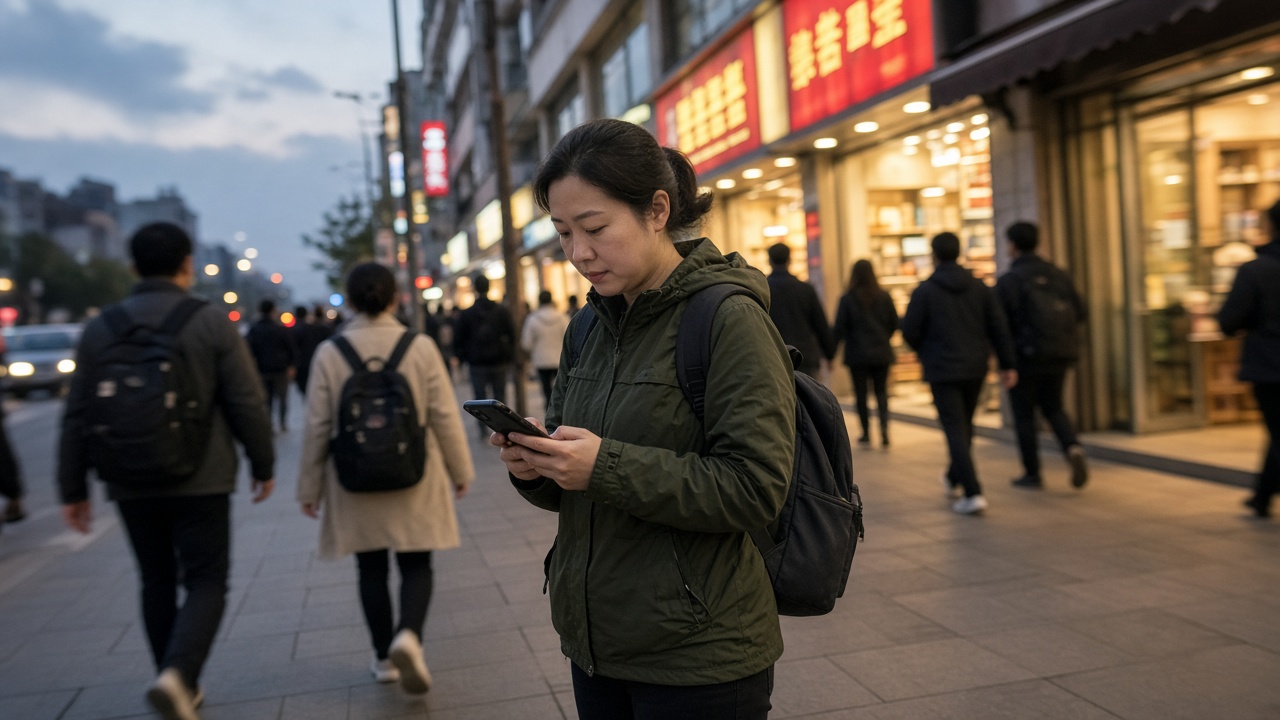
Yes, a woman can travel alone in a major Chinese city, and plenty of women do — locals and visitors. The honest condition is short: a passport that matches the entry rule for your nationality, a way home, a first night in a hotel that can register a foreign guest, and a payment method that still works at the till. With that in place, central Beijing, Shanghai, or Chengdu in the evening does not feel like a closed zone.
It is an easy trip if you have already been alone in one unfamiliar city, you will use a translator, and you are not counting on Google Maps. Start shorter, or with a guide on day one, if a failed card ruins the whole week, or if the plan is Tibet, an unmarked night market, and three cities over a weekend.
A general solo frame, not China-specific, is in the solo travel memo. The rest of this page is what changes on a Chinese street.
Where to go alone first
Pick a first city where the evening is not a puzzle. Shanghai and Chengdu feel easier than Beijing if what you want is “I know where I am”: a tight center, metro into the evening, and a cafe where sitting alone with tea is normal. Choose Beijing when you want the Wall, the palaces, and wide avenues, and you do not mind long rides inside the city. Pace and style are compared in which China city to choose.
Guangzhou and Xi’an make a good second stop: food, metro, and neighborhoods that are obvious for a hotel. They are optional on a first landing if you have never used Alipay.
Tibet, Xinjiang, and border areas such as Tashkurgan or Kanas are not a spontaneous add-on to a solo week. They need a separate permit. It is not handed out at a park gate. Save them for a trip you build in advance, not for an evening in Chengdu.
Ready plans that work for one person: Shanghai in 3 days, Chengdu on a budget, and Beijing in 3 days. Search a flight to China with a connection that does not land you at midnight with no first booking.
If the language worries you more than the city, book a short guided walk for the morning after you land, then do the rest yourself. It is a way to see how the metro and payments work while you are still fresh, not a chaperone for the week.
Entry in November 2026
Visa-free entry is real and it is not universal. As of November 2026, ordinary passport holders from a published list of countries can enter for tourism, business, visiting relatives or friends, exchange, and transit, and stay up to 30 calendar days. The days start the day after you enter. For most countries on that list the waiver runs through 31 December 2026. Russia is the exception in the embassy note: through 31 December 2027. The United States is not on that list, so a US passport still means a visa. Do not copy one country’s rule onto your own.
Where the waiver applies, it covers a woman traveling alone. Group tours are not required. Border officers can still ask for a return ticket and a hotel booking, and they can refuse entry if the purpose does not match. Work, study, and journalism stay outside the waiver. Your passport needs to cover the whole stay. Emergency and temporary travel documents are not ordinary passports.
Fill in the arrival card before you fly. WeChat, Alipay, and the NIA 12367 app all take it. A hotel registers a foreign guest. A private stay means the local police station within 24 hours. Confirm the wording on the Chinese embassy site for your country and on the National Immigration Administration site before you treat this page as the rule.
What to save on your phone at home is in the China solo trip checklist: payments, data, and what to download before you lose your usual apps.
Money: Alipay and a backup
Daily China runs on a phone. Cash is awkward in a big city, and a foreign card tapped on a terminal often does nothing. The setup that works in autumn 2026: install Alipay before you fly, link a card, make a tiny payment, and try WeChat Pay the same evening. I am not quoting a limit. Those ceilings move.
Carry a backup. Some yuan in cash, from home or the airport ATM, and a second card that is not inside the same phone. One card for the week is how a dinner ends at a frozen screen when a code never arrives.
Cafes and taxis do not expect a tip. Where a small extra is normal and where it looks odd is in how tipping works in China.
Day and night: metro and DiDi
By day, solo logistics are simple: follow the metro signs and match the exit to a photo of the sign, not to memory. Rush hour is packed. Keep the bag in front of you, do not hold the phone out, and if someone stays pressed against you after the crowd has shifted, change carriages at the next stop. That is crowding, not a reason to cancel the trip.
At night, one rule: DiDi from the app, door to door, from the metro or the cafe to the hotel. Book it in Alipay or in DiDi itself so the plate and the route are on your screen. Do not take a private car at the station or the airport, even with a laminated “official” card. A night bus into a neighborhood you do not know is a poor first evening.
Between cities, high-speed rail is the calm option. Stations are huge, but the boards and the passport check are repetitive once you have done one. Tickets and luggage are covered in the China high-speed train guide. Do not book a connection whose last mile falls after midnight.
Hotels that accept foreigners
Book night one before you fly and tell the hotel you are arriving on a foreign passport. Some cheap guesthouses still cannot register foreign guests. You find out at midnight, after the DiDi has left. Stay in an ordinary hotel with a 24-hour desk, near a metro station. Skip hourly rooms and skip a flat with no registration on the first night.
In reviews, read recent notes from women: light at the entrance, a working lift, street noise, whether the desk answers at night. How to choose a neighborhood when you are alone is in how to choose safe solo accommodation. What a bad room photo is hiding — a weak lock, a dark corridor — is in hotel red flags.
For Beijing, Shanghai, or Chengdu, narrow the search early: a hotel that can register a foreign guest within a few metro stops of what you are seeing by day. A long night transfer eats the saving from a “cheap” district.
What actually happens
The tea scam and the “art student” still show up near temples and pedestrian streets. The shape is always the same: a friendly chat, an invitation for tea or a studio, then a bill you never ordered. “No, thank you,” and a step into the nearest shop or metro entrance is the whole response. You do not need to debate it, and you do not need to go “for five minutes.”
Around temples you may meet people in monks’ clothes with a donation bowl. A working temple takes offerings on its own grounds, without walking you to a shop. If the approach feels off, keep walking.
Bars, karaoke, and “let me show you the city” from a stranger are a different category. In the center this is rarely random violence. It is more often a bill that grows and an evening you no longer steer. A no is enough.
People may look longer than you are used to, especially outside Shanghai. It is uncomfortable and it usually stops there. If looking turns into following, go into a cafe, a metro station, or your hotel and order DiDi from inside. Do not keep walking “so you don’t seem rude.”
Data and the apps that work
Install the local set before you fly: Amap for maps, DiDi or DiDi inside Alipay, WeChat, Alipay, and 12306 if you will take a train. Google Maps, Instagram, and WhatsApp often do not open on an ordinary Chinese network. The phone is not broken.
A travel eSIM for China gives you data at the airport and on the metro. It does not bring blocked apps back, and it does not replace Amap. A second eSIM is worth having if the first one fails to register in the first hour. Download an offline translator and screenshots of your booking while you still have your usual wifi.
Insurance and carry-on
A bill at a clinic used to treating foreign patients can cost more than the flight. Buy travel insurance that covers the dates with room to spare and a medical limit you would actually show a doctor. Policies often refuse a trip into a posted closed area. For a city stay, that is a reason to leave border zones off the plan, not a reason to skip cover.
In the cabin bag: medicines you already know by name, pain relief and period supplies, a light scarf for temples and air-conditioning, a power bank inside your airline’s limit, and a passport copy stored apart from the original. A bigger “just in case” pharmacy can wait until you are in the city.
Dress length in Beijing, Shanghai, and Chengdu is not policed by a special rule for women. In a working temple, cover shoulders and knees the way you would anywhere else. Shoes matter more than an outfit. The days are long.
Build the first trip for one
Set China, keep one city for the first days, and leave night transfers out of the plan. If you want a frame to edit, start from Beijing in 3 days, Shanghai on a budget, or Chengdu on a budget.
Ready-made routes
Routes for your destination
Day-by-day plans you can adapt to your dates right away.



Common questions
Do I need a visa to visit China alone?
It depends on your passport. China’s visa-free list covers ordinary passports from a set of countries for tourism, business, visiting friends, exchange, and transit, for up to 30 days. For most of that list the waiver runs through 31 December 2026. Russian passports are extended through 31 December 2027. A US passport is not on the 2026 embassy list, so plan on a visa. Check the Chinese embassy or the National Immigration Administration before you book. The 30 days, when they apply, are counted from the day after entry.
Can I walk alone at night?
In central Beijing, Shanghai, and Chengdu, lit streets stay busy in the evening and women walk them without a companion. Use the metro while it is easy, then DiDi door to door. Do not get into a car offered at the station, and do not follow a stranger to a bar or karaoke.
Which city is easiest for a first solo trip?
Shanghai or Chengdu is the usual first pick: a dense center, a metro, and cafes where you can sit out the evening. Beijing is the classic first visit if you want the Wall and the palaces and do not mind long cross-town rides. Guangzhou and Xi’an are strong second stops, not a required start.
Will Alipay work with a foreign card?
Many travelers link a card in Alipay or WeChat Pay before they fly and then pay for the metro, DiDi, and cafes. Card lists and limits move, so I will not quote a ceiling. Set both apps up at home and carry some cash yuan so one declined card does not end the day.
Do I have to register with the police?
A hotel that accepts foreign guests registers you. If you stay with friends or in a flat with no front desk, register at the local police station within 24 hours. Fill in the arrival card before you land, in WeChat, Alipay, or the NIA 12367 app.
How many days should I plan?
Three nights in one city is enough to learn the rhythm without a transfer. A week in Beijing, or Shanghai plus one easy side trip, is calmer than three cities in five nights. If your passport is on the waiver, 30 days is the ceiling; longer stays need a visa arranged in advance.
How does AlpacaBag help plan this?
In the planner, set China, pick Beijing, Shanghai, or Chengdu, and build days for one person: flights, a hotel neighborhood, and evenings that do not depend on a late transfer. The ready plans below are there if you want a frame to edit.