
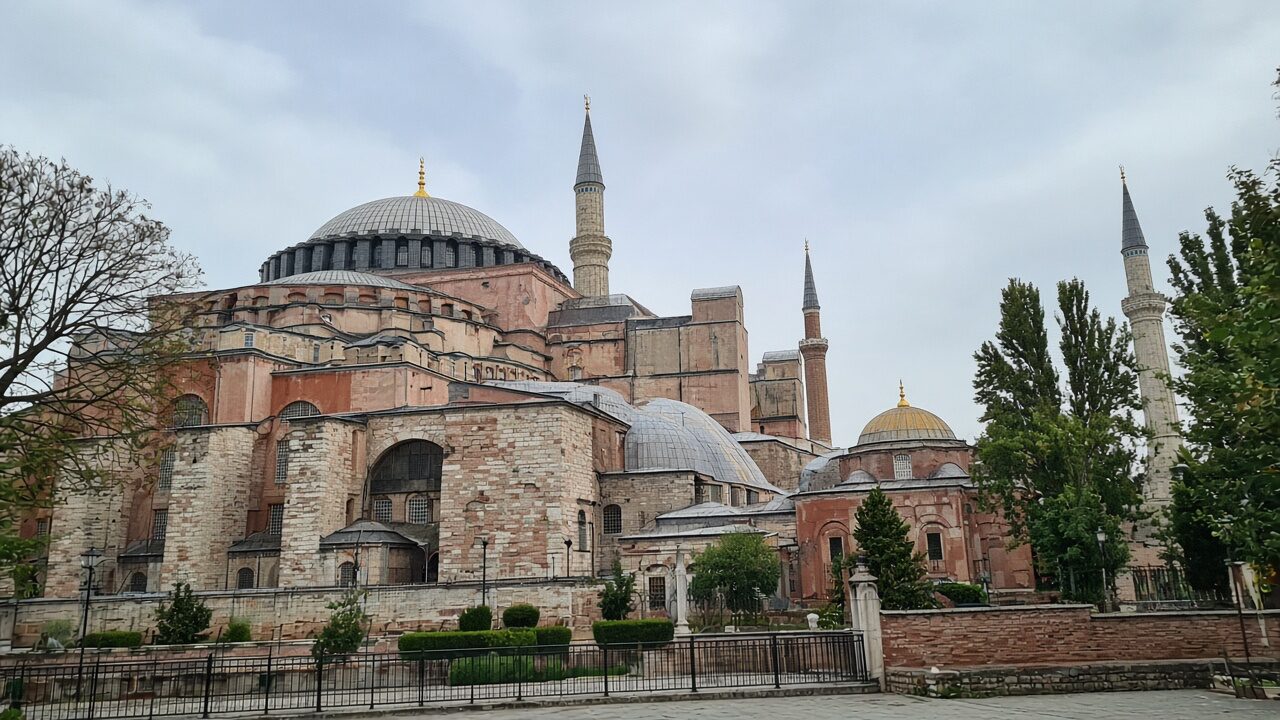
Hagia Sophia is a working mosque, not a museum
Accounts of wandering freely across the ground floor belong to an earlier visitor system. Hagia Sophia returned to mosque use in 2020. Cultural visitors now take a paid route through the upper gallery, while worshippers use a separate flow below. The arrangement protects prayer and reduces pressure on a building that has already survived earthquakes, structural interventions and fifteen centuries of use.
This changes the experience rather than cancelling it. From above, the nave feels even larger and the dome seems to float beyond the Ottoman calligraphic roundels. You do not stand beneath the centre of the dome on the carpet, and a visitor ticket does not unlock the prayer floor. Old museum-era photographs should not set your expectations.
Turkey's Ministry of Culture and Tourism describes a controlled gallery route with a southern entrance ramp and a northeast exit. That system was still the relevant official framework when checked on 1 October 2026. Restoration is active, so scaffolding or a covered sightline can appear without the whole monument being closed.
Approaching the visitor entrance from Sultanahmet
Take tram T1 to Sultanahmet and walk into the square between Hagia Sophia and the Blue Mosque. Cultural visitors are directed toward the southern side of the complex, near the Ahmed III Fountain and the Bayezid II minaret. Follow the signs for visitors or the ticket office for the final approach because restoration fences can move the queue.
Do not join the first line you see. One line may serve worshippers, another gallery ticket holders and another an organised group. A tour company's meeting pin is not necessarily the door. Find the official entrance before listening to offers of priority access; no guide can remove the security check or open a restricted floor.
Walking from the Eminonu ferry terminals takes roughly half an hour, uphill through Sirkeci and Gulhane. In the historic peninsula, a taxi can be slower than the tram because pedestrian zones and traffic restrictions keep cars away from the square. Bring only a day bag and keep your ticket and phone ready at security.
Inside the upper gallery: mosaics, dome and Marble Door
The ascent follows a broad historic ramp with uneven stone underfoot. It is not a modern museum staircase, so grippy shoes are useful and travellers with limited mobility should assess the current route before buying. Circulation is generally one way; if you rush past a mosaic, returning may not be possible.
The first reward is the view through the arcades: nave, dome and monumental calligraphy align in one frame. Then look closer. The gallery holds the Marble Door associated with Byzantine church councils and several mosaics. The celebrated Deesis depicts Christ between the Virgin Mary and John the Baptist. Much of it has been lost, but the surviving faces still carry remarkable depth and expression.
Imperial mosaics place emperors and empresses beside sacred figures, evidence that the building was once the ceremonial centre of Constantinople. Some works may be screened by conservation or worship arrangements. Bring headphones for the QR-based audio system; it was designed to deliver interpretation without broadcasting noise into the mosque.
Prayer pauses, modest dress and quiet behaviour
Five daily prayers follow the sun, so there is no single year-round sightseeing timetable. Visitor access can pause or be redirected before and during worship. Friday midday prayer draws a larger congregation and can produce the longest interruption. Avoid placing a timed Topkapi Palace or Basilica Cistern ticket immediately after Hagia Sophia.
Cover shoulders and knees, and women should carry a headscarf. Staff may apply details according to the route in use, but arriving ready is more respectful and faster than relying on borrowed coverings. This remains a sacred space, not a costume backdrop. Do not photograph worshippers closely or stage loud poses above the prayer floor.
Remove shoes only where staff direct visitors onto carpet; the gallery does not automatically follow the same procedure at every point. Silence notifications and avoid speaker audio. Sound travels astonishingly well through the vast interior, which is part of the architecture and a reason to keep voices low.
Gallery tickets and the least stressful time to visit
Foreign cultural visitors pay for the upper gallery; worshippers enter through a different system. Prices and concessions can change, so use the official ticket office or the official sales channel named by the Ministry of Culture and Tourism. Do not assume Museum Pass Istanbul includes this route, and read any third-party product carefully: many sell commentary or a guided walk, not a different admission category.
Mornings often have fewer tour groups, although prayer and conservation work still control access. Arriving just before the final admission is risky because security or a temporary closure can consume your remaining time. Allow 60 to 90 minutes once inside and extra time for the outdoor queue. In summer, carry water for the wait but do not eat in the gallery.
Checked 1 October 2026: Hagia Sophia operates as a mosque and cultural visitors use a separate upper-gallery route. The prayer timetable and restoration notices displayed that day take precedence over a generic opening-hours listing.
How to read Byzantine and Ottoman layers together
Emperor Justinian's basilica was dedicated in 537. It served as the ceremonial church of Constantinople, became a mosque after 1453, operated as a museum in the twentieth century and returned to mosque use in 2020. Those histories are not arranged in separate rooms; they occupy the same view.
Columns, marble revetment and mosaics reveal the Byzantine structure. The mihrab, minbar, sultan's lodge and giant calligraphic discs speak to Ottoman worship. The mihrab is slightly offset from the building's axis because it faces Mecca, while the basilica was designed for a different liturgical orientation. The gallery makes that shift easier to see.
After leaving, take a tea break before entering another monumental interior. Cross the square for our Blue Mosque guide when the next visitor window opens, or choose lunch using the Istanbul food guide. A slower transition preserves more of Hagia Sophia than a rushed checklist.
Where to stay
A convenient base can simplify an early start; compare location before price.
Build a day in Sultanahmet
Space the paid Hagia Sophia gallery, free Blue Mosque visit and lunch around prayer pauses without turning the square into a race.
Ready-made routes
Routes for your destination
Day-by-day plans you can adapt to your dates right away.
FAQ
Can tourists enter the main prayer floor at Hagia Sophia?
The standard cultural visitor route uses the upper gallery and is separate from the worship area. Worshippers follow their own entrance flow. A commercial tour cannot override barriers or take tourists into a section closed to cultural visitors.
Does Hagia Sophia close during prayer?
Visitor movement may pause or change around the five daily prayers. Friday midday prayer can create the longest interruption. Leave a generous buffer and follow the notices displayed at the entrance on your day.
What should I wear inside Hagia Sophia?
Cover shoulders and knees; women should carry a headscarf. Follow staff directions for the route operating that day. Shoes come off only if visitors are directed onto a carpeted worship area, not automatically for every part of the gallery.
What can you see from the upper gallery?
The route gives elevated views of the dome, nave and Ottoman calligraphic roundels, plus Byzantine mosaics and the Marble Door. It does not recreate the unrestricted ground-floor visit shown in photographs from the museum years.
How long should I allow?
Allow 60 to 90 minutes after entry, plus security and any queue. The historic ramps and uneven surfaces take longer than a modern museum staircase, and restoration barriers may alter the circulation.