
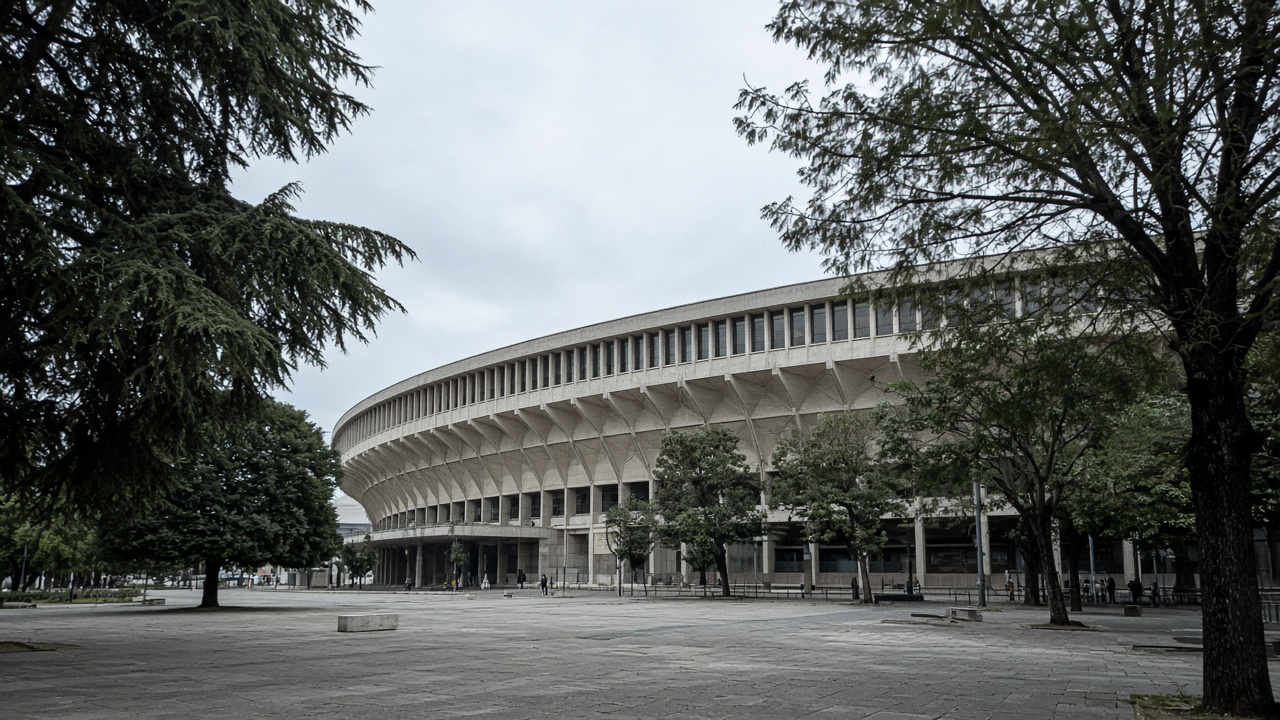
Stadio Flaminio — Pier Luigi Nervi’s masterpiece
Arena history: from the 1960 Olympics to today
Campo Rondinella occupied the site from the 1910s. For the 1960 Games, Pier Luigi Nervi delivered a reinforced-concrete stadium where engineering and form agree: cantilevered stands, clean lines, a sense of lightness across a huge span. After the Olympics the arena hosted Italy’s rugby side and football moments tied to Rome’s clubs—including the Lazio story that still shadows the site.
For concrete and modernist fans, Flaminio outranks many postcard stops downtown. If you are building a day beyond the Colosseum, pair it with Rome beyond the Colosseum and unusual Rome hidden gems.
Why the stadium is abandoned—and what may come next
Closed since 2011, the structure needs major work; tourists cannot enter. From the fence you can still read Nervi’s signature cantilevers—the best photo angle for modernist shots without trespassing. Through 2025–2026, rebuild proposals linked to S.S. Lazio have circulated publicly (figures around €480 million have been reported). Status shifts—check news before you travel. For now the visit is façades plus the neighbourhood, not the stands.
A Flaminio route: what to see near the stadium
Keep the spine clear: Piazza del Popolo → Via Flaminia → Stadio Flaminio → MAXXI and Ponte della Musica → Villa Glori or Auditorium Parco della Musica. Do not stack a full Vatican morning on the same day unless you enjoy sprinting.
MAXXI and Ponte della Musica
MAXXI, Zaha Hadid’s national museum of 21st-century arts, is the district’s second magnet. Budget 1.5–2 hours and buy tickets on the official site. Next door, the pedestrian–cycle Ponte della Musica offers clean lines and a Tiber view—an easy pause before lunch. Together with the stadium it forms a ready “ancient centre to modern north” block that fits our architecture lovers’ Rome itinerary.
Villa Glori and Auditorium Parco della Musica
Villa Glori is a quieter green break than Villa Borghese in peak season, with views over the northern districts. Renzo Piano’s Auditorium (three beetle-like halls around a plaza) rewards a short detour even without a concert ticket. If your evening is elsewhere, ride back toward the centre or contrast the pace with a Trastevere one-day walk. For classic belvederes, see our Rome viewpoints guide—Flaminio is about façades more than panoramic terraces.
| Time | Stop | Note |
|---|---|---|
| 10:00 | Piazza del Popolo | Start the walk along Via Flaminia |
| 10:40 | Stadio Flaminio | 20 minutes on the exterior façades |
| 11:15 | MAXXI | 1.5–2 hours inside (ticketed) |
| 13:30 | Ponte della Musica | Bridge photos and a nearby lunch |
| 15:00 | Villa Glori / Auditorium | Park pause or Renzo Piano’s halls |
Practical information for visitors
Getting there—and why you cannot go inside
Interior access is closed; exterior circuit only. Starting at Piazza del Popolo (Flaminio metro) keeps orientation simple. Trams and buses along Via Flaminia help if you prefer not to walk the full stretch. Groups who like museums and venues can use our Rome itinerary for friends; history-minded travellers may prefer the history lovers’ 3-day plan.
Sleep near Piazza del Popolo or Parioli for easy access—compare hotels in northern Rome. A guided Rome architecture tour adds Olympic context if you want a narrator; the neighbourhood is otherwise easy to self-guide. Before you go, lock in flights, insurance, and an eSIM.
| Cost | Range | Note |
|---|---|---|
| Stadium exterior | €0 | Closed site—façades only |
| MAXXI | €12–15 | Typical adult ticket range |
| Coffee in Parioli | €2–4 | Counter coffee average |
| Lunch nearby | €15–30 | Café or trattoria |
| Day total per person | €30–50 | With museum, excluding lodging |
Planning a beach leg in Italy? That is Rimini on the Adriatic—not this neighbourhood. Hotel names that sound similar (Villa Flaminia and the like) deserve a quick address check before you book.
Architectural Rome: antiquity to Flaminio
Tell AlpacaBag you care about modernism and museums—it will sequence Piazza del Popolo, Nervi’s stadium, and MAXXI into one coherent day.
Ready-made routes
Routes for your destination
Day-by-day plans you can adapt to your dates right away.
FAQ
Can you go inside Stadio Flaminio?
No. The stadium has been closed since 2011. Visitors study Nervi’s concrete from outside the fence. Lazio rebuild plans for 2025–2026 are in the news, but interior access is not open to tourists.
How long should I plan for Flaminio?
About 20 minutes for the stadium façades. With MAXXI, Ponte della Musica, and a walk to Villa Glori or the Auditorium, budget 3–4 hours.
How do I get there from central Rome?
Walk from Piazza del Popolo along Via Flaminia—the clearest route. Trams and buses serve stops near the stadium and MAXXI; Flaminio metro is a convenient starting point.
Is Flaminio the same as Rimini?
No. Flaminio is a northern Rome neighbourhood with Olympic heritage and contemporary architecture. Rimini is an Adriatic beach resort. Also double-check hotel names like Villa Flaminia so maps do not send you elsewhere.
Is Flaminio worth it without an architecture interest?
If you only want classical forums and piazzas, spend the day downtown or in Trastevere. Flaminio shines for modernist concrete, Nervi, and MAXXI.