
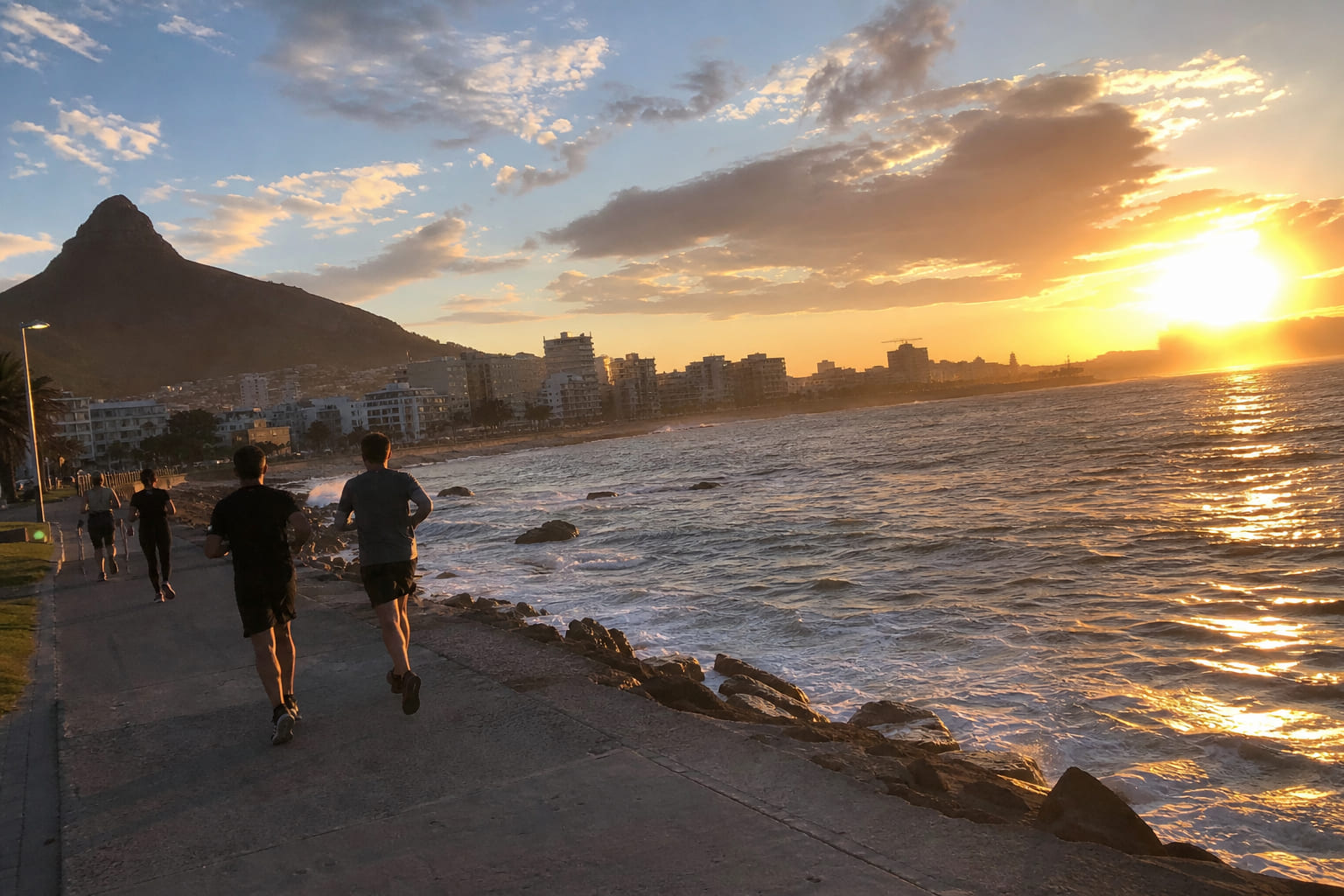
Safe neighborhoods for tourists in Cape Town are unevenly distributed: the Atlantic coast and Waterfront harbor are better patrolled than the CBD and outskirts. Before booking, compare hotels and apartments in Sea Point, get travel insurance for South Africa, and estimate costs in the travel budget calculator. Traveling solo? Read our guide to safe accommodation for solo travelers.
For what to see beyond the harbor, see our V&A Waterfront alternatives guide. Build a day-by-day plan in AlpacaBag route wizard or browse the route library.
Atlantic coast: premium and beaches
Camps Bay, Clifton, and Bakoven offer the highest safety levels and elite real estate. You'll find Instagram-famous white-sand beaches and upscale restaurants — ideal for well-off travelers, but you'll need to rent a car to reach other parts of the city comfortably.
Clifton splits into four beaches — the higher the number, the quieter the vibe. Camps Bay works well for waterfront dinners, but book taxis in advance after midnight. Peak season is November–March — see our best months to travel guide.
The sweet spot: Sea Point and Green Point
Sea Point and Green Point sit close to both downtown and the ocean, offering an excellent balance of safety, price, and infrastructure. In Sea Point you can safely walk the promenade even in the evening — specialty coffee shops, stores, and a large outdoor pool abound. Green Point, home to the stadium, has plenty of bars, hostels, and padel courts with reasonable accommodation prices.
For most tourists this is the optimal base: 10–15 minutes to V&A Waterfront by Uber, 20 minutes to Table Mountain. Book a hotel in Sea Point or Green Point and get a South Africa eSIM with offline maps. Evenings — try Mojo Market, covered in our off-the-beaten-path Cape Town guide.
Tourist hub: V&A Waterfront
Victoria & Alfred Waterfront is Cape Town's most guarded and popular zone. It's safe to walk here at any hour thanks to constant patrols. The area offers a huge choice of restaurants, malls, and hotels — but accommodation prices run above the city average.
Waterfront suits first-time visitors: Table Mountain cable car, museums, and harbor cruises are steps away. For the mountain, book a group tour with a guide rather than hiking alone. If Waterfront feels too packaged, see our alternative districts guide.
City life: Gardens and De Waterkant
Gardens (City Bowl) is popular for Table Mountain views and restaurants along Kloof Street. De Waterkant draws visitors with tidy streets and cozy architecture. Both are safe for daytime walks, but proximity to the business district means extra caution after dark — use taxis at night.
Kloof Street is the gastronomic axis: breakfasts, wine bars, and boutiques within walking distance of parks at the mountain's base. Never leave valuables in a parked car — more tips in our guide to storing money while traveling.
Quiet outlying areas
Constantia is a safe historic wine district perfect for peace seekers, but accommodation is expensive. Bloubergstrand and Table View attract kite surfers and postcard Table Mountain views. You must have a car here — these areas sit far from major sights.
Constantia Wine Route is a separate vacation format: tastings, gardens, and quiet villas. Combining Cape Town with the Garden Route or Johannesburg? Use our multi-city vacation guide.
Build a route around your neighborhood
Set your base in Sea Point, Waterfront, or Camps Bay — AlpacaBag distributes sights by day with logistics, travel times, and a PDF plan.
Neighborhood comparison for tourists
Compare areas by ocean access, price level, infrastructure, and whether you need a car — so you can pick a base that fits your budget and trip style.
| Area | Ocean access | Price level | Infrastructure | Car needed |
|---|---|---|---|---|
| Camps Bay / Clifton | Oceanfront | Very high | Low | Yes |
| Sea Point / Green Point | Nearby | Medium | High | No |
| V&A Waterfront | Harbor | High | Very high | No |
| Gardens | Far | Medium | High | Recommended |
| Constantia | Far | High | Low | Required |
Ready-made routes — in the AlpacaBag route library. Tipping at restaurants and for taxis — in our tipping guide by country.
Higher-risk zones
The business district (CBD) is fine to visit by day, but after dark street crime risk rises sharply — do not book a hotel there. Colorful Bo-Kaap and evolving Woodstock are daytime-only destinations; avoid empty side streets — though Woodstock works well for daytime mural walks, as described in our Waterfront alternatives guide.
Townships on Cape Town's outskirts are off-limits for independent tourist visits. Township tours are only possible with licensed operators — organized tours with a guide. For broader offbeat Africa context, see our unconventional destinations roundup.
Safety rules in 2026
- Use Uber or Bolt around the city, especially after sunset — evening walks are risky almost everywhere except Waterfront and Sea Point promenades.
- Do not display expensive watches or jewelry; keep your phone in an inner pocket to avoid street theft.
- Lock car doors and close windows at traffic lights when driving.
- For Table Mountain hikes, hire a guide or join a group — avoid solo treks.
Full checklists for independent travelers — in our solo travel safety checklist and practical solo travel guide. Compare flights to Cape Town well in advance.
FAQ
Where is the best area for tourists to stay in Cape Town in 2026?
Sea Point and Green Point offer the best balance of safety, price, and infrastructure — the Sea Point promenade is relatively safe even in the evening, the city center is close, and you do not need a car. For maximum security, choose V&A Waterfront; for beaches and premium stays, pick Camps Bay.
Is it safe to stay in Cape Town CBD?
Visit the business district by day, but do not book accommodation there. After dark, street crime risk rises sharply. Base yourself in Sea Point, Waterfront, or Gardens and take Uber into CBD during daylight hours.
Do I need a car if I stay in Camps Bay or Constantia?
Yes. Camps Bay, Clifton, Constantia, Bloubergstrand, and Table View are far from major sights and poorly served by public transport. Rental cars or frequent Uber rides add significantly to your budget — factor that in when booking.
Is it safe to walk around Cape Town at night?
Evening walks are risky almost everywhere except the V&A Waterfront and Sea Point promenades. Elsewhere, use Uber or Bolt, keep your phone and jewelry out of sight. See our solo travel safety checklist for more.
How do I plan a trip around safe neighborhoods?
Choose a base in Sea Point or Green Point, then build a day-by-day route in AlpacaBag — the planner accounts for travel times between districts — or start from a ready-made 3-day Cape Town itinerary.