
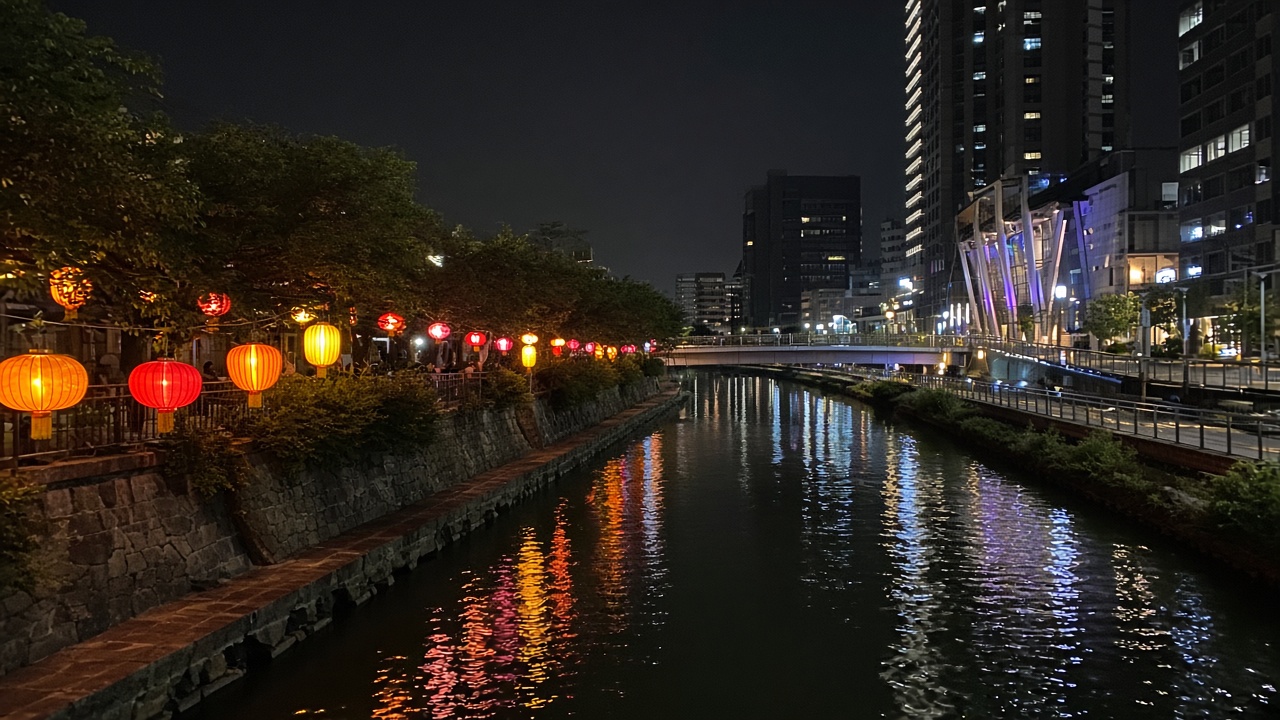
What it is and when to go
The Seoul Lantern Festival (often branded under Seoul’s winter light programs) is an outdoor evening event: large lantern sculptures, themed installations, and streamside lighting rather than a single indoor ticketed museum. The classic season window is December–January for the 2026–2027 winter — exact nights, themes, and any paid zones are announced closer to opening on official Seoul tourism sites.
Pair a lantern night with daytime Seoul walking: cafés and galleries from our Seoul Instagram spots guide and the unusual Seoul cafés roundup. If you are stacking Korea art travel earlier in autumn, see the Gwangju Biennale 2026 guide.
Before peak winter weekends, book a central Seoul hotel, compare flights into ICN or GMP, and set up a Korea eSIM or Yesim so maps still work in crowds.
Cheonggyecheon: the main lantern walk
Cheonggyecheon is the restored downtown stream that cuts east–west under elevated and street-level walkways. During lantern season, installations sit in and above the water channel so you walk along the lower path (or street level bridges) rather than hunting for a single gate.
Practical pattern: enter near City Hall / Jonggak, walk east toward Dongdaemun, then exit when crowds thicken or your hands freeze. You do not need to cover the entire length — choose a 1–2 km stretch with the densest displays published for that year. Stay on the walkway; do not climb installations or block bridge bottlenecks for long photo sessions.
Scaffold a full Seoul weekend around the night walk with Seoul 3 days budget-friendly or Seoul for architecture lovers.
Gwanghwamun plaza and nearby streets
Many seasons also place large lantern sets and media façades around Gwanghwamun Square and the palace-front plaza. This area works as a second stop the same evening: metro to Gwanghwamun or City Hall, a short plaza loop, then a warm-up café before you drop down to Cheonggyecheon.
Couples often prefer this stretch for wider photo space and easier taxi pickup after the stream walk — build timing into a Seoul 3 days for a couple plan rather than stacking another night market across town the same evening.
Metro access and evening timing
Useful Cheonggyecheon-adjacent stops include City Hall, Jonggak, Euljiro 1-ga, Euljiro 3-ga, and Dongdaemun History & Culture Park — Lines 1–5 cover different entry points. Ride in before full dark if you want photos with residual sky glow; stay after 20:00 for denser lighting and denser crowds.
Weekend nights and the New Year window are the hardest. For a calmer visit, choose a weekday after dusk, walk one direction only, and exit via a different station so you are not fighting the same stairs twice. Logistics for any festival weekend — lodging buffers, SIM, and exit plans — are covered in the festival trip planning guide.
Want lantern night fitted into a realistic Seoul weekend without guessing metro hops?
Build itineraryPractical tips
Confirm exact dates, opening hours, and any ticketed zones on official Seoul tourism pages closer to winter — this article does not invent fixed ticket prices. Dress for wind along the open stream; bring a small thermos or plan a café break mid-walk.
Photography: phones handle the color well, but tripods and large lights are often restricted or impractical in crowds. Keep bags zipped; pickpockets are rare but dense bridges create bump zones. If you need daytime content the next morning, park near Jongno or Myeongdong rather than far south of the river so you can recover sleep.
Ready-made scaffolds: Seoul weekend, budget, architecture, and couple route pages.
Ready-made routes
Routes for your destination
Day-by-day plans you can adapt to your dates right away.
FAQ
When is the Seoul Lantern Festival 2026–2027?
The festival typically runs from December into January. For the 2026–2027 season, treat Dec–Jan as the planning window and confirm exact opening and closing nights on official Seoul tourism channels closer to winter — calendars shift slightly year to year.
Is the Seoul Lantern Festival free?
Most streamside and plaza displays along Cheonggyecheon and around Gwanghwamun are outdoor evening viewing. Some seasons add ticketed zones, night markets, or special pavilions — check the official program before you go rather than assuming everything is free.
How do I get to the Cheonggyecheon lantern displays by metro?
Use Seoul Metro stops that serve Cheonggyecheon: City Hall, Jonggak, Euljiro 1-ga, Euljiro 3-ga, Dongdaemun History & Culture Park, and nearby transfers on Lines 1, 2, 3, 4, and 5 depending on which stretch you walk. Pick an entry point, walk one direction along the stream, then exit at another station.
How long do I need for a lantern evening?
Plan 1.5–3 hours for a relaxed Cheonggyecheon walk plus Gwanghwamun plaza photos. Crowds peak on weekend nights and around New Year — arrive at dusk, keep moving, and skip trying to photograph every installation.
What should I wear and bring?
Seoul winter evenings are cold and windy along the open stream. Layer up, wear non-slip shoes, bring a power bank, and keep hands free for gloves. An eSIM helps for live maps when mobile networks get congested.