
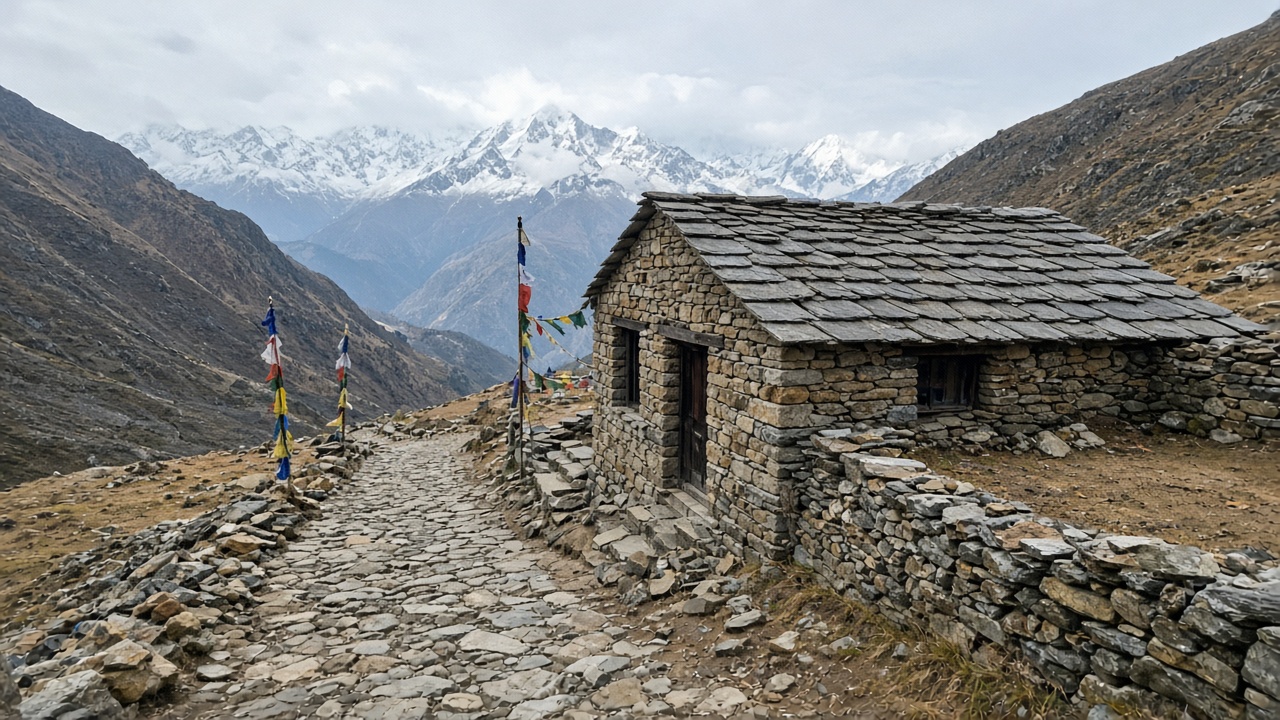
The guide list and the restricted areas are different rules
The Nepal Tourism Board TIMS page still titles the rule as a licensed trekking guide and an agency-issued TIMS card on most Himalayan routes. It dates that text to the revised TIMS provision effective 31 March 2023. The page does not say “every path in Nepal.” It prints a table. If your route is on the table, the page tells you to arrange the guide and the card through a government-registered trekking agency. If the route is not on the table, do not treat silence as permission. Check the official notice.
Annapurna is on the table. The named treks are the Annapurna Circuit, the Nar Phu Annapurna Circuit, Mesokanto / Tilicho, Poon Hill–ABC, Khopra, Mardi Himal, and Sikleh Tara Hill. Everest, Langtang, Helambu, Manaslu, and Upper Mustang are on the same page, in their own rows. A lakeside walk in Pokhara is not one of those names. Mardi Himal is. Do not read a city guide as a pass to start that trek without the guide the table asks for.
Restricted areas are the second rule, from the Department of Immigration. The page says free individual trekkers are forbidden there. An authorized agency applies. The group needs a licensed guide. An individual cannot apply. There should be at least two trekkers. That page, checked 17 November 2026, still says so. News reports in March 2026 described a looser solo rule. If the immigration page and a news story disagree, the page you will be stopped with is the one to re-read.
Nar and Phu, and Upper Mustang, sit under both. They are named on the Tourism Board list, and they are restricted areas with their own permit. The Annapurna Circuit and Poon Hill–ABC are the guide-and-TIMS rule. They are not the Upper Mustang permit. A checkpoint can still collect a conservation-area ticket on those Annapurna trails. That ticket is a third piece of paper. Its price is not reprinted here. Check the official notice.
Quote the fee that is printed, and stop there
The TIMS page prints the card charge: NPR 1,000 for SAARC citizens and NPR 2,000 for other applicants, currently payable online. The checkout belongs to the agency filing the form. The page does not print a guide’s daily wage. Check the official notice, then the written quote, before you treat a forum number as the price.
Restricted-area permits are in US dollars and paid in Nepali rupees. The immigration services list and the route-and-fee page agree on Upper Mustang and Upper Dolpa: USD 500 per person for the first 10 days, then USD 50 per person per day. A permit is not issued past the visa expiry. Those two lines are the ones this guide will repeat. Re-read them before you pay.
They do not agree on every other row. Manaslu, Humla, and Nar-Phu are on both official pages, and the figures are not the same text. This page will not pick a winner. Check the official notice for the week you apply, and pay the line the office is using that day. A conservation-area entry, where a park or ACAP checkpoint charges one, is not in either of those immigration tables. Check the official notice for that ticket too.
People ask about Diamox because the nights get high
Acetazolamide is the drug trekkers mean when they say Diamox. It is a prescription. A clinician decides if it fits you. This page does not give a dose or a schedule, and it does not explain how to obtain the drug without that clinician. The reason the question shows up is the terrain. The named Annapurna and Everest routes sleep well above Kathmandu and Pokhara. Flying in and walking up in a few days is the pattern that makes people feel ill.
The CDC traveler page on high altitude is the non-drug brief this guide will use. Ascend slowly. Do not treat a low city and a high sleeping lodge as the same day. If a headache, dizziness, or confusion gets worse, descend. Do not ignore those symptoms and do not wait them out higher up the trail. That is a planning habit, not a personal medical plan. Someone who is confused, too breathless to walk, or not waking normally needs help on the ground, not another paragraph.
A tea-house day with a lower sleep is the usual way the Annapurna trails build that pause. It is also why the guide on the Tourism Board list is not only a paperwork person. The decision to stop or go down still has to be made while you can make it.
Cook it, boil it, peel it
Tea houses already work this way if you let them. Dal bhat that was cooked and is still hot is the meal. Tea and water that were boiled are the drinks. Fruit you peel yourself is the snack. Raw salad, ice in a cold drink, and water from the tap are the things to leave. Cook it, boil it, peel it. That is the whole food rule on this page.
It is a kitchen habit, not a medical protocol. This page does not name medicines, mixing ratios, or a clinic plan. If you are ill on the trail, tell the guide and talk to a clinician. Hot food does not replace that.
The city nights are Kathmandu and Pokhara
The trail rule starts when the route is one of the named treks or a restricted area. The nights before that are a city. Kathmandu and Pokhara are those nights. This English page has no city itinerary to attach. The planner can still lay out the days, and the offbeat Nepal guide is the city side: Bhaktapur and the lakeside, not a permit to skip the guide list.
The immigration services file asks the agency for insurance papers for the foreign trekker and for the Nepali staff. Staff cover is the agency’s duty. Your own policy is the one that has to answer if you need an evacuation. Ask for trek insurance that includes helicopter evacuation before you leave the valley: trek insurance for a Himalayan trail. That link searches policies. It is not a guide agency, and it does not issue a TIMS card or a restricted-area permit.
Read the TIMS table for the route name, then the immigration page if the valley is restricted. The fee that is not printed here is the one to check the official notice for.
Build the Kathmandu and Pokhara daysReady-made routes
Routes for your destination
Day-by-day plans you can adapt to your dates right away.
FAQ
Does the Annapurna Circuit require a guide in 2026?
The Nepal Tourism Board TIMS page, checked 17 November 2026, still lists the Annapurna Circuit, Poon Hill–ABC, Mardi Himal, Khopra, and Tilicho among routes that need a licensed guide and an agency-issued TIMS card. That rule is the revised TIMS provision effective 31 March 2023. It is not the same document as a restricted-area permit. Read the list again before you walk, because it is the kind of rule that can change.
Is Upper Mustang under the same rule?
Upper Mustang is on the Tourism Board guide list and it is also a restricted area. The Department of Immigration page says a free individual trekker cannot apply, a registered agency files the permit, the group needs a licensed guide, and restricted-area trekking needs at least two trekkers. Nar and Phu sit in the same split: named on the guide list, and also on the restricted map. The Annapurna Circuit itself is the guide-and-TIMS rule, not that Mustang permit.
What do the card and the permit cost?
The TIMS page prints the card charge as NPR 1,000 for SAARC citizens and NPR 2,000 for everyone else, paid online when the agency files the card. A guide’s daily rate is not on that page: check the official notice and the agency’s written quote. Upper Mustang and Upper Dolpa are USD 500 per person for the first 10 days, then USD 50 per person per day, on the Department of Immigration services list. Other restricted routes, including Manaslu and Nar-Phu, do not match across the official fee pages: check the official notice before you pay. A conservation-area ticket is a third fee. This page does not invent it.
What dose of Diamox should I take?
None from this page. Acetazolamide, often called Diamox, is a prescription drug. A clinician decides whether it belongs in your plan. Trekkers ask because the named routes sleep high and a fast climb out of Kathmandu or Pokhara is how altitude illness starts. The non-drug basics are to ascend slowly, to descend if headache or confusion gets worse, and not to ignore those symptoms. This page does not give a dose or a schedule.
What is safe to eat in a tea house?
Cook it, boil it, peel it. Eat food that was cooked and is still hot, drink tea or water that was boiled, and peel fruit yourself. Leave raw salad, ice in the glass, and tap water. That is a kitchen habit, not a medical protocol. If you are ill, talk to a clinician.
Does this page book a guide?
No. There is no guide-agency offer here. The Tourism Board tells you to contact a government-registered trekking agency for a listed route. The only commercial link is trek insurance, because the immigration file asks for insurance papers and a trek can need an evacuation. The link does not issue a TIMS card.