
Before a multi-city Deutsche Bahn hop, compare flights into FRA / CGN / BER, hotels near the cathedrals, travel insurance, and an eSIM for offline maps. Tower tickets stay with the churches — affiliate links never replace official desks.
Germany’s headline temples: Cologne to Berlin
| Cathedral | City | Style | Time | Tower |
|---|---|---|---|---|
| Cologne Cathedral | Cologne | Gothic / UNESCO | 1.5–2 h | tower paid, ≈ €5–8 |
| Ulm Minster | Ulm | Gothic | 1.5–2 h | tallest church tower — climb paid |
| Aachen Cathedral | Aachen | Carolingian / Gothic | 1–1.5 h | focus on the coronation core |
| Berlin Cathedral | Berlin | Neo-Baroque | 1.5–2 h | dome / viewpoint — paid |
| Freiburg Minster | Freiburg | Gothic | 1–1.5 h | tower by timetable |
Cologne Cathedral: facts and folklore
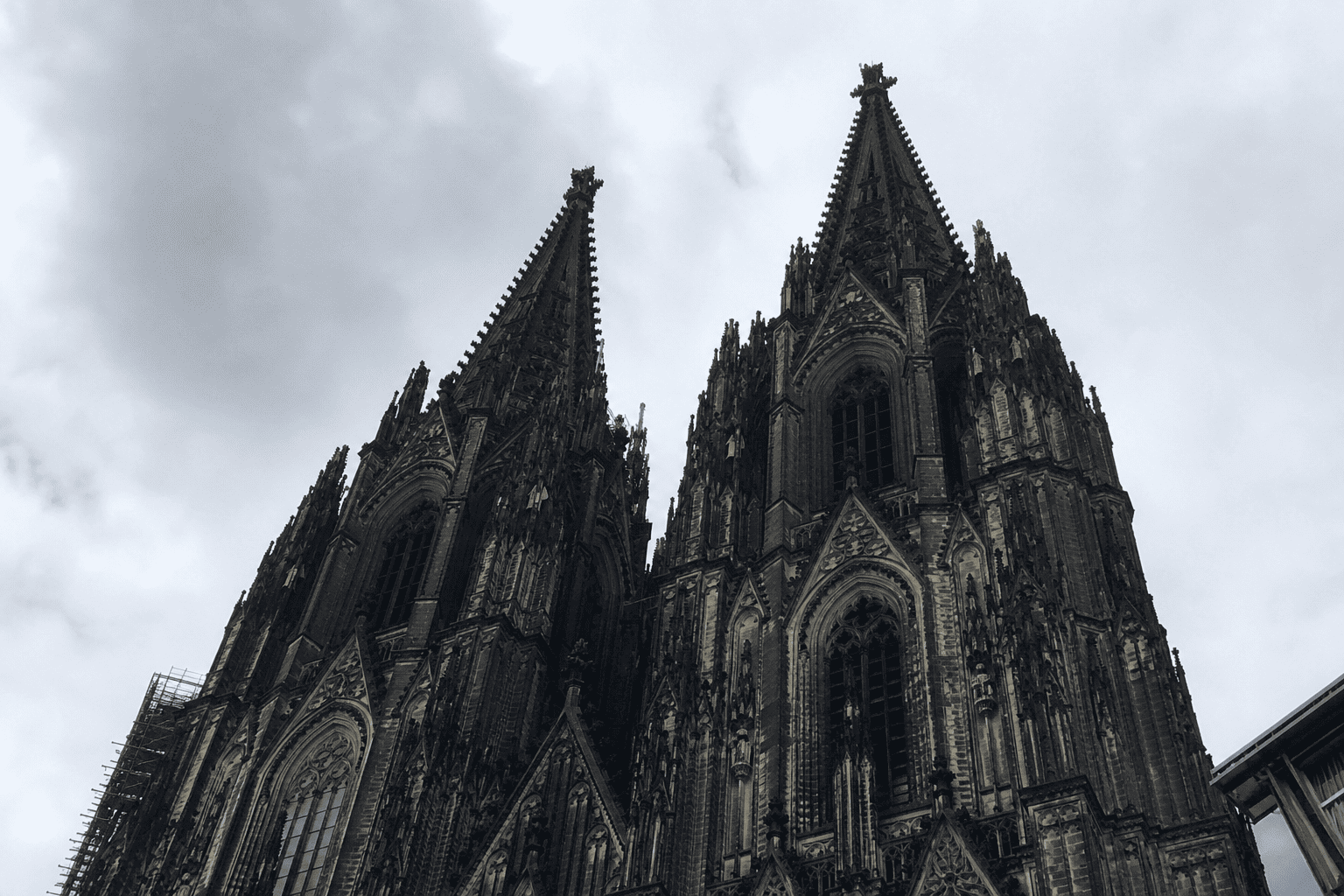
UNESCO status, darkened stone, twin spires hard against Hauptbahnhof. Domplatte / Domkloster puts you minutes from the doors after stepping off the train. Inside: stained glass and nave scale; outside: budget time for the tower queue.
Ulm Minster — the tallest church tower
Ulm is famous for height. The climb is a physical side-quest: stairs, narrow passages, Danube views. Do not stack it after a heavy museum day.
Aachen Cathedral — coronation core
Aachen is a different historical layer: Carolingian core and medieval coronations. Smaller than Cologne, denser for empire-history travellers.
Berlin Cathedral — capital grandeur
In Germany’s capital you get neo-Baroque on Museum Island, not Cologne-style pure Gothic. Dome access is ticketed — pair it with a city day, not three museums in the same slot. Continue with our Berlin architecture itinerary.
Freiburg Minster
A southern accent: filigree tower and market life around the square. Useful if the Rhine stretch pulls you toward the Black Forest — or if you later continue via Munich architecture days.
Gothic cathedrals in Germany: what to look for
Gothic reads vertically: pointed arches, buttresses, and flying buttresses free the walls for giant stained glass. Germany also keeps brick Gothic traditions farther north and multi-century build stories — the “forever unfinished” silhouette is part of the biography, not a failed Instagram shot.
Unfinished silhouettes and church legends
Many churches stood for centuries without finished spires or with temporary tops. Regensburg and other southern names often appear in “unfinished cathedral” talk — treat it as atmosphere, not a horror checklist.
Editorial tip: look for an evening organ concert — nave acoustics explain the volume. A paced guided tour helps with language; tower tickets still come from the church.
Practical rail plan: see the highlights in one trip
Brief logic: Frankfurt — Cologne — Aachen — Münster — Berlin (~7 days). Ulm and Freiburg are southern options if time remains or you fly via Munich / Stuttgart. Between cities, use Deutsche Bahn and re-check platforms the day you travel.
| Day | Plan |
|---|---|
| Day 1 | Frankfurt arrival, short walk, overnight in the rail hub |
| Day 2 | Cologne: cathedral by Hauptbahnhof, Altstadt, evening spire views |
| Day 3 | Aachen coronation church, then continue north |
| Day 4 | Münster (optional) or a straight hop toward Berlin |
| Days 5–6 | Berlin Cathedral plus city buffer time |
| Day 7 | Fly out — or add a southern detour: Ulm / Freiburg |
For a slower Bavarian gateway stop, see Memmingen in one day. History-forward travellers can also branch to Heidelberg for history lovers.
Königsberg Cathedral: brick Gothic beyond modern Germany
Königsberg Cathedral is a Baltic brick-Gothic landmark and a German cultural layer outside today’s federal republic. It appears here briefly as an architectural parallel to Rhine stone Gothic — not as politics. If you plan a separate visit, check current entry rules and opening hours yourself.
Visit practicalities: time zones, services, dress
Germany runs on CET/CEST — factor the shift if you aim for morning Mass or an evening organ slot. During services, visitors are often asked to wait. Tower budgets roughly €5–8 plus donations; prices change — trust the day’s desk.
A cathedral route without overload
Set cities and pace — AlpacaBag will space rail hops so you are not climbing three towers in one day.
Ready-made routes
Routes for your destination
Day-by-day plans you can adapt to your dates right away.
FAQ
Do German cathedrals charge admission?
The main nave is often free or donation-based; towers and some crypts are ticketed. Always confirm at the on-site desk.
Where is Cologne Cathedral?
On Domplatte next to Cologne Hauptbahnhof (Domkloster area) — a few minutes on foot from the platforms.
How long should I plan per cathedral?
About 1.5–2 hours for interior and photos; a tower climb adds queue time and stairs.
Is there a dress code?
These are active churches: cover shoulders and knees when possible, and keep voices low during services.
When is the best light for spire photos?
Early morning or golden hour; midday on Domplatte is crowded. Flash is usually banned indoors.