
Night markets
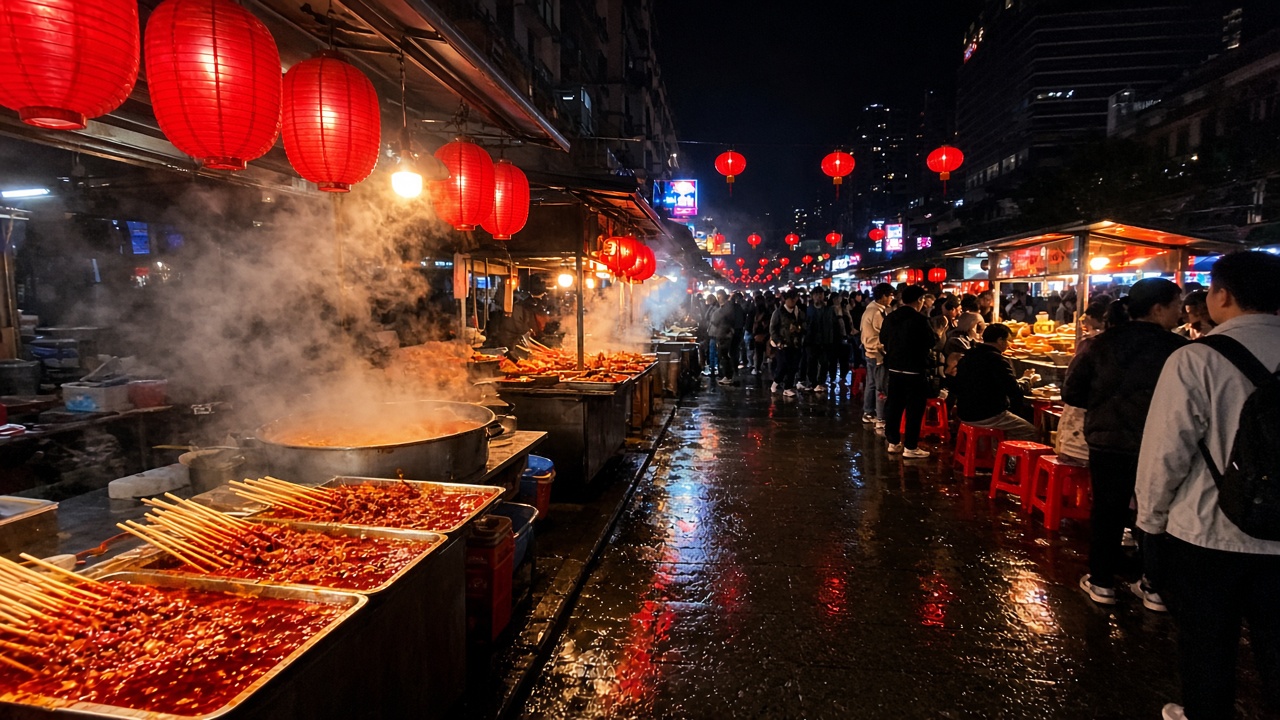
Start with living 夜市 around 坡子街 and the river: local clusters beat the hotel “food street”. Watch steam, local queues and wok turnover. Hours are usually evening; rain can collapse rows earlier.
What to eat from 湘菜
- 臭豆腐 — Changsha stinky tofu: crisp shell, soft centre, sauces to choose.
- Spicy crayfish/shrimp, smoked pork, rice noodles.
- Prices float—follow the queue, not a year-old blogger list.
Ordering heat levels
Hunan heat is fresh chili more than Sichuan numbing mala. Ask for 微辣 or 少辣 if you are not ready for full fire. Rice and cold tea help more than “one more skewer to try”.
Alipay and WeChat
Alipay and WeChat Pay cover stalls and metro. Cash is rarer. Keep an eSIM for market maps and vendor chats.
Hygiene and queues
Prefer high oil-turnover stalls. Split spicy plates with friends. Sensitive stomach: alternate fire with plain rice—do not open the night with three kinds of 臭豆腐.
Wuhan and Hengshan links
After Changsha heat, logical next beats: Wuhan sakura / noodles, Nanchang Tengwang Pavilion or sunrise on Hengshan.
Protect the evening for markets
The wizard keeps night 夜市 off a sandwich between early HSR and “one more museum”.
FAQ
Where are Changsha night markets?
Clusters around Pozi Street / 坡子街, riverfronts and local 夜市 blocks shift by season. Chase steam and local queues, not only the hotel “food street”. Hours are usually evening to late—check Maps/WeChat the same day.
How spicy is Hunan food?
Hunan (湘菜) leans on fresh chili and smoked meats—often hotter than guests expect after Sichuan numbing spice. Ask for 微辣 / 少辣 if you are not ready for full fire. Rice and water help.
Are Alipay and WeChat Pay enough?
Yes—the base stack for stalls, tea and transit. Cash is rarer. Bind a card early and check foreign-account limits.
What should I try?
Anchors: 臭豆腐 (Changsha stinky tofu), spicy crayfish/shrimp, rice noodles and wok street food. Shopfronts turn over fast—follow queues and clean pans.