
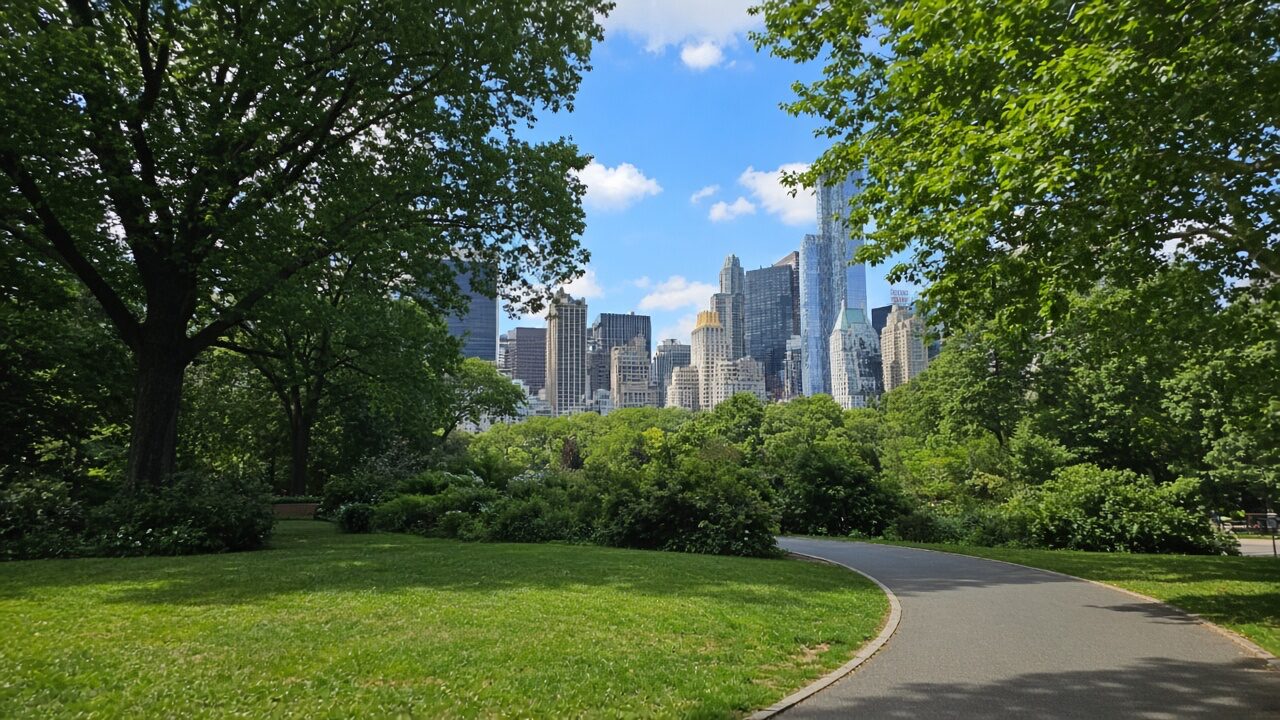
Choose one section, not the entire rectangle
A first visit can connect Gapstow Bridge, The Mall, Bethesda Terrace, Bow Bridge and Strawberry Fields in three or four hours with pauses. Harlem Meer and Conservatory Garden offer a quieter northern return visit. Combining 59th to 110th Street, the zoo and a museum produces distance rather than a coherent day.
The south serves first-time visitors and families, the middle connects Bethesda, Bow Bridge and Strawberry Fields, and the north offers quieter landscapes. A bicycle is not an automatic upgrade because many pedestrian paths prohibit riding and landmark stops require repeated parking. Walking often produces the more coherent first route.
Official hours, maps and seasonal rules
The park opens daily from 6:00 to 1:00. The Conservancy map marks restrooms, visitor centres, accessible routes and seasonal facilities. Lawns, skating, boats and the zoo keep separate calendars, so confirm them individually. Dog rules include daytime leash requirements and landscapes where off-leash access is never permitted.
Central Park Conservancy provides the authoritative restroom, accessibility and seasonal-facility maps. Park hours of 6:00 to 1:00 do not extend to boats, the zoo or skating, each of which follows another operator calendar. Lawn flags and current notices also matter more than an old activity list.
A first-timer route from 59th to 79th Street
Select an entrance by subway line and intended exit, not by searching for one main address. Columbus Circle serves the southwest, Fifth Avenue at 59th Street the southeast, and 72nd Street works for Strawberry Fields or Bethesda. Mobile reception can weaken in lower terrain, so use cross streets on the park edges as navigation anchors.
Use Columbus Circle for the southwest, Fifth Avenue at 59th Street for the Pond and zoo, or 72nd Street for Bethesda and Strawberry Fields. Crossing the park later takes longer than the map implies. Choose the eventual east- or west-side exit before starting so the next journey remains simple.
- Download the official restroom map.
- End on the side needed for your next stop.
- Check seasonal lawn and facility closures.
Picnics, children, running and spending
Start near Gapstow Bridge, continue along The Mall to Bethesda, then turn toward Bow Bridge and Strawberry Fields. Families can exchange the northern stretch for the zoo or a playground. A picnic controls spending when lawns are open. Exit toward the Upper West Side, Museum Mile or the subway line needed next.
After Bethesda and Bow Bridge, leave toward the Upper West Side for food or Museum Mile from the east. Do not schedule a museum at a time requiring uninterrupted fast walking; performers, photographs and path closures change the pace. A Sheep Meadow picnic also depends on the lawn being open.
Rain plans and shorter alternatives
In rain, reduce the walk to the southern arches and pair it with a museum. Runners should use the official running map and separate exercise goals from sightseeing. If long walking is unsuitable, make a compact loop around the Pond. Paid activities are optional additions to a park that is already worthwhile for free.
Rain favours a short Pond, Gapstow and Mall circuit followed by a museum. Riverside Park offers a quieter Hudson walk, while Prospect Park supports a local Brooklyn day. Neither reproduces Central Park’s landmarks, but both deliver green space when the main goal is rest rather than a checklist.
Where to stay for this itinerary
The Upper West Side suits Strawberry Fields, family dining and west-side subway lines; the Upper East Side connects the park with Museum Mile. Midtown offers more lines to southern entrances. Pick a park side around evening plans, or every sightseeing day begins with an unnecessary crosstown journey.
Stays on the right side of Central Park · Insurance for a New York stay
Build the day around your pace
AlpacaBag connects stops with transport, food and realistic time on site.
Ready-made routes
Routes for your destination
Day-by-day plans you can adapt to your dates right away.
Frequently asked questions
What are Central Park hours?
It opens every day from 6:00 to 1:00.
How long is a useful first route?
Allow three to four hours for the southern and central highlights.
Is admission free?
Yes. The zoo, boats and selected activities charge separately.
Should I walk the whole park?
Not on a first visit unless distance itself is the goal.